
Disclosure: some links here are affiliate links. If you sign up through one I may earn a commission at no extra cost to you.
32 Honest Ways to Make Money Online in 2026
Lists like this usually fail for the same reason. They give you thirty ideas, no way to choose between them, and roughly equal weight to “sell stock photos” and “start a software company.” So you read the whole thing, feel briefly motivated, and do none of it.
If you would rather begin with your phone, my guide to legit apps that pay you is a quick first step.
The fix is to sort by the two things that actually decide whether an idea fits your life: how long until the first dollar arrives, and whether you’re renting out your hours or building something that keeps paying. Those two axes pull in opposite directions almost every time. The fastest money has no leverage. The highest ceiling takes months of unpaid work. Nearly every mistake people make online comes from picking something in the wrong quadrant for their actual situation.
So the 32 real ways to make money online below are grouped into five tiers by that logic, fastest first. Read the tier that matches where you are, and skip the rest. Brand new? Start with the 30-day path for beginners.
Want a number before you commit? Our side hustle income calculator estimates what an idea could pay based on the hours you actually have each week. Aiming for a specific target? We worked out how many hours it takes to earn $100 a day online with 12 common methods.
TL;DR
- Need money this week? Tier 1. Gig platforms, microtasks, and selling things you already own. Low ceiling, but the money is real and it lands in days.
- Have a skill and 10 hours a week? Tier 2 is where most people should be. Freelance services pay $25–$100/hour, and the first client usually lands inside a month.
- Want something that pays while you sleep? Tiers 3 and 4. Expect 6 to 18 months of unpaid work before it’s meaningful. That’s not pessimism, it’s the actual timeline.
- The single most common mistake is starting in Tier 4 (blog, YouTube, audience) with no income, running out of money and motivation in month four, and concluding online income is a scam.
- The realistic sequence is Tier 2 to fund your life, Tier 3 or 4 built on the side with the money Tier 2 buys you.
If you’re still in school, our guide on how to make money as a teenager covers the options that fit around classes.
Whichever you choose, a weekly side hustle system keeps it from eating your evenings.
First: how to actually pick one
Before the list, three questions. Answering them honestly cuts 32 options down to about four.
How soon do you need the money? If the answer is “this month,” you’re in Tier 1 or 2 and everything else is a distraction. There is no shame in this. Cash flow buys you the patience to build the slower things later.
What do you already know how to do? The single biggest predictor of whether someone earns online in their first 90 days is whether they started from an existing skill or tried to learn a new one from zero. Bookkeeping, writing, spreadsheets, a second language, video editing, knowing your way around Shopify, having worked in customer service. All of it is sellable. Starting from “I have no skills” almost always means “I haven’t looked at my own résumé properly.”
How many hours a week, honestly? Not the number you’d like. The number that survives a bad week at work and a sick kid. If it’s under five, Tier 1 and 2 are the only realistic options, because audience-building at three hours a week takes years rather than months.
For context on how normal this is: the Bureau of Labor Statistics’ most recent contingent and alternative employment survey counted 11.9 million independent contractors in the US, about 7.4% of total employment. That figure is from July 2023 and it’s the newest full supplement available, but the direction of travel since then has been up, not down.
Which way to make money online fits you?
Use your answers to the three questions above to find your starting tier. Pick one row, read that tier, and ignore the rest for now.
| If this sounds like you… | Start in | Best first ways to make money online |
|---|---|---|
| You need money this month and have under 5 hours a week | Tier 1 | Gig apps and selling things you already own |
| You have a skill someone would pay for and 5–10 hours a week | Tier 2 | Freelance writing, virtual assistance, bookkeeping or design |
| You can wait 2–3 months and like making things | Tier 3 | Digital products, templates or printables |
| You can wait 6–12 months and enjoy writing or video | Tier 4 | A niche blog, YouTube channel or newsletter |
| You have savings to invest but little time | Tier 5 | Low-cost index funds or high-yield savings (not financial advice) |
| You have no obvious skill yet | Tier 1, then Tier 2 | Gig work for cash while you build one service skill, such as VA work |
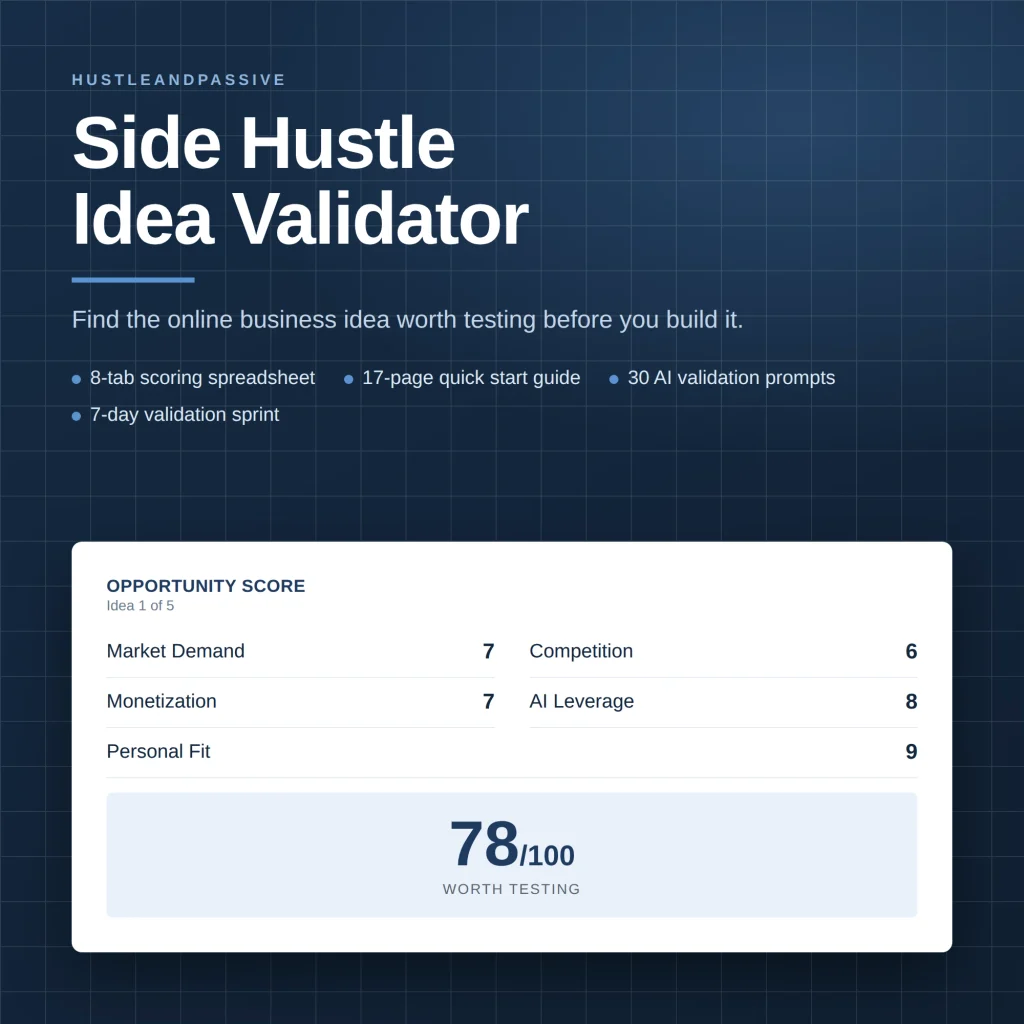
My Side Hustle Idea Validator is a spreadsheet that scores each idea on eight weighted criteria, including market demand, startup cost and personal fit, and gives you a build, modify or kill call. It won’t predict income; it tells you which idea deserves testing first.
How to Make Money Online for Beginners: A 30-Day Starting Path
If you’re brand new, 32 options is more than you need. Here’s how to make money online for beginners in practice: pick one method from Tier 1 or Tier 2, give it 30 days, and judge it on real signals, not on how motivated you feel.
| Week | What to do | Done when |
|---|---|---|
| Week 1 | Pick one method from the table above that fits your weekly hours | One method chosen, the rest parked |
| Week 2 | Set up for free: a profile, a listing or a simple sample | Your offer is live where a buyer can see it |
| Week 3 | Act daily: send pitches, apply for gigs or publish listings | At least 15 pitches, applications or listings out |
| Week 4 | Follow up once, adjust your price or offer, review what got replies | A first payment, or a clear reason to switch |
These are planning targets, not income promises. Some Tier 1 methods pay in the first week; skill-based work often takes longer.
Three beginner starting points
- Use skills you already have. Looking for real ways to make money from home without a big upfront cost? Our guide to side hustle ideas from home compares 15 options by pay, hours and startup cost.
- Make one simple digital product. Templates, planners and printables cost little to create. Our list of digital product ideas shows what you keep per sale on each platform.
- Work toward a specific number. If you have a daily target in mind, our honest $100-a-day math shows the hours each method needs.
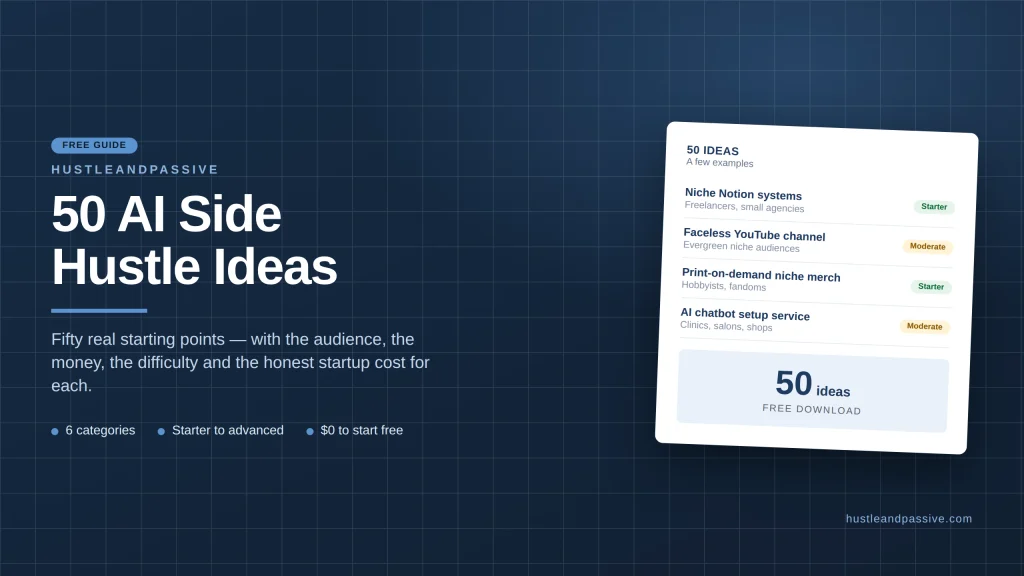
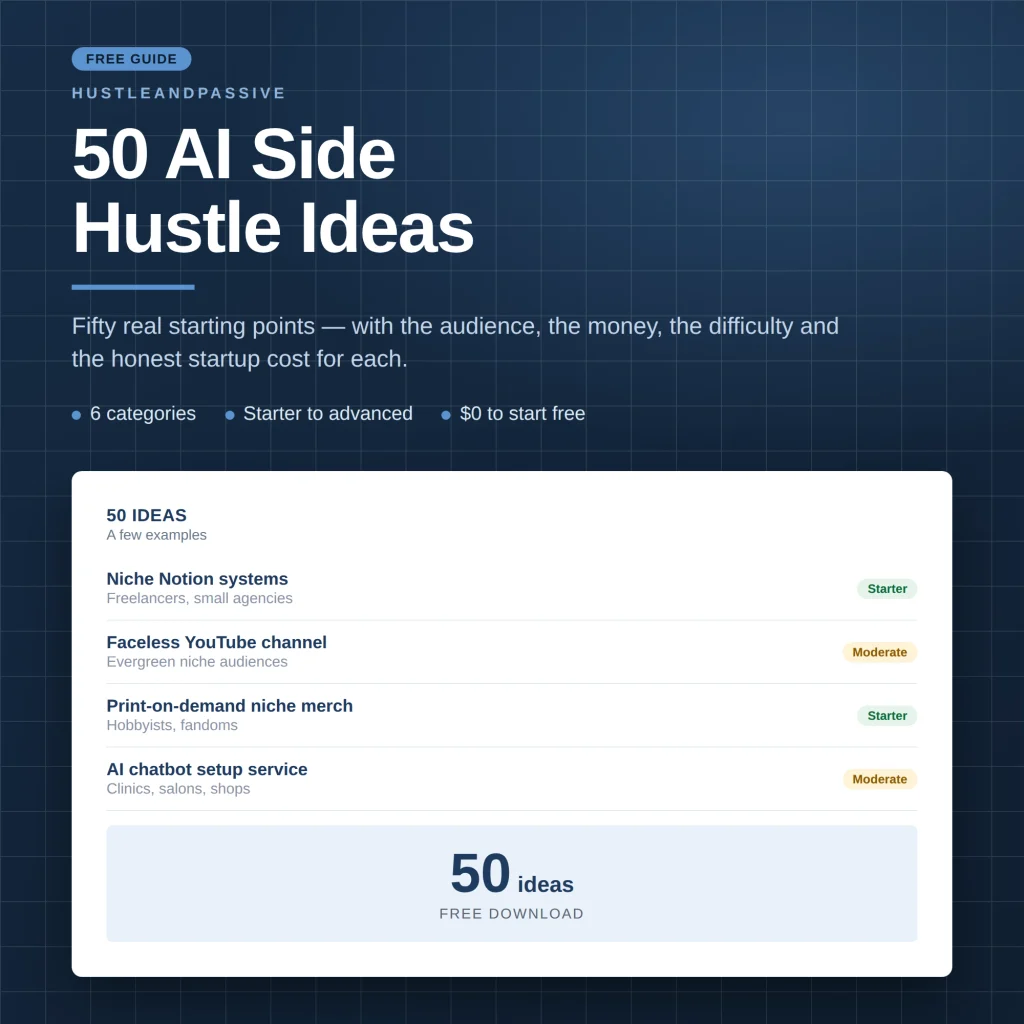
Need a shortlist before choosing? The free 50 AI Side Hustle Ideas list gives you one, and the Validator above helps you decide between your top two.
Tier 1: Money this week (low ceiling, no leverage)
These pay fast. None of them build anything. Use them for cash flow, not as a plan.
1. Delivery and rideshare gigs. DoorDash, Uber Eats, Instacart. Pays same-day or next-day on most platforms. Realistic take-home after fuel and vehicle wear is well below the gross figure the app shows, so track it properly for a fortnight before deciding it works. Full breakdown of who pays fastest is in the gig economy jobs that pay instantly guide.
2. User testing. UserTesting, Userlytics, TryMyUI. You record yourself using a website and talking through what confuses you. Typically $10 per 20-minute test. The catch is supply: tests are irregular and you’ll qualify for fewer than you’re offered. Fine as a filler, not a floor.
3. Microtask and AI-training work. Data labelling, transcription review, rating AI outputs. This is a genuinely growing category as AI companies buy human evaluation at scale. Pay is modest and per-task, but the work is remote, flexible and requires no portfolio.
4. Selling things you already own. eBay, Vinted, Facebook Marketplace, Back Market for electronics. Not a business, but for a lot of people it’s the fastest few hundred dollars available and it funds the actual business. Skipping this because it isn’t “passive” is a mistake I’ve watched people make.
5. Online surveys and cashback. I’m including these to tell you they’re mostly not worth your time. Effective hourly rates sit far below minimum wage almost everywhere. The exception is high-value market research panels for specific professions, which occasionally pay $100+ for an hour-long interview.
6. Pet sitting and local task apps. Rover, TaskRabbit. Not strictly online, but sourced online and paid through the platform. Higher hourly than delivery in most cities, and repeat clients turn it into something steadier.
7. Selling unused phone plan data, storage or bandwidth. Small, genuinely passive, and worth about the price of a coffee per month. Mentioned for completeness. Don’t build a plan around it.
If you’re specifically hunting for the fastest-paying options, there’s a dedicated list of side hustles that pay daily with the payout timelines for each platform.
Tier 2: Sell a skill (fastest real money, still trading hours)
This is where most readers should start, and it’s the tier that generic lists undersell in favour of sexier options. Rates here are real, the first client typically lands within four to six weeks, and the work compounds into a portfolio.
8. Freelance writing. Blog posts, newsletters, case studies, technical documentation. Beginner rates start around $0.05–$0.10 per word and experienced specialists clear $0.30+. AI has compressed the bottom of this market and widened the top: nobody pays for generic 800-word blog posts any more, and everybody pays for someone who can interview a subject-matter expert and write something a model couldn’t. The full path is in the freelance writing career guide, and the tested list of freelance writing platforms covers where the work actually is.
9. Virtual assistance. Inbox management, scheduling, CRM upkeep, travel booking, light bookkeeping. Typical rates run $18–$40/hour depending on specialisation, and specialised VAs (Shopify, HubSpot, podcast production) sit at the top of that. Zero credentials required. Start with the no-experience VA guide and the free tool stack that runs it.
10. Bookkeeping. Underrated, unsexy, extremely steady. Small businesses need it monthly, forever, and they hate doing it. Certification helps but isn’t mandatory in most markets. Retainer pricing rather than hourly is normal, which makes income predictable in a way most online work isn’t.
11. Social media management. Content calendars, scheduling, community replies, light design. The trap is undercharging: this is priced as a monthly retainer ($400–$1,500 per client is a common band), not per post, and pricing per post is how people end up working forty hours for six hundred dollars.
12. Video editing. Demand keeps climbing because short-form eats so much footage. Podcast clips, YouTube edits, ad variants. Rates from $30/hour up. This is one of the few skills where a strong portfolio genuinely outweighs experience.
13. Online tutoring and teaching. Preply, Wyzant, iTalki, or direct. Language teaching is the largest slice, but exam prep pays better. Rates run $15–$60/hour, and building a direct client base off-platform is where it gets worth doing.
14. Web design and no-code site building. Webflow, Framer, WordPress. Small local businesses still need websites and still pay $1,500–$5,000 for one. Not glamorous, consistently in demand.
15. Podcast production. Editing, show notes, guest booking, clip creation. Retainer work, typically $300–$1,200/month per show. Small market, low competition, sticky clients.
16. Transcription and captioning. Entry-level pays poorly because AI does the first pass now. Where it still pays is correcting AI transcripts in domains that need accuracy: legal, medical, technical. Specialisation is the whole game here.
17. Data analysis and spreadsheet work. If you’re genuinely good with Excel or SQL, small businesses will pay well for reporting they can’t build themselves. Consistently underpriced by the people who can do it.
18. Consulting in whatever you did professionally. The highest-rate option in this tier and the one people talk themselves out of. Ten years in logistics, HR, manufacturing or retail management is a consulting practice. Rates start where your old salary implies and go up.
19. Customer support, remote. Salaried or contract, fully remote, low barrier. Not a hustle exactly, but for a lot of people it’s the realistic version of “work from home” and it pays better than most of Tier 1.
Tier 3: Build a product once, sell it repeatedly
Now we’re into leverage. Expect two to six months before meaningful revenue, and expect the first product to underperform. That’s normal and it’s not a reason to stop.
20. Digital products and templates. Notion templates, spreadsheet models, Canva template packs, planners, prompt libraries. Low production cost, instant delivery, no inventory. Realistic first-year revenue is a few hundred dollars a month rather than a few thousand, and the ones that work solve a narrow, annoying problem for a specific job. There’s a full breakdown in the digital products guide and a list of where to sell them.
21. Online courses. Higher price point than templates ($50–$500), significantly more work to produce. The mistake is building the course first. Sell it as a live cohort twice, learn what people actually get stuck on, then record it.
22. Ebooks and paid guides. Amazon KDP or direct sales. KDP gives you distribution and takes a cut; direct sales give you the email address, which is worth more. Fiction and non-fiction are completely different businesses, and only one of them is predictable.
23. Print on demand. Printful, Printify, Redbubble, Etsy. You design, they print and ship. Margins are thin (typically 20–30%) and design quality is the entire differentiator now that everyone has access to the same AI image tools. Works when you have a specific audience already, struggles when you don’t.
24. Selling on Etsy. Digital downloads specifically, rather than physical goods, because there’s no shipping and no inventory. Etsy brings the traffic, which is what makes it beginner-friendly, and takes fees for it. See what’s actually selling on Etsy.
25. Stock photography, video and audio. Genuinely passive once uploaded, and genuinely low-paying per asset. Generative AI has flattened the low end of this market hard. Still viable for specific, hard-to-generate subject matter: real locations, real products, niche professional settings.
26. Software, plugins and small tools. Micro-SaaS, WordPress plugins, browser extensions, Shopify apps. Highest ceiling in this tier by a distance. Requires either coding ability or a genuine willingness to learn it, and AI coding assistants have moved this from “impossible for non-developers” to “hard but doable.”
27. Selling on your own store. Physical products, dropshipping, or your own brand. Shopify’s Basic plan is $39/month ($29 billed annually), with a trial to start. Dropshipping specifically is far harder in 2026 than the 2021 hype suggested, mostly because ad costs rose and delivery expectations didn’t. The step-by-step ecommerce guide covers the version of this that still works.
Start Your Online Store with Shopify
Turn your idea into a real business instead of just another marketplace listing. Full branding, your own customer list, and an app ecosystem that scales as your AI product line grows.
Tier 4: Build an audience (slowest, highest ceiling)
Twelve to eighteen months before this pays properly. Everyone underestimates that and it’s why most people quit at month five. The payoff is that an audience monetises through every other tier on this list, which is why people persist.
28. Niche blogging. Still works in 2026, but the version that works is narrower and more first-hand than it was. Generic informational content gets absorbed by AI answer boxes; specific, tested, experience-based content gets cited by them. Start with something you can write about from actual experience. The seven-step niche blog guide covers setup properly.
You need hosting and a domain for this, and it’s the one genuinely unavoidable cost. Hostinger’s Premium plan runs $2.99/month promotionally, $10.99 on renewal, with a free domain for the first year.
Host Your Own Storefront for Under $2.99/Month
Skip the marketplace cut entirely. Hostinger runs everything from landing pages to checkout, fast enough to handle a launch spike without falling over.
👉 Set up hosting with Hostinger if you’re starting a blog. Check the renewal rate, not just the promo.
29. YouTube. Highest ceiling of anything on this list and the longest runway. Ad revenue is the least interesting part; sponsorships, your own products and affiliate revenue are where channels actually earn. Faceless formats have lowered the barrier considerably, and raised the competition to match.
30. Newsletters. The most durable audience asset, because you own the list rather than renting attention from an algorithm. Monetises through sponsorships, paid tiers and your own products. Kit’s free plan covers up to 10,000 subscribers with unlimited broadcasts and landing pages, which is more than enough to find out whether anyone wants what you’re writing.
👉 Start a free Kit account and send the first issue this week. The list you don’t start today is the one you’ll wish you’d started last year.
31. Affiliate marketing. Not a business by itself. It’s a monetisation layer on top of a blog, newsletter, channel or community. Treating it as a standalone plan is the most common way people waste a year. The honest version, including what not to do, is in the beginner’s guide to ethical affiliate marketing.
32. Paid communities and memberships. Recurring revenue, which makes it the most stable model here, and the highest ongoing effort, because a community that goes quiet dies. Skool charges $9/month plus a 10% transaction fee on its lower tier, or $99/month at 2.9%. Worth running the numbers: at meaningful revenue the expensive plan is the cheap one.
Stop Losing Audiences After Week One
Course content + community discussion = one powerful platform. Skool unifies your teaching and your tribe, making it easier than ever to retain students and build a loyal, paying audience.
👉 Try Skool free for 14 days if you already have an audience asking you questions. If you don’t have that yet, this is premature.
Tier 5: Money from money
Not “making money online” in the working sense, but it belongs on the list because it’s where the earlier tiers should eventually flow.
High-yield savings and treasuries. Boring, liquid, and the correct home for your emergency fund before anything else. Covered properly in the automatic saving system.
Index fund investing. The default answer for most people, most of the time. Slow by design.
Dividend and REIT income. Genuinely passive, requires real capital to produce real income. The maths is unforgiving: meaningful monthly income needs a portfolio most people building a side hustle don’t have yet.
A note on crypto: the 2025 version of this article had cryptocurrency as a numbered “way to make money online.” That was a mistake and I’ve cut it. Speculating isn’t earning, the risk profile is nothing like the rest of this list, and putting it next to freelance writing implies a similarity that doesn’t exist.
Realistic time to your first $100
| Path | First $100 | Ceiling | Trading hours? |
|---|---|---|---|
| Delivery / gig apps | 2–5 days | Low | Yes |
| Selling things you own | 1 week | One-off | Yes |
| Microtasks / AI training | 1–2 weeks | Low | Yes |
| Virtual assistance | 3–6 weeks | Medium | Yes |
| Freelance writing | 3–8 weeks | Medium-high | Yes |
| Consulting | 4–8 weeks | High | Yes |
| Digital products | 1–4 months | Medium-high | No |
| Etsy digital downloads | 1–3 months | Medium | No |
| Online courses | 2–6 months | High | No |
| Print on demand | 2–5 months | Medium | No |
| Niche blogging | 6–18 months | High | No |
| YouTube | 6–18 months | Very high | No |
| Newsletter | 4–12 months | High | No |
| Paid community | 3–9 months | High | Partly |
Ranges are typical, not guaranteed. Anyone quoting you a specific figure for what you’ll earn is selling something.
Real Ways to Make Money Online vs. Traps to Avoid
Anything requiring an upfront payment to start earning. Legitimate work pays you. This rules out most “be your own boss” recruitment pitches on sight.
MLMs, presented as anything. Social selling, brand ambassador, wellness coach. The compensation structure is the tell, not the product.
Courses promising a specific income by a specific date. “$10k/month in 90 days” is not a claim anyone can make about a stranger’s business.
Anything where the product is teaching people to sell the same thing. If the business model only works when you recruit, it isn’t a business model.
FAQ
How can beginners make money online?
Choose one method that fits your weekly hours, set it up for free, and give it 30 days of daily action: pitches, applications or listings. Tier 1 gig work and Tier 2 services such as virtual assistance or writing are the easiest starting points, because they need no audience and no upfront cost.
What’s the most realistic way to make money online with no experience?
Virtual assistance or a Tier 1 gig platform. VA work needs no credentials, and a first client often comes within a few weeks of steady outreach. Gig apps pay within days but cap out low. Both beat waiting until you feel qualified.
How much can a beginner realistically make online in the first month?
Usually between nothing and a few hundred dollars, depending on the tier. Gig work can pay within days at modest hourly rates, freelancing often pays nothing in month one while you land a first client, and Tiers 3 and 4 typically earn nothing in the first month by design.
What are real ways to make money from home online?
Freelance services such as writing, virtual assistance and bookkeeping, gig and task apps, selling digital products, and building content that earns from ads or affiliate links. Real opportunities pay you for work or products; anything that asks you to pay first or recruit others is a red flag.
Is passive income online actually possible?
Yes, but the word “passive” hides the setup cost. Digital products, courses and affiliate content can earn without ongoing hours once established, but getting there usually takes months of unpaid work. It’s deferred income rather than free income.
What’s the fastest way to make money online today?
Selling things you already own, then gig apps that pay same-day. Neither builds anything, but both can put money in your account this week, which is often what’s needed before anything longer-term is possible.
Do I need a website to make money online?
Not for Tiers 1 and 2, since freelance platforms and gig apps handle that. You need one for Tiers 3 and 4, because the point is owning your audience rather than renting it, and basic hosting costs a few dollars a month.
If you want to go deeper, my guide to weekend side hustles is a good next read.
Where to start, concretely
If you need money inside 30 days: pick one Tier 2 skill you already have, set a rate, and pitch ten people this week. Not a website, not a logo. Ten pitches.
If you have income and want leverage: pick one Tier 3 product, ship it badly in three weeks, and see if anyone buys. The first one is research, not revenue.
If you’re playing a long game: start the newsletter or the blog now, keep your income source, and give it a year before you judge it.
The thing that separates people who earn online from people who read about earning online isn’t the idea. It’s picking one and giving it a fair run. Most of this list works. None of it works simultaneously.
For the underlying model behind Tiers 3 to 5, the complete guide to passive income for beginners is the deeper read, and if you’re still choosing a direction, the business ideas breakdown approaches the same question from the niche side.
My free 50 AI Side Hustle Ideas list has fifty more, each with the audience, the money, the difficulty and the startup cost.

Writes and tests every guide on hustle&passive. Everything here is something we have actually run — including the parts that did not work.