This post contains affiliate links – I may earn a commission at no extra cost to you.
Plenty of freelance writers land their first paid gig with zero published clips, no journalism degree, and no industry connections just a laptop, the willingness to write, and enough persistence to keep sending cold pitches even after the first ones go nowhere.
The entry level has changed, though. AI tools now produce the cheap, generic filler that beginners used to be hired for, so clients pay for what AI can’t do on its own: real research, subject knowledge, a distinct voice and careful editing (including editing AI drafts). The good news is that plenty of writing gigs still suit people who are just starting out, as long as you sell those things instead of word count.
This guide is for the person who has no idea where to start, including anyone searching for freelance writing jobs with no experience. Below, you’ll find 10 freelance writing jobs that actually work for beginners, the skills you genuinely need (not the fluffy LinkedIn kind), and a dead-simple roadmap to get from “I’ve never been paid to write” to “I just sent my first invoice.”
Want to compare every option before you choose? See our list of sites that pay you to write, from publications that pay per article to newsletters and digital products.
How to Start a Freelance Writing Career: Steps at a Glance
Short on time? Here is the whole process in seven steps. Each one is explained in detail further down.
- Pick one niche and one type of writing. Blog posts, SEO content and emails are the easiest places to start.
- Write three samples that look like the work you want to be paid for.
- Put them online on a simple portfolio site or a Medium profile.
- Set starting rates of roughly $0.05–$0.25 per word or $25–$50 an hour.
- Pitch 10 businesses a week and join one or two beginner-friendly freelance writing sites.
- Deliver early, then ask for a testimonial and more work.
- Raise your rates every three months.
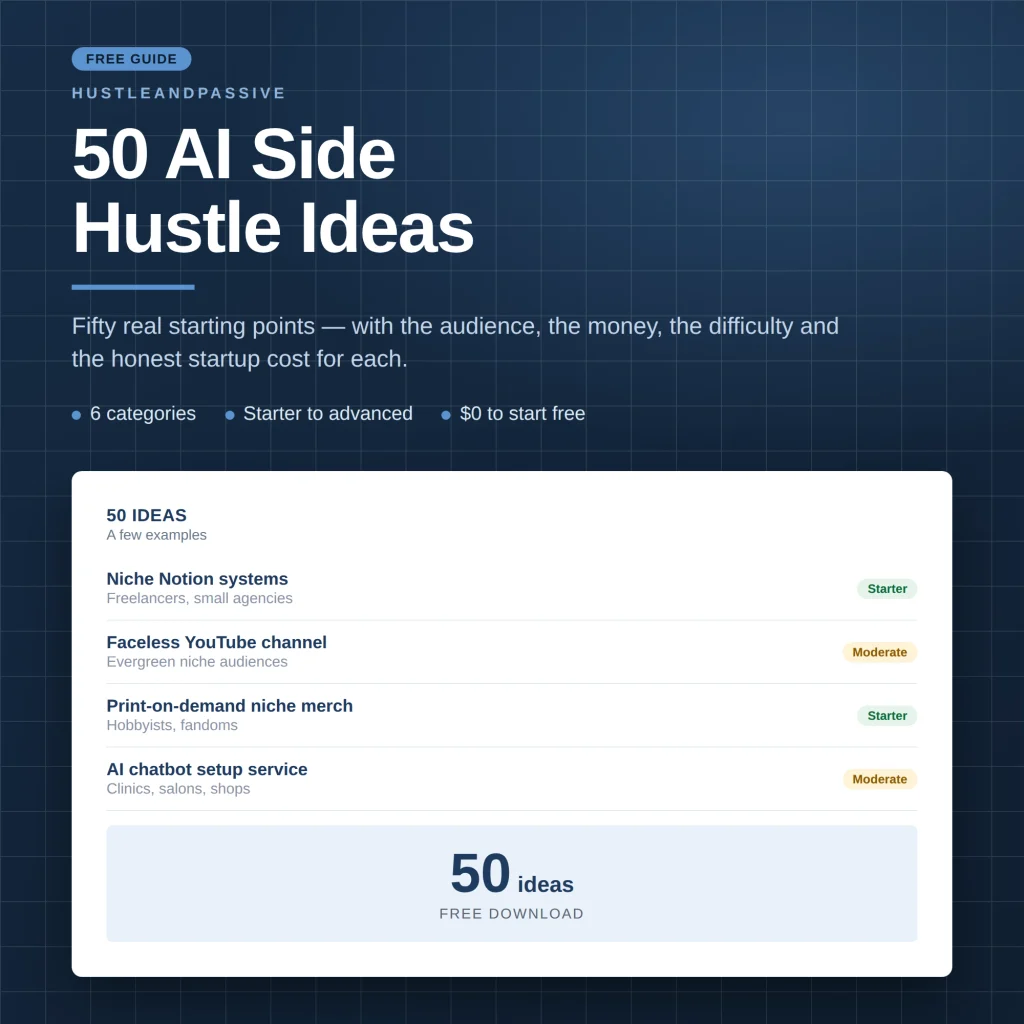
Free guide: 50 AI Side Hustle Ideas. Not sure freelance writing is your best option? Compare it with fifty other ideas, each with the audience, the money, the difficulty and the real startup cost.
What Is Freelance Writing? (And Why Beginners Overthink It)
Freelance writing is paid writing you do for clients as an independent contractor rather than an employee: blog posts, website copy, emails, product descriptions, help documents and more, usually billed per word, per piece or per hour. In plain terms, you get paid to write stuff for people who don’t employ you full-time. You deliver a blog post, an email sequence, a product page – you invoice, you move on. No office. No boss breathing down your neck. No pretending to care about quarterly team-building retreats.
Here’s the part beginners mess up: they think they need credentials. A degree. Previous bylines. A polished website. You don’t. What you actually need is the ability to write clear, useful sentences and the reliability to hit a deadline without ghosting your client.
The writers who stall out? They’re usually the ones trying to be everything to everyone. “I’m a freelance writer” is a terrible pitch because it means nothing. The writers who win early pick a lane – even a weirdly specific one and own it. The 10 job types below are those lanes. Pick one that matches what you already know (or what you’re willing to learn fast), and you’ll skip six months of aimless, demoralizing pitching.
For a broader perspective on freelancing, check out the U.S. Small Business Administration (SBA) guide to freelancing, which covers essential business basics, and this insightful Forbes article on thriving as a freelancer.
10 Freelance Writing Jobs for Beginners That Actually Pay
These are the freelance writing jobs for beginners that are easiest to land with no experience: the client cares about clear writing and meeting deadlines more than about your bylines. Pay ranges in this section are typical beginner asking rates, not guarantees; your niche and the quality of your samples move them a lot.
| Job | Easiest first clients | Why beginners get hired |
|---|---|---|
| Blog posts and SEO content | Small business and SaaS blogs | Predictable structure; a brief and keyword are usually provided |
| Website copy and product descriptions | Local businesses, Etsy and Shopify sellers | Short deliverables; one before-and-after sample sells it |
| Social media and email writing | Coaches, creators and founders | Short formats; results are visible fast |
| Technical and grant writing | Software companies and small nonprofits | Rigid formats you can learn; less competition |
| Resumes and ghostwriting | Job seekers and busy founders | Paid for your interviewing and editing, not your audience |
1. Blog Post Writing
The classic entry point, and for good reason. Businesses need blog content to rank on Google, and most would rather hire a freelancer than deal with a full-time hire. Beginner blog work usually covers “top of funnel” stuff how-to guides, listicles, explainers.
The money: $0.10–$0.25/word when you’re new. Bump to $0.25–$0.50/word once you’ve got 5+ solid samples.
Why it works: The structure is predictable. Research, outline, draft, submit. Most clients hand you a brief and a target keyword. You’re not inventing the wheel.
How to start: Find the blogs of SaaS companies, health brands, or finance sites. Look up their content manager on LinkedIn. Send a short pitch pointing out a gap in their current content. Platforms like Contently and ClearVoice also match writers with brands, though they can be competitive.
The blogging angle: Some writers skip client work entirely and start their own blog if that’s more appealing than chasing clients, how to start a niche blog walks through the full 7-step setup. A niche blog can earn through affiliate marketing, ads, and sponsored posts. If you go this route, you need hosting that doesn’t require a computer science degree. Get a WordPress blog live in under an hour with Hostinger it costs less than a sandwich a month. And if you monetize with affiliate links, ThirstyAffiliates keeps every link organized and every disclosure compliant – because nothing kills momentum like a broken affiliate link you didn’t know about.
Launch Your Website Today Without Breaking the Bank
Get fast, secure, and beginner-friendly hosting with Hostinger. Set up your website in minutes and start building your online business today.
2. SEO Content Writing
SEO writing is blog writing with intent. You’re not just writing you’re optimizing for a keyword so the post actually ranks on Google. It’s not about stuffing “best dog food 2026” into every paragraph. It’s about giving the searcher exactly what they typed in looking for.
The money: $0.15–$0.40/word for beginners. SEO writers usually earn more than general bloggers because their work directly impacts revenue.
Why it works: You can learn the basics in a weekend. Understand keyword placement, header structure, and internal linking, and you’re already ahead of most applicants.
The tool that changes everything: Before you pitch an SEO client, run their competitor’s blog through Keysearch’s content-gap tool. Find a content gap a keyword they should be ranking for but aren’t. Mention that specific gap in your pitch. It instantly separates you from the hundred other writers sending generic “I can write for you” emails. For learning the fundamentals, Moz’s Beginner’s Guide to SEO is still the best free resource out there.

Find Keywords That Actually Rank
Stop guessing what to write. KeySearch helps you discover low-competition keywords, analyze competitors, and create SEO content that drives long-term organic traffic.
3. Website Copywriting
Copywriting sells. Headlines, landing pages, “About” sections, service descriptions the goal is conversion, not education. It’s different from blogging because you’re not informing; you’re persuading.
The money: $50–$200 per page when you’re starting. Experienced copywriters charge $500+ per page without blinking.
Why it works: Small businesses and solopreneurs launch new pages constantly and hate writing them. You don’t need to be Don Draper on day one. You need to write clear, benefit-driven sentences that don’t sound like they were generated by a corporate chatbot.
Pro move: Pick a local business with a terrible homepage. Rewrite it as a spec piece (clearly labeled “spec work”). One strong before/after example is enough to land a paid project. Study Copyhackers to learn the mechanics of persuasion without getting sleazy.
4. Product Description Writing
E-commerce brands with hundreds of SKUs need short, punchy descriptions. The work is repetitive, which means they hand it off in bulk.
The money: $5–$25 per description, or $200–$500 per batch.
Why it works: Each description is 50–100 words. Low barrier to entry, and you get fast.
Where to find it: Etsy sellers (see 17 best products to sell on Etsy for the categories moving fastest right now), Amazon FBA businesses, and Shopify store owners post bulk description work on freelance boards all the time. If you know a product category well – beauty, electronics, outdoor gear – you can charge more for that expertise.

Sell Digital Products While You Sleep
Don’t let a clunky checkout process kill your sales. Shopify makes it incredibly easy to sell digital downloads, manage inventory, and get paid whether you are awake or asleep.
5. Social Media Content Writing
This isn’t “posting on Instagram.” It’s writing captions, LinkedIn posts, and Twitter/X threads for founders and brands who have the visuals handled but can’t write copy to save their lives.
The money: $200–$800/month per client for a set number of posts.
Why it works: The format is short. You can show results fast one viral thread or high-engagement carousel caption becomes a portfolio piece overnight.
The catch: You need to nail the brand’s voice. This job is less about your personality and more about mimicking theirs convincingly. Learn each platform’s quirks before you pitch.
6. Email Newsletter Writing
Newsletters are still having a moment in 2026. Brands, creators, and SaaS companies all need regular email content that gets opened and read. If you can write a subject line that doesn’t scream “spam folder” and a body that delivers actual value, you’re hireable.
The money: $100–$300 per email for beginners. Retainers are common.
Why it works: Email is conversational. It rewards clarity over cleverness. You don’t need to be poetic; you need to be useful.
Tool tip: If you plan to offer this, start your own email list first with Kit (ConvertKit). Running a newsletter for even 50 subscribers teaches you more about subject lines, open rates, and CTAs than any $500 course. Plus it doubles as a live portfolio piece.
7. Technical Writing
“Technical” just means “explaining how something works.” User guides, help center articles, software docs, API explainers. It’s not as intimidating as it sounds.
The money: $0.20–$0.50/word for entry-level topics.
Why it works: You don’t need to be a programmer. If you can learn software faster than the average person and explain it in plain English, you can write help docs. The best entry point? SaaS onboarding documentation. Pick a tool you already use Notion, Loom, Zapier and write sample help articles. Coursera and Udemy both offer technical writing certs if you want to signal credibility.
8. Grant Writing
Nonprofits and research organizations need grant proposals to secure funding. The format is rigid, which paradoxically makes it easier to learn.
The money: $500–$2,000 per proposal, or $40–$100/hour.
Why it works: It’s not creative writing. It’s persuasive writing inside a template. Once you learn the structure – NSF, NIH, or smaller private foundations you can repeat it.
Warning: Steeper learning curve than blogging. Start with small local nonprofits before tackling federal grants. Platforms like Idealist can connect you with organizations that need help.
9. Resume & Cover Letter Writing
Job seekers will pay to have their experience reframed by someone who understands how hiring managers actually read resumes. If you’ve ever helped a friend rewrite their resume and they got an interview, you already have proof this works.
The money: $100–$300 per resume; $50–$150 per cover letter.
Why it works: Short deliverables. You can knock one out in 2–3 hours.
How to start: Offer the service on LinkedIn or in career-focused Facebook groups. One happy client leads to referrals shockingly fast.
10. Ghostwriting
You write content that gets published under someone else’s name usually a founder, executive, or creator. LinkedIn posts, thought leadership articles, even books.
The money: $0.25–$1.00/word for beginner ghostwriting. Mid-level ghostwriters charge $1–$3/word.
Why it works: You don’t need your own audience. You need to be good at interviewing someone, capturing their voice, and turning their rambling thoughts into clean prose.
How to break in: Start with LinkedIn ghostwriting for a founder in a niche you understand. Lower stakes than a book, and it pays monthly retainers. Reedsy also connects ghostwriters with authors looking for collaboration.
Free: 50 AI Side Hustle Ideas – fifty starting points across six categories, each with the audience, the money, the difficulty and the honest startup cost.
The 10 Skills That Actually Matter (No Fluff)
You don’t need an MFA. You need a toolkit of practical skills clients pay for. Here’s what actually moves the needle in year one:
1. Grammar and clarity. Poor grammar kills credibility before you get a chance to prove your worth. Use Grammarly and Hemingway Editor as safety nets, but don’t rely on them entirely. Read good writing regularly it seeps into your own style subconsciously.
2. Research proficiency. Most of what you write will be about topics you don’t fully understand yet. Learn to find credible sources fast (Google Scholar, PubMed, official industry sites), take notes efficiently, and synthesize without plagiarizing. Evernote or Notion help organize the chaos.
3. SEO basics. Know how to place a keyword in a title, URL, first paragraph, and H2. Understand meta descriptions. You don’t need to be an expert you need to speak the language. Follow Search Engine Journal and Neil Patel’s blog to stay current.
4. Adaptability. One client wants punchy sentences. Another wants long, detailed explainers. You need to switch voices without losing quality. Study different style guides (APA, MLA, Chicago) and practice writing in different tones.
5. Niche selection. Generalists compete with everyone. Niche writers compete with almost no one. Pick an industry you already know – health, finance, SaaS, parenting, pets and own it. The same niche-finder logic in the best business ideas guide works just as well for picking a writing specialty as it does for picking a business.
6. Self-editing. Your first draft is never your final draft. Cut 20% of your words on every pass. Read your work out loud. Fix awkward phrasing before a client sees it.
7. Technical fluency. You don’t need to code, but you should be comfortable with WordPress or another CMS, basic HTML/CSS for formatting, and simple design tools like Canva for graphics.
8. Client communication. Ask clarifying questions before you start. Confirm deadlines. Send brief progress updates. Track every conversation and follow-up with HubSpot’s free CRM so leads don’t disappear into the void.
9. Business admin. You need invoicing, tax tracking, and a contract template. Don’t wait until you’ve made $5,000 to figure this out. FreshBooks or QuickBooks handle the money side. A basic contract template from a site like Bonsai covers your legal bases.
10. Continuous learning. The writers earning the most in years two and three treated year one like an apprenticeship. Take one focused course. Read better writers. Join a community. A writing group on Skool gives you accountability, feedback, and referrals that accelerate everything.
Join a Writing Community on Skool
Looking to improve your writing, connect with other writers, and stay motivated? Join this writing group on Skool to learn, share ideas, and grow your writing skills with a community of like-minded creators.
Your First 90 Days: A Dead-Simple Roadmap
Starting from zero? Here’s the exact sequence that gets you to a paid project fastest.
Step 1: Pick One Niche and One Job Type
Don’t offer all 10 jobs above. Pick one blog writing, copywriting, or email writing are the fastest to monetize – and one niche you actually understand. “I write email newsletters for fitness coaches” is infinitely stronger than “I do freelance writing.”
Use Google Trends or a keyword tool to confirm your niche has commercial demand. If businesses are already spending money on content in that space, you can capture some of it.
Step 2: Build 3 Samples and Get Online
You don’t need paid work to have a portfolio. Write three pieces that look like the work you want to get paid for. Host them on a simple writer website. You don’t need fancy a homepage, an “About” blurb, and a “Work” page with your samples is enough.
To get online fast, set up your site with Hostinger their WordPress setup takes under an hour and costs less than a coffee per month. A professional-looking site immediately separates you from writers who pitch from a Gmail address with no portfolio.
Step 3: Set Rates That Don’t Undersell You
Beginners freeze here. Use these benchmarks:
- Per word: $0.05–$0.25 when you’re brand new. $0.25–$0.50 once you have clips. (Some niches pay $1+/word, but that’s not a Day 1 target.)
- Per hour: $25–$50 for beginners. Track your time with Toggl or Harvest so you know if your per-word rate is actually sustainable.
- Per project: Flat rates work best for defined deliverables. A 1,000-word post that takes 4 hours = $100 minimum at $25/hour.
Raise your rates every three months. Seriously. Put it in your calendar.
Step 4: Pitch 10 People This Week
Not tomorrow. This week. Find 10 companies or creators in your niche already publishing content. Send each a short, personalized email. Here’s a template that actually gets replies:
Subject: Freelance Writer – [Specific Gap You Found]
Hi [Name],
I came across [Website] and noticed your recent post on [Topic]. Solid piece. I also noticed you don’t have anything on [Related Gap] – which gets [X] monthly searches and is exactly what your competitors are ranking for.
I’m a freelance writer specializing in [Niche]. Here are two samples: – [Link 1] – [Link 2]
Happy to send a draft on spec if you’re interested. No obligation.
[Your Name]
Expect most pitches to get no reply; that’s normal, not a sign you’re bad at this. Personalized pitches that point out a specific gap get far more replies than generic ones, and a single yes from your first batch is a good start if your samples are strong.
Step 5: Deliver, Then Ask for More
Your first client is worth more than the paycheck. Deliver early. Over-communicate. Then ask the magic question: “I’m looking to add one more client this month do you know anyone who needs similar work?” Referrals are the hidden engine of freelance income.
Beyond referrals, build a simple marketing rhythm:
- LinkedIn: Share your work. Comment on posts by potential clients.
- Email list: Collect emails from your website and send a monthly update. Kit (ConvertKit) makes this painless for beginners.
- CRM: Track every pitch and follow-up in HubSpot’s free CRM so you never lose a warm lead because you forgot to follow up.

Own Your Audience. Build Your List
Social media algorithms can change tomorrow. Your email list is yours forever. HubSpot gives you the tools to capture leads, automate sequences, and turn subscribers into buyers without needing a tech degree.
The Tools That Actually Matter
You don’t need a complicated tech stack. These are the ones that move the needle:
| Tool | What It’s For |
| Grammarly / Hemingway | Catching errors and improving readability |
| Google Docs | Drafting and real-time collaboration with clients |
| Scrivener | Organizing long-form projects like ebooks |
| Trello / Asana / Notion | Tracking deadlines without losing your mind |
| Canva | Simple graphics to accompany your writing |
| Keysearch | Keyword research for SEO writing pitches |
| HubSpot | Free CRM for tracking client leads |
| Toggl / Harvest | Time tracking so you know your real hourly rate |
For learning, Coursera, Udemy, and Skillshare offer affordable courses on writing, SEO, and digital marketing. On Writing by Stephen King and The Elements of Style by Strunk and White belong on every writer’s shelf. Full stop.
Realistic Income: What Beginner Freelance Writers Earn
Let’s be brutally honest.
For context, the U.S. Bureau of Labor Statistics puts the median pay for writers and authors at $76,910 a year ($36.98 an hour) in 2025, and 65% of them are self-employed. That figure covers experienced writers, so treat it as something to grow toward, not a starting rate. At the experienced end, the Editorial Freelancers Association’s 2026 rate chart lists ghostwritten blog posts at roughly 25–40¢ per word, or $75–$100 an hour.
The ranges below are typical of what beginners report, not a promise. Your results depend on your niche, how often you pitch and how quickly you raise your rates.
Month 1–2: $0–$500. You’re building samples, pitching into the void, and probably doing a couple small projects at a low rate to get testimonials.
Month 3–6: $500–$1,500/month. You’ve landed 1–2 regular clients. You’re getting faster, which means your effective hourly rate is climbing even if your per-project rate hasn’t changed.
Month 6–12: $1,500–$3,500/month. If you’ve been consistent, you now have 2–4 recurring clients and a referral pipeline. This is where many writers quit their day jobs but only if their expenses are covered and they have a safety net.
Year 2+: $3,500–$7,000+/month. Specialized writers (SEO, email, technical, ghostwriting) who own a niche command premium rates. Generalists plateau lower.
These numbers assume you’re pitching regularly and treating this like a business. If you’re dabbling on weekends, cut these numbers in half.
The Hard Parts Nobody Warns You About
1. The feast-or-famine cycle. It never fully goes away. The fix: diversify across 3-4 regular clients instead of relying on one big fish, and spend 20% of every week pitching new prospects even when you’re fully booked. Especially when you’re fully booked.
2. Taxes will wreck you if you’re not prepared. Freelance income is irregular. Set aside 25–30% of every payment for taxes immediately. Not next month. Immediately. QuickBooks or FreshBooks tracks everything so you’re not crying in April.
3. Rejection is the cost of entry. Many beginners stop after a handful of pitches. The ones who land clients keep sending them, week after week. Reframe rejection as market feedback. When possible, ask “what would have made this a yes?” and use it.
4. Boundaries blur when your home is your office. Create a dedicated workspace, set work hours, and communicate them to clients. The Pomodoro Technique (25 minutes on, 5 minutes off) prevents the burnout spiral.
5. Writing alone is isolating. Set achievable weekly goals, celebrate small wins, and connect with other freelancers. A focused community on Skool replaces the watercooler and keeps you sane on slow days.
Where to Actually Find Clients
This guide covers what to write and how to start. The next piece you need is the where the platforms and job boards that actually land clients. Read 11 Best Freelance Writing Websites in 2026 next for a full breakdown of which platforms are worth your time and which are a race to the bottom.
Not sure which site to start on? Our comparison of the best freelance writing sites for beginners shows which ones are free to join and what each one takes from your pay.
If you’re also considering remote work beyond writing, becoming a virtual assistant with no experience draws on many of the same pitching skills and can run parallel to your writing business.
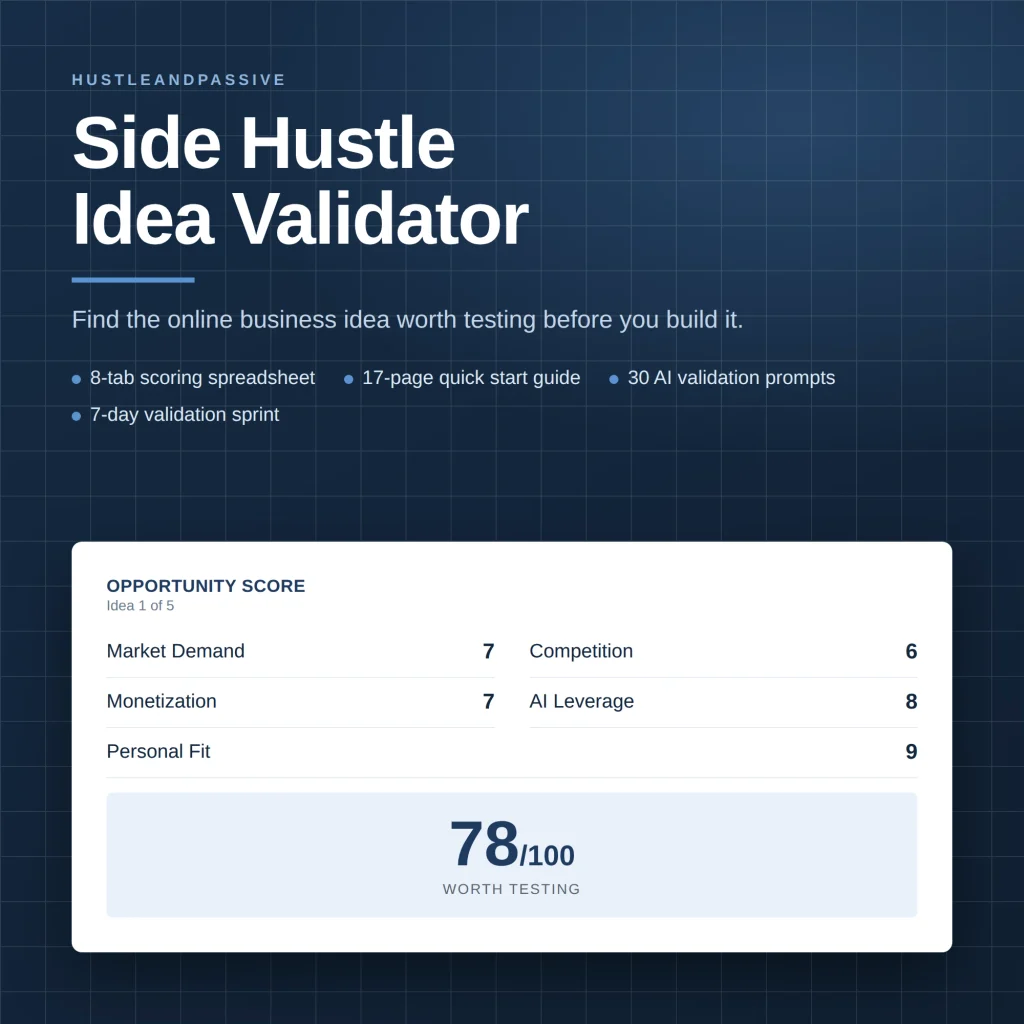
The Side Hustle Idea Validator scores your ideas – freelance writing or otherwise on eight weighted criteria and turns three months of hoping into one week of testing.
The Bottom Line
Freelance writing isn’t a lottery ticket. It’s a skill-based service business that rewards consistency over raw talent and specificity over breadth. Your first $500 comes from picking one job type, writing three samples, and sending emails until someone says yes.
The 10 jobs above are all valid starting points. The roadmap works if you execute it this week, not “someday.” The skills section isn’t aspirational it’s a checklist. Work through it over your first 90 days.
Start with blog writing or SEO content if you want the fastest path to cash. Start with email or copywriting if you want higher per-project pay. Start with technical writing if you can explain complex topics simply.
Whatever you choose, the only wrong move is waiting until you feel “ready.” You’re already a better writer than you think. The market will tell you the rest.
If you want to go deeper, my guide to finding virtual assistant clients is a good next read.
Frequently Asked Questions
How do I start a freelance writing career with no experience?
Pick one niche and one type of writing, write three samples that look like the paid work you want, put them online, and pitch 10 businesses a week. Clients hire from samples, not degrees, so you can start before anyone has paid you.
How much do beginner freelance writers make?
Most beginners charge around $0.05–$0.25 per word or $25–$50 an hour, and income in the first months is often small while you build samples and clients. For comparison, the BLS reports a $76,910 median for all writers and authors in 2025, which reflects experienced writers.
Do I need a degree to become a freelance writer?
No. Clients care about your samples, your reliability and whether you understand their audience. A focused portfolio in one niche does more for you than a degree.
How long does it take to get your first freelance writing client?
It varies, but many beginners who pitch consistently land a first paid project within their first 90 days. Sending 10 targeted pitches a week and following up is the most reliable way to shorten the wait.
What is the best freelance writing site for beginners?
Fiverr and Textbroker are the easiest starts because work comes to you and both are free to join. Upwork and the ProBlogger job board are good next steps once you have samples. See our u003ca href=u0022https://hustleandpassive.com/freelance-writing-websites/u0022u003efull comparison of freelance writing websitesu003c/au003e.
What is freelance writing?
Freelance writing is paid writing you do for clients as an independent contractor rather than an employee, such as blog posts, website copy, emails and product descriptions. You usually bill per word, per piece or per hour, and you choose your clients and workload.
Where can beginners find freelance writing jobs?
Start with businesses in a niche you know, pitched directly with a specific content idea, plus people in your own network. Freelance platforms like Upwork and Fiverr and job boards add volume. Our freelance writing websites guide compares which sites suit beginners.
Related guides
- 11 Best Websites for Freelance Writing in 2026 (Compared)
- Get Paid to Write: 12 Real Ways and Sites That Pay Writers in 2026

Writes and tests every guide on hustle&passive. Everything here is something we have actually run — including the parts that did not work.