Disclosure: This post contains affiliate links. If you click through and sign up, I may earn a commission at no extra cost to you.
The 11 best websites for freelance writing in 2026
Let’s be real: finding your first high-paying writing gig in 2026 is exhausting. You spend hours pitching into the void, only to get ghosted or outbid by someone willing to work for pennies. And now, you’re competing against AI-generated content that drives rates even lower.
If you want to actually make a living, you need to stop wasting time on the wrong platforms. You need to know exactly where the serious clients with real budgets are hanging out.
In this guide, I’m breaking down the 11 best freelance writing websites in 2026. I’ve ranked them by actual pay potential, how hard they are to get into, and whether they will actually protect your money. Whether you have zero clips or a decade of experience, this list will help you find your spot.
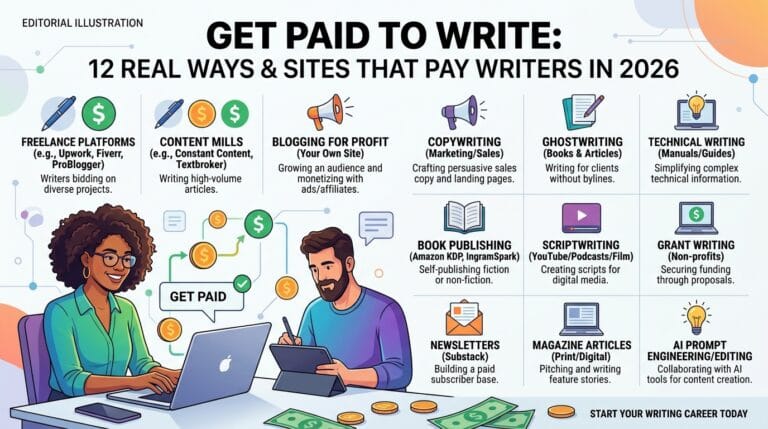
Not sure freelancing is your only route? Our guide on how to get paid to write also covers publications that pay per article and reader-based platforms like Medium and Substack.
Quick Summary: Top 3 Freelance Writing Websites
If you are short on time, here are the three platforms that consistently pay the best and treat writers like professionals:
| Rank | Platform | Best For | Avg. Earnings | Fee Structure |
| 1 | Upwork | Long-term clients & payment protection | $25–$150+/hr | 0–15% per contract |
| 2 | ProBlogger | Direct blogging gigs with no bidding | $50–$150+/article | Free for writers |
| 3 | Contently | Premium enterprise brands | $300–$1,500+/piece | No fee (Vetted only) |
If writing isn’t the right fit, many of these platforms also hire for admin work; here’s how to become a virtual assistant with no experience.
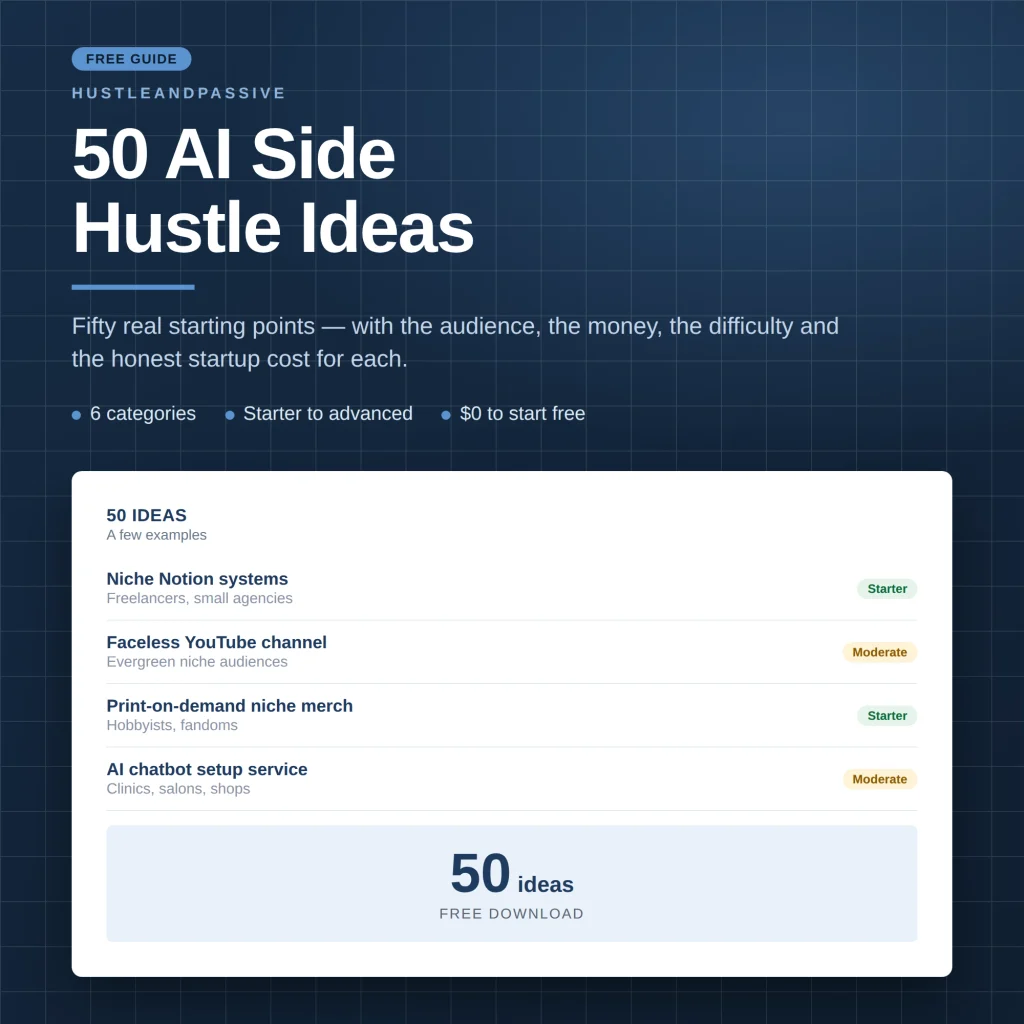
Free guide: 50 AI Side Hustle Ideas. Before you compare platforms, make sure freelance writing is the right side hustle for you. Fifty ideas, each with who it is for, how it makes money, how hard it is, and what it really costs to start.
How We Chose These Freelance Writing Websites
To separate the legitimate opportunities from the outdated content mills, I evaluated dozens of platforms against four strict criteria:
- Earning Potential: Can you actually charge market rates, or does the platform force you into a race to the bottom?
- Barrier to Entry: Do you need a massive portfolio to get in, or can a beginner start today?
- Payment Protection: Does the platform hold the money in escrow, or are you trusting the client to pay your invoice?
- Job Volume: Are there actually enough good jobs posted to make logging in worth your time?
Want to find freelance writing keywords clients are actually paying for?
Before choosing your niche, use KeySearch to discover low-competition keywords, analyze competitors, and identify content opportunities that businesses are actively investing in.

Find Keywords That Actually Rank
Stop guessing what to write. KeySearch helps you discover low-competition keywords, analyze competitors, and create SEO content that drives long-term organic traffic.
1. Upwork – Best Overall for Long-Term Clients
What it is: Upwork is the biggest freelance marketplace in the world. It connects businesses with independent writers across almost every niche.
Why we love it: Upwork is a grind at first, but it’s the best place to build actual, long-term client relationships. Once you get a few 5-star reviews under your belt, the dynamic flips. Clients start inviting you to private jobs, which means you can skip the endless bidding wars. Plus, their new matching algorithm actually does a decent job of putting your profile in front of people looking for your specific niche.
Key features:
- Escrow Protection: Clients have to fund the milestone before you type a single word.
- Profile Portfolio: You can pin your best case studies right at the top of your profile.
- Billing Flexibility: Choose between hourly tracking or fixed-price milestones.
Pricing: Free to join, but you buy “Connects” to send proposals. Upwork’s freelancer service fee now ranges from 0% to 15% per contract, and the rate is locked in when the contract starts.
Product Pros
Product Cons
Best for: Writers who want to build a sustainable business with recurring clients.
2. ProBlogger Job Board – Best for Direct Blogging Gigs
What it is: ProBlogger is a highly respected industry blog with a dedicated job board specifically for freelance writers and content marketers.
Why we love it: The clients on ProBlogger actually know what they want. They aren’t looking for a virtual assistant who also happens to write; they want dedicated writers. The job posts are detailed, the budgets are realistic, and the clients understand that good writing costs money.
Key features:
- Highly targeted audience of employers actively seeking writers.
- No bidding wars. You just email the client or apply through their site.
- Clear categories for copywriting, blogging, and technical writing.
Pricing: Free for writers. Employers pay to post jobs, which naturally filters out the cheap clients.
Product Pros
Product Cons
Best for: Intermediate writers who have a basic portfolio and want to bypass platform fees.
Related reading: How to Start a Freelance Writing Career in 2026: A Step-by-Step Guide to Success
3. Contently – Best for Premium Brand Content
What it is: Contently is a premium talent network that connects elite writers with Fortune 500 companies and major digital publications.
Why we love it: If you already have a solid portfolio of published work, Contently is where the big budgets live. Their talent scouts actually look at your clips and invite you to pitch for massive brands like Marriott and Microsoft. You don’t have to beg for work; they bring it to you.
Key features:
- Free portfolio builder that looks incredibly professional.
- Dedicated talent managers who pitch your work to brands on your behalf.
- Access to enterprise-level content marketing budgets.
Pricing: Free for writers. Contently marks up the client side, but you get 100% of your agreed rate.
Product Pros
Product Cons
Best for: Experienced writers and journalists with a polished, published portfolio.
4. Fiverr – Best for Beginners Building a Portfolio
What it is: Fiverr flips the traditional freelance model. Instead of pitching clients, you create packaged “Gigs” and clients buy them directly from your storefront.
Why we love it: Fiverr removes the stress of writing custom proposals. You set up your Gigs, optimize your thumbnails, and wait for the orders. It’s a great sandbox for beginners. You learn how to package your services, deal with client revisions, and hit deadlines without the stress of pitching.
Key features:
- Seller-defined packages (Basic, Standard, Premium) to easily upsell clients.
- Fiverr Pro tier for vetted professionals to command higher rates.
- Built-in messaging and order tracking.
Pricing: Fiverr takes a 20% commission on all earnings.
Product Pros
Product Cons
Best for: Beginners who want to quickly build a portfolio and gather reviews.
5. FlexJobs – Best for Vetted, Scam-Free Remote Writing Jobs
What it is: FlexJobs is a subscription-based job board that manually screens every single listing to ensure it’s legitimate and remote-friendly.
Why we love it: Let’s be honest: the remote job boards are full of scams, MLMs, and fake “data entry” gigs. FlexJobs charges a small fee, but their team manually vets every single listing. It saves you hours of sifting through garbage to find the one legitimate remote writing job.
Key features:
- 100% scam-free guarantee.
- Advanced search filters for “100% remote” and “freelance” roles.
- Access to resume reviews and skill tests.
Pricing: Requires a subscription: $23.95 every 4 weeks, or $9.95/month on the 3-month plan and $5.95/month on the annual plan. A 14-day trial costs $2.95.
Product Pros
Product Cons
Best for: Writers who want a steady stream of vetted remote opportunities and don’t mind paying for convenience.
6. Textbroker – Best for Consistent, Entry-Level Volume
What it is: Textbroker is a content platform that assigns you a “star rating” (2 to 5 stars) based on a writing sample. Your rating dictates your pay rate and what jobs you can access.
Why we love it: Textbroker isn’t going to pay your mortgage, but it has one massive advantage: zero pitching. You can log in on a random Tuesday, grab three 500-word articles from the queue, and just start writing. It’s perfect for building discipline when you have no clips.
Key features:
- “OpenOrder” marketplace for quick, first-come-first-serve assignments.
- “TeamOrder” option to join specific client teams for steady work.
- Payouts processed twice a week ($10 minimum).
Pricing: Free to join. OpenOrders pay 1.1 cents per word at 3 stars, 1.6 cents at 4 stars and 5.5 cents at 5 stars. DirectOrders, where a client picks you, start at 2.2 cents per word.
Product Pros
Product Cons
Best for: Absolute beginners who need to build discipline and create their first 10 writing samples.
7. ClearVoice – Best for Experienced Content Marketers
What it is: ClearVoice is a premium content platform that connects brands with vetted freelance writers and creators.
Why we love it: ClearVoice cares about content strategy, not just churning out 1,000 words. You’re often brought in to help plan content calendars rather than just blindly executing briefs. It makes the work actually interesting.
Key features:
- Robust portfolio builder with performance analytics.
- Direct matching with brand campaigns based on your niche.
- Focus on long-form, high-value content.
Pricing: Free for writers. ClearVoice handles client billing and pays you your agreed rate.
Product Pros
Product Cons
Best for: Mid-to-senior level writers and content strategists looking for premium brand partnerships.
8. Freelancer.com – Best for Diverse Writing Projects
What it is: Freelancer.com is a massive global crowdsourcing marketplace where clients post projects and freelancers bid on them.
Why we love it: The volume of jobs on Freelancer.com is massive, though you have to dig through a lot of low-budget posts to find the good ones. If you write in a boring but lucrative niche like grant writing or technical manuals, you can find hidden gems here that other platforms ignore.
Key features:
- Contest mode where you can submit writing samples and only get paid if you win.
- Milestone payment system for large projects.
- Wide variety of project types beyond standard blog posts.
Pricing: Free to join with a limited number of bids. Freelancer.com takes 10% of each fixed-price project (or $5, whichever is greater) and 10% of hourly work. Paid memberships give you more bids.
Product Pros
Product Cons
Best for: Writers with a highly specialized niche who can stand out in a crowded marketplace.
9. Medium Partner Program – Best for Building an Audience
What it is: Medium is a popular publishing platform. Its Partner Program pays writers based on the engagement and reading time their stories get from paying Medium members.
Why we love it: Medium lets you stop writing for clients and start building your own audience. If you write a piece that catches on, it can pay you passive income for months. You own the byline, and there are no client revisions to deal with.
Key features:
- Built-in audience of millions of readers.
- Clean, distraction-free writing editor.
- Ability to cross-post content from your personal blog.
Pricing: Free to write. Medium takes a cut of the membership pool to pay writers.
Product Pros
Product Cons
Best for: Writers who want to build a personal brand and generate semi-passive income.
10. nDash – Best for B2B and SaaS Writers
What it is: nDash is a unique platform that allows writers to pitch their own original content ideas directly to brands, rather than just responding to job postings.
Why we love it: nDash lets you pitch your own ideas directly to brands. If you know a SaaS company needs an article on supply chain AI, you can pitch that exact concept. It stops you from looking like a commodity and makes you look like a consultant.
Key features:
- “Pitch” feature to submit original ideas directly to brands.
- Transparent pricing where you set your own rates.
- Heavy focus on B2B, tech, and SaaS industries.
Pricing: Free for writers to create a profile, but full approval is selective. nDash doesn’t publish its writer fee on its site, so check the terms before you accept your first assignment.
Product Pros
Product Cons
Best for: Confident B2B and SaaS writers who have strong content ideas.
11. Guru – Best for Flexible Contract Negotiations
What it is: Guru is a long-standing freelance platform that offers a highly flexible environment for negotiating terms and payment schedules.
Why we love it: Guru’s “WorkRooms” keep everything for a specific project in one place: files, messages, and payments. It’s just a lot less chaotic than trying to manage a complex project on Upwork or Fiverr.
Key features:
- Customizable WorkRooms for each individual project.
- Multiple payment terms (hourly, fixed-price, recurring).
- “Guru Preferred” program for top-rated freelancers.
Pricing: The free Basic membership has a 9% job fee. Paid memberships lower it, down to 5% on the top Executive plan.
Product Pros
Product Cons
Best for: Freelancers who value organized project management and flexible contracts.
Free: 50 AI Side Hustle Ideas – fifty starting points across six categories, each with the audience, the money, the difficulty and the honest startup cost.
Best Freelance Writing Sites for Beginners (Free to Join)
If you have no clients and no published samples yet, start with a site that brings the work to you and costs nothing to join. These five, all covered above, are the most beginner-friendly:
| Site | Free to join? | What it costs you | Why it works for beginners |
|---|---|---|---|
| Fiverr | Yes | 20% of each order | Buyers find your gig, so you never write a proposal |
| Textbroker | Yes | No fee; OpenOrders pay 1.1¢ (3 stars) to 5.5¢ (5 stars) per word | A steady queue of short orders to practice on and turn into samples |
| Upwork | Yes, but you buy Connects to send proposals | 0–15% per contract | Payment protection, and small first jobs can turn into long-term clients |
| ProBlogger Job Board | Yes | No fee | Clients pay to post, so listings are real blogging jobs, not bidding wars |
| Medium Partner Program | Yes, in eligible countries | No fee | Publish your own articles as a public portfolio and earn from member reading time |
A simple order that works: take a handful of small orders on Fiverr or Textbroker, publish your two best pieces on Medium as public samples, then use those samples to apply for ProBlogger listings and Upwork jobs. Our guide on how to start a freelance writing career walks through each step.
Skip FlexJobs until you have samples. Its subscription ($23.95 every 4 weeks, less on longer plans) is hard to justify before you can win the jobs it lists.
Comparison: Which Freelance Writing Platform Is Right for You?
| Platform | Best For | Barrier to Entry | Payment Protection | Avg. Fee |
| Upwork | Long-term clients | Medium | High (Escrow) | 0–15% |
| ProBlogger | Direct blogging gigs | Low-Medium | Low (Direct invoice) | 0% |
| Contently | Premium brand content | High | High | 0% (to writer) |
| Fiverr | Beginners / Portfolios | Low | High | 20% |
| FlexJobs | Vetted, scam-free jobs | Low (requires sub) | Medium | Subscription |
| Textbroker | Entry-level volume | Very Low | High | Built into rate |
Which Freelance Writing Website Is Right for You?
The best platform depends on your current experience and goals.
Choose Upwork if you:
- Want a large volume of available jobs
- Are willing to write proposals
- Plan to build long-term client relationships
Want more options beyond writing? Browse these remote side jobs you can start from home.
Choose Fiverr if you:
- Prefer clients to contact you
- Enjoy marketing your services
- Want scalable, productized writing offers
Choose ProBlogger if you:
- Already have writing samples
- Want premium blog writing clients
- Prefer applying directly without bidding
Choose LinkedIn Jobs if you:
- Want recurring contracts
- Enjoy networking
- Are building a professional personal brand
Choose WriterAccess or ClearVoice if you:
- Have experience in a specific niche
- Want higher-paying assignments
- Prefer working with established businesses
Pro Tip: Mastering your schedule is just as important as choosing the right platform. Check out our guide on Mastering Time Management for Freelance Writers in 2026 to maximize your billable hours.
Writing Sites That Pay Daily for Beginners: What’s Realistic
Short answer: no major freelance writing website pays beginners daily. Every platform below holds your money for a set period after the work is approved, to cover refunds and disputes. What you can control is choosing sites with shorter holds and asking direct clients to pay on delivery.
| Platform | When your money becomes available | Minimum payout |
|---|---|---|
| Textbroker | Payouts processed twice a week | $10 |
| Upwork (hourly contracts) | About 10 days after the billing week ends | None stated |
| Upwork (bonuses and manual payments) | 5 calendar days after processing | None stated |
| Fiverr | 14 days after the order is marked complete | None stated |
| Medium Partner Program | Monthly, initiated by the 10th for the previous month | $10 |
| Direct clients you invoice | On your terms, such as payment on delivery | You decide |
Sources: Textbroker’s author payment conditions, Upwork’s help center, Fiverr’s terms of service and Medium’s help center, checked September 2026. Withdrawal fees and bank transfer times come on top.
For beginners who need money fast, Textbroker is the quickest of these: you pick an open order, write it, and once it’s accepted your balance can go out in the next twice-weekly payout. The trade-off is low pay. Textbroker lists 1.1 cents per word for 3-star authors and 1.6 cents for 4-star authors, so a 500-word article pays $5.50 to $8.
The faster route over time is direct clients. When you invoice a business yourself, you can ask for payment on delivery or 50% upfront, and a bank transfer or PayPal payment arrives in days rather than weeks. That’s why the beginner sites above work best as a way to build your portfolio, not as a payday.
How to Land Your First Freelance Writing Client Faster
Signing up for a platform is only the first step. To stand out from other applicants:
- Choose a profitable niche instead of marketing yourself as a general writer.
- Create three to five high-quality writing samples, even if they’re self-published.
- Personalize every proposal by referencing the client’s business.
- Highlight measurable results whenever possible, such as improved traffic or engagement.
- Respond quickly to new job postings—many clients hire within the first 24 hours.
A simple portfolio website can also boost your credibility. If you don’t have one yet, consider using Hostinger to launch a professional site in a few hours.
Launch Your Website Today—Without Breaking the Bank
Get fast, secure, and beginner-friendly hosting with Hostinger. Set up your website in minutes and start building your online business today.
To attract inbound clients, publish helpful content on LinkedIn and build an email list with ConvertKit so you can stay connected with prospects and past clients.
Common Mistakes Beginners Make on Freelance Writing Platforms
1. Underpricing Your Services
Charging $15 for a 1,000-word article might get you your first job, but it attracts the worst clients and leads to rapid burnout. According to the U.S. Bureau of Labor Statistics, the median pay for writers is significantly higher than content-mill rates. Start at a sustainable rate and raise it as you gather testimonials.
2. Ignoring Client Guidelines
Clients on these platforms use detailed briefs. Failing to follow basic instructions (like word count or header formatting) is the fastest way to get a 1-star review. Always read the brief twice before submitting.
3. Poor Communication
Freelancing is a relationship business. If you are going to miss a deadline, tell the client before the deadline, not after. Professionalism will get you rehired faster than raw writing talent.
Manage Your Affiliate Links Like a Pro
As your freelance writing business grows, you may start recommending tools and earning affiliate commissions through your blog. Instead of managing dozens of long affiliate URLs manually, ThirstyAffiliates lets you organize, cloak, categorize, and track all your affiliate links directly from your WordPress dashboard.
Stop digging through old posts every time an affiliate URL changes. With ThirstyAffiliates, you can manage all your affiliate links in one place, create branded links, and update them across your entire website in minutes.

Whether you’re promoting writing tools, hosting providers, or SEO software, it helps keep your links clean, professional, and easy to update.
Why writers love ThirstyAffiliates:
- Cloak long affiliate links
- Organize links by category
- Update destination URLs in one place
- Track clicks and improve link management
- Save time as your affiliate income grows
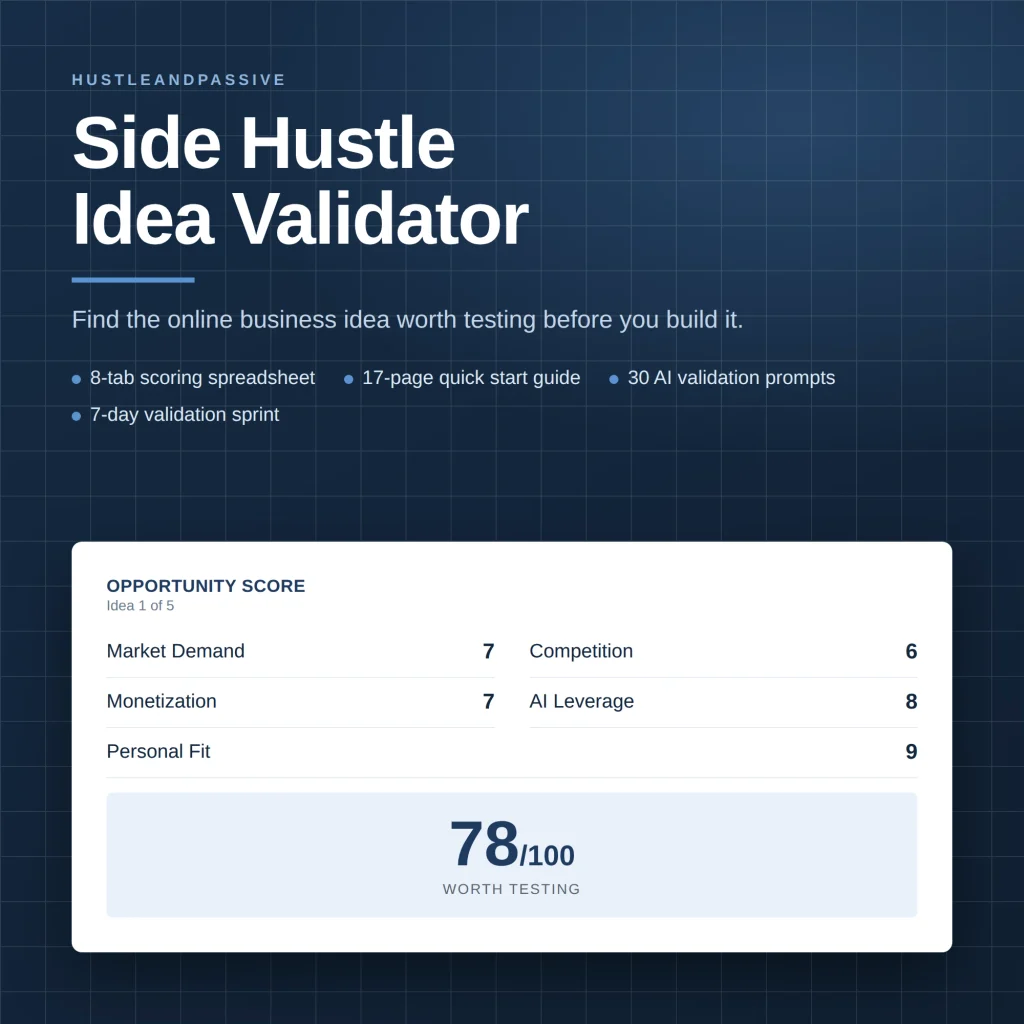
The Side Hustle Idea Validator scores up to five income ideas – freelance writing included on the same eight criteria, so you’re comparing options with real numbers instead of a gut feeling.
Conclusion: Our Top Pick
If you are serious about building a long-term freelance writing career, Upwork remains the best overall platform in 2026. Its combination of escrow payment protection, massive job volume, and the ability to build recurring client relationships makes it unmatched for sustainable growth.
However, if you already have a strong portfolio and want to skip the bidding wars, applying to Contently or pitching original ideas on nDash will yield the highest per-project returns.
Your Next Step: Pick one platform from this list, optimize your profile today, and submit your first three proposals this week.
Ready to build a profitable freelance writing career?
Start by creating a strong portfolio, joining two or three platforms from this list, and investing in tools that help you work smarter. KeySearch can help you uncover profitable writing niches, while ThirstyAffiliates makes managing affiliate links effortless as you monetize your content.
👉 Get Started with KeySearch
👉 Learn More About ThirstyAffiliates
Further Reading:
- 10 Exciting Freelance Writing Jobs for Beginners to Kickstart Your Thriving Career
- Top 10 Best Freelance Writing Jobs in 2026: A Comprehensive Guide
If you want to go deeper, my guide to virtual assistant tools is a good next read.
Frequently Asked Questions
What is the best freelance writing website for beginners in 2026?
Fiverr and Textbroker are the best for beginners. They have low barriers to entry, consistent work volume, and clear guidelines. This allows new writers to build confidence and develop a portfolio before moving to premium platforms.
Which freelance writing sites are free to join?
Fiverr, Textbroker, Upwork, Freelancer.com, Guru, the ProBlogger job board and Medium are all free to join. Most take a cut of what you earn instead: Fiverr keeps 20%, Upwork 0–15% per contract, Freelancer.com 10% (minimum $5) and Guru 9% on its free plan. FlexJobs is the main exception, because it charges a subscription.
Which freelance writing site pays the most?
Premium networks like Contently usually pay the most per piece, because their clients are large brands with real content budgets. On open marketplaces like Upwork you set your own rate, so your pay depends on your niche, samples and reviews far more than on the platform itself.
How much can you realistically make on freelance writing websites?
Earnings vary wildly. Beginners typically earn $10 to $30 per article on entry-level platforms. Intermediate writers on Upwork or ProBlogger can make $40 to $100+ per hour. Expert writers on Contently regularly command $300 to $1,500+ per piece.
Are freelance writing websites still worth it in 2026?
Yes, if you use them strategically. While platform fees exist, they provide essential payment protection and client discovery that are difficult to replicate when cold-pitching, especially when you are just starting out.
Do I need a college degree to get hired on these platforms?
No. Most clients care far more about your portfolio, writing samples, and ability to meet deadlines than your educational background. A strong, niche-specific portfolio is your best credential.

Writes and tests every guide on hustle&passive. Everything here is something we have actually run — including the parts that did not work.