This post may contain affiliate links. If you purchase through these links, we may earn a small commission at no extra cost to you. We only recommend tools and products we genuinely believe in. [Learn more about our disclosure policy.]
A beginner’s ethical guide to affiliate marketing: how to earn trust before a click, choose products responsibly, and disclose clearly
You’ve seen the posts. Lamborghinis. Fake income screenshots. Countdown timers screaming “ONLY 3 SPOTS LEFT.”
And your gut said, “I could never do that.”
Good. Keep that feeling.
Most people assume affiliate marketing means convincing strangers to buy junk. Squeeze the click, collect the commission, move on. That’s what the loudest voices online would have you believe.
But the version I practice looks more like texting a friend: “Hey, I tried this thing. It fixed my problem. Link’s here if you want it.”
No pressure. No fake urgency. Just a recommendation with a URL attached.
And I’ll be honest with you. This approach doesn’t just feel less gross. It outperforms the aggressive stuff over time. People buy from people they trust. That’s not some marketing framework. That’s just how humans operate.
This guide covers three things. How to build trust before anyone clicks your link. How to pick products you won’t feel weird promoting six months from now. And how to handle FTC disclosures without writing like a corporate attorney.
Let’s go.
Ethics isn’t a handicap. It’s the whole strategy.
It’s tempting to look at aggressive, high-commission affiliate sites and assume they’re winning. Some are, for a while. But sites built on hype and shady products tend not to last: Google algorithm updates, FTC complaints, and audience backlash have a way of catching up with that model over time.
The problem with aggressive affiliate marketing is that trust only breaks once. You recommend garbage, someone buys it, and you’ve lost that reader permanently. They don’t come back. They don’t forgive. They close the tab and mentally file you under “spam.”
Now flip it. Someone recommends a tool. You try it. It solves your problem. Next time that person shares a link, you don’t hesitate. You click. You might even buy something you don’t strictly need because their judgment has earned that kind of credit with you.
One honest recommendation compounds for years. One sleazy one costs you a reader forever.
I go deeper on this in our guide on ethical affiliate marketing and how to recommend products without being spammy. Worth a read if you want the full framework.
Earn trust before the click, not after
Most affiliate content starts selling in the first paragraph. The reader hasn’t finished the intro and there’s already a “BUY NOW” button pulsing at them.
Think about how that feels in real life. You walk into a coffee shop and the barista goes, “You NEED our $14 oat milk latte, it’s LIFE-CHANGING, 40% off but only for the next ten minutes!”
You leave. Obviously you leave.
What should happen instead? The barista makes you a solid coffee. You enjoy it. Maybe on your way out they mention the loyalty card. You sign up because you already trust the product.
Your content needs the same sequence. Give the value first. Make the recommendation second.
In practice, that looks like this:
- Solve the reader’s problem completely, even if they never buy anything.
- Mention the product as one option, not the only option.
- Talk about your actual experience, including the parts that annoyed you.
- Let them walk away. No timer. No scarcity. No guilt.
Say you’re writing about email marketing platforms. Don’t review one tool and crown it the winner. Compare three or four. Give real pros and cons. Then say which one you use and why.
The reader walks away informed whether they click your link or not. If your content is useless without the affiliate click, you’ve built a sales page, not a blog post.
The friend test
Before publishing any recommendation, I ask myself one question: “Would I say this exact sentence to a friend at dinner?”
If I wouldn’t look someone in the eye and say “This tool will 10X your income,” I don’t write it. Catches a lot of nonsense.
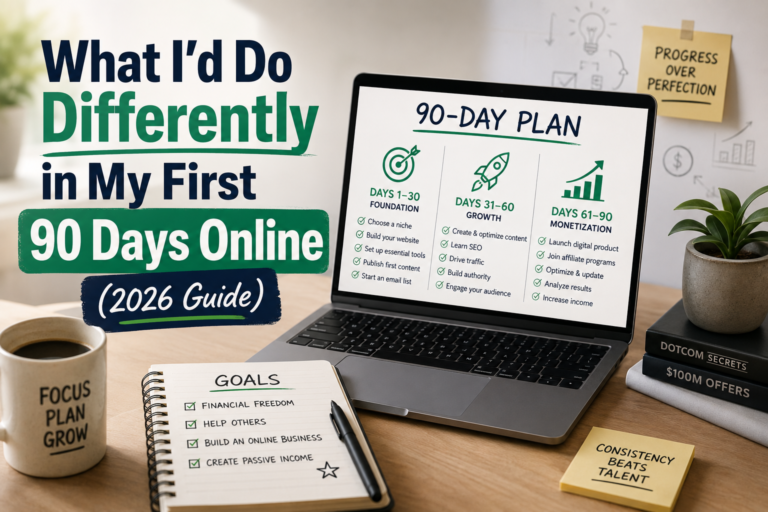
Give yourself 90 days before monetizing hard
If you’re brand new, I’d push back on the urge to slap links everywhere from day one. Your first few months should prove you’re useful, not profitable.
I wrote a full breakdown of what to focus on (and what to ignore) in your first 90 days online. The short version: build content, build relationships, build a reputation for being helpful. The commissions come later, and they come bigger when you’ve earned them.
Pick products you won’t hate yourself for promoting
The most common beginner mistake I see: signing up for whatever program pays the highest commission.
They spot a course offering 75% recurring revenue and think they’ve struck gold. Then they promote something they’ve never opened, never used, never gotten value from. And readers can tell. There’s a hollowness to a recommendation that comes from a sales page instead of experience.
My rule is strict: don’t promote what you haven’t used. And I don’t mean “watched a 4-minute demo video.” I mean used, in your actual workflow, for more than a week.
Before you link to anything, you should be able to answer three questions without hesitating:
- What specific problem did this fix for me?
- What’s one thing I genuinely don’t like about it?
- Who should NOT buy this?
That third question trips people up. But admitting a product isn’t for everyone is exactly what makes your recommendation believable. Nobody trusts a reviewer who loves everything.
A vetting checklist I actually use
| Question | Why it matters |
| Have I used this 30+ days? | First impressions lie. Give it time. |
| Can I name 3 concrete results? | “It’s great” means nothing. Specifics build trust. |
| Do I know who it’s NOT for? | Honest limitations equal credibility. |
| Is their support team responsive? | You’re putting your name next to their service. |
| Would I use this if I earned $0? | Separates belief from commission bias. |
If a product fails more than one of those, I skip it. There’s always another product. My reputation doesn’t regenerate as easily.
Finding products that fit
If you’re starting with Amazon’s affiliate program (most beginners do, and that’s fine), I put together 10 proven strategies for success with Amazon affiliate marketing programs. The core principle: match the product to the reader’s actual problem. Not the other way around.
Disclosures: do them like a person, not a law firm
Everyone dreads this part. The FTC disclosure.
You’ve seen the bad versions. Tiny gray text stuffed in the footer. “This publication may contain affiliate links through which the publisher may receive monetary compensation from third-party entities.” Nobody reads that. Nobody trusts a site that talks like a terms-of-service agreement.
I used to think of disclosure as a legal chore. Then I realized it’s actually a trust signal. When you tell a reader upfront, “Hey, I earn a commission if you buy through this link,” you’re saying, “I respect you enough to be transparent.”
That changes the whole dynamic between you and the reader.
Three rules I follow
Put it where eyes actually go. Above the first paragraph. Before the first link. Not in the footer. Not behind a “read more” jump. If a reader has to scroll past three sections to find your disclosure, you’ve failed the “clear and conspicuous” test.
Write it like you talk. Compare these:
“This publication contains affiliate links through which the publisher may receive monetary compensation.”
vs.
“Quick heads-up: some links below are affiliate links. If you buy through them, I earn a small commission at zero extra cost to you. I only recommend stuff I actually use.”
The second one sounds like a person. The first sounds like a robot covering its legal bases.
Do it every single time. Your “About” page disclosure doesn’t count. Every post with affiliate links gets its own disclosure. Readers don’t memorize your site policies. They land on one article from Google and that’s all they see.
Placement cheat sheet
- Below the title, above the first paragraph
- Again before the first affiliate link in the body
- In your site footer as a backup
- NOT only on a separate “Disclosure” page
- NOT in 8-point gray font at the very bottom
The FTC’s actual guidance lives on their website if you want the full legal picture. But honestly, “be clear, be early, be human” covers 95% of it.
Build a content strategy that doesn’t revolve around selling
I think a lot of beginners get the content equation backwards. They think: “I need to write reviews that make people buy.”
Try this instead: “I need to write content that helps people decide.”
Those produce very different articles. The first one is a sales letter wearing a blog post costume. The second one is genuinely useful, and the affiliate links show up as a natural byproduct.
Formats that work without feeling pushy
- Comparison posts. “Tool A vs. Tool B: which one I actually kept after 6 months.”
- Retrospectives. “What I’d do differently starting my blog over.”
- Problem-first tutorials. Solve the issue step by step, mention tools as they come up.
- “Is [Product] Worth It?” posts. Real pros, real cons, clear verdict.
- Roundups. “7 tools in my daily workflow.” With honest caveats for each.
The product supports the content. The reader’s problem is the star.
The 80/20 split
Roughly 80% of your posts should be pure value. No affiliate links. Just help. Tutorials, opinion pieces, stories, guides.
The other 20% can include recommendations woven into helpful content.
Why does this work? Because when 8 out of 10 posts ask nothing of the reader, the 2 that include links feel like a friend’s suggestion instead of a pitch. The ratio builds permission.
And if you’re thinking about how affiliate income fits into a bigger picture, our guide on building multiple passive income streams puts it in context. Affiliate marketing is one stream. Not the whole operation.
What to do when you get it wrong
You will recommend something that turns out to be mediocre. Or a company will change its pricing overnight. Or a product you loved in March will be garbage by August.
This is where ethical marketing gets tested. Not in the easy wins. In the messy middle.
What I do:
Update the post. Add an editor’s note at the top. “Since I wrote this, [X] changed. My updated take: [Y].”
Pull the link if the product no longer serves readers. Yes, you lose a few dollars in commission. You keep something harder to rebuild.
Say you were wrong, plainly. “I recommended this six months ago. I was wrong. Here’s what I’d suggest instead.”
Readers respond to this more than you’d expect. It proves you’re paying attention. That you care about their experience more than your payout. And ironically, it makes them trust your next recommendation even more.
It’s tempting to avoid this out of ego or fear of losing a commission. But readers generally respond well to a visible correction — it signals you’re paying attention to their experience, not just your payout.
A 30-day plan if you’re starting from zero
If this all feels like a lot, let me shrink it down.
Week 1: Pick your niche. Choose 2 or 3 products you already use in your daily life. Don’t sign up for 15 programs. You can’t speak authentically about 15 things.
Week 2: Write 3 posts that solve real problems. Zero affiliate links. Just be useful. Prove you’re not here to extract value.
Week 3: Write one honest comparison or review. Use the vetting checklist. Disclose clearly. Include the downsides. Resist the urge to make it a sales page.
Week 4: Engage. Reply to comments. Show up in communities. Answer questions without linking anything. Be a person, not a funnel.
After 30 days you’ll have a small foundation of trust. Then you scale. Not before.
If you want a sustainable weekly rhythm that doesn’t eat your whole life, our weekly side hustle system lays out how to stay consistent without burning out. Because being ethical also means being honest with yourself about how many hours you actually have.
Tools that keep things clean
You don’t need much. But a few things help once you’re past the starting line:
| Tool | What it does | Why it matters here |
| Keysearch or Ahrefs | Shows what people actually search for | Write answers to real questions, not guesses |
| Kit (ConvertKit) | Email list you own | Reduces dependence on algorithms |
| Canva Pro | Clean visuals | Professional without being hype-y |
| ThirstyAffiliates | Link management | Keeps disclosures organized |
| Grammarly | Clarity check | Catches the “corporate robot” tone before you publish |

Find Keywords That Actually Rank
Stop guessing what to write. KeySearch helps you discover low-competition keywords, analyze competitors, and create SEO content that drives long-term organic traffic.
None of these are day-one requirements. A free WordPress install and one affiliate program is enough to start. If you want to explore options without spending much, our roundup of AI tools for beginners covers affordable starting points.
The filter, not the cage
I used to think “ethical” was a limiting word. A cage that kept me from the big money.
I don’t think that anymore.
It’s a filter. It keeps out the get-rich-quick noise. The products I’d feel weird recommending. The tactics that work once and then poison the well. The burnout from pretending to love stuff I don’t.
What’s left after filtering? A sustainable thing. Readers who open my emails. A reputation that gets stronger every year instead of crumbling after one Google update.
Plenty of people build modest, sustainable income this way and feel genuinely proud of what they built. Aggressive, high-pressure tactics can generate more revenue in the short term, but they also tend to come with more legal risk, more audience backlash, and less staying power.
You don’t have to choose between income and integrity. That’s a false choice pushed by people who profit from your desperation.
For proof this works long-term, read these 3 stories of people who went from side hustle to full-time income. None of them tricked anyone. Every single one built trust first and let the money catch up.
Start before you feel ready
You don’t need 10,000 followers.
You don’t need a perfect website.
You don’t need to have used every product in your niche for a year.
You need one honest recommendation. One useful post. One clear disclosure.
Publish it. Fix it later.
The people who find you early will grow alongside you. They’ll remember you were honest when you had nothing to gain from honesty. That memory is worth more than any commission check.
So pick one product you genuinely like. Write one paragraph about why it helped you. Add a disclosure. Hit publish.
That’s the whole thing. That’s ethical affiliate marketing.
No Lamborghini required.
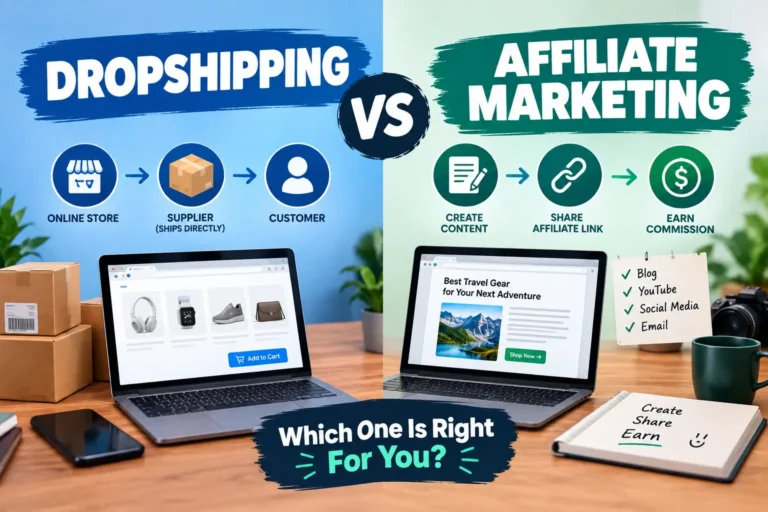
Still deciding whether affiliate marketing is the right model for you? Our comparison of dropshipping vs affiliate marketing breaks down the costs, profit per sale and risks of each.
Frequently asked questions
Do I legally have to disclose affiliate links?
Yes. The FTC requires clear disclosure of any material connection between you and a product you recommend, including affiliate commissions. The disclosure has to appear before the reader clicks the link. Burying it at the bottom doesn’t cut it.
Can I do this without a website?
Sure. YouTube, email newsletters, podcasts, social media. The ethics don’t change with the platform. Disclose clearly, recommend honestly, put your audience first. Where you publish is a logistics question, not an ethics question.
How many products should a beginner promote?
Start with 1 to 3 things you use daily. Spreading across 20 programs means you can’t speak with real authority about any of them. Add more slowly as your audience grows and your expertise deepens.
What if a product I recommended turned bad?
Update the post. Add a note explaining what changed. Remove or replace the link. Apologize briefly if people were affected. Transparency during a mistake builds more trust than a flawless record ever could.
Does “ethical” mean I can’t be persuasive?
No. You should explain why something helped you. Share specific results. Paint the before-and-after. The line is between persuading with truth and manipulating with pressure. If your claims are honest and the reader can walk away without buying, you’re fine.
How long until this actually pays?
Realistically, 4 to 8 months for meaningful income. Trust takes time. But once it’s built, it converts at a much higher rate than aggressive tactics. Month six of honest marketing usually outperforms month one of pushy marketing, and it keeps growing instead of collapsing. Our beginner’s guide to understanding passive income sets realistic timelines if you want the full picture.

Writes and tests every guide on hustle&passive. Everything here is something we have actually run — including the parts that did not work.