Here’s what most guides on how to become a freelancer leave out: the hard part isn’t the skill, it’s the money side. You pick your own rate, find your own clients, pay platform fees and handle your own taxes. Nobody sends a paycheck.
This guide on how to become a freelancer is for you if you want to start freelancing on the side, or want to replace part of a salary, and you’d like to know the steps, the fees and the tax basics before you send a single pitch.
I haven’t freelanced on these platforms myself, so I won’t quote my own earnings. I read the platforms’ own help pages and the IRS guidance, then built the steps around what’s checkable.
Some links on hustle&passive may be affiliate links. If you purchase through one of these links, we may earn a commission at no additional cost to you. Affiliate Disclosure
Last updated: October 2026. Platform fees and tax rules change, so check each official page before you rely on a number. This is general information, not tax or legal advice.
Key Takeaways
- Freelancing is a small business. Learning how to become a freelancer means learning to sell a service, set a price and handle your own taxes.
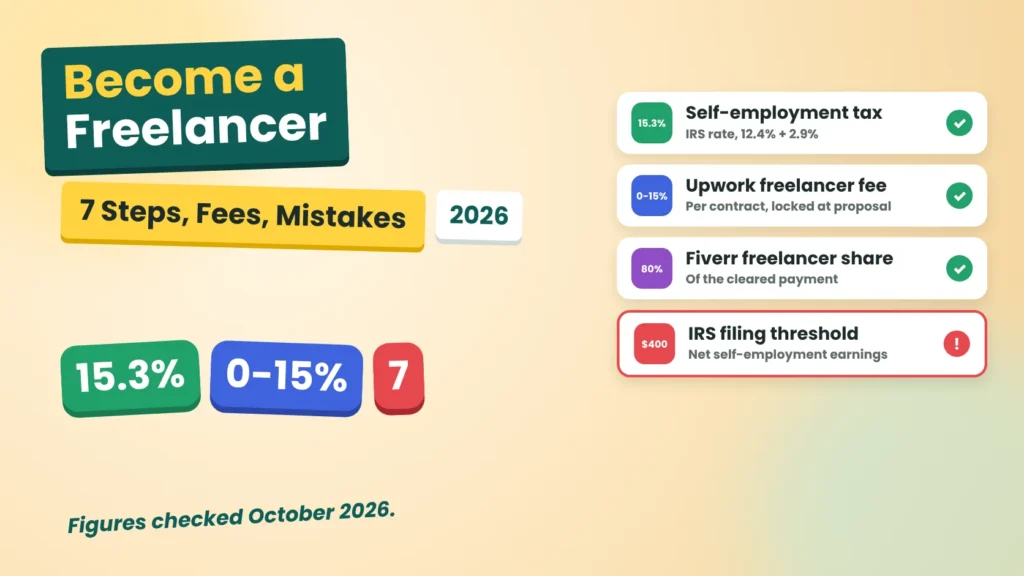
- Platforms take a cut. Upwork says its freelancer fee runs from 0% to 15% per contract, and Fiverr’s help page shows freelancers receiving 80% of a cleared payment.
- Taxes start early. The IRS says you must file if you net $400 or more from self-employment, and pay estimated tax if you expect to owe $1,000 or more.
- Start with one skill. One clear offer beats a long list of services.
- Your first client is the slow one. Expect to pitch many times before someone says yes.
What Does a Freelancer Actually Do?
A freelancer sells a skill to clients without being an employee. That can be writing, proofreading, design, transcription, virtual assistance, tutoring or something else.
Here’s the quick view of what it costs you before the details.
| Cost or rule | What the official page says | What it means for you |
|---|---|---|
| Upwork fee | 0% to 15% per contract, locked once a proposal or contract is sent | Check the fee on each offer |
| Fiverr share | Freelancers receive 80% of the client’s cleared payment | About 20% goes to the platform |
| Fiverr clearing | 14-day clearing period before withdrawal | Cash isn’t instant |
| Self-employment tax | 15.3% (12.4% Social Security plus 2.9% Medicare) | Set money aside from your first job |
| Estimated tax | Needed if you expect to owe $1,000 or more | Plan quarterly payments |
How to Become a Freelancer in 7 Steps
1. Pick one skill people already pay for
Look at what you can do today, not what you wish you could do. If people pay for it, you have a start. My guide to how to start a freelance writing career shows what this looks like for writers, and my guide to getting paid to write lists more options.
2. Turn the skill into a clear offer
“I do writing” is vague. “I write 800-word blog posts for small businesses” is an offer. Name what you deliver, how long it takes and what it costs.
3. Set your first price
Count your time, your tools and your taxes. Here’s an example, not a promise. If you want $30 an hour after costs, and about a quarter of your income may go to tax and fees, you’ll need to charge noticeably more than $30 an hour. Start there and adjust after a few jobs.
4. Build two or three samples
Clients want proof. Make samples that look like the work you want, even if no one paid you for them. A short portfolio page is enough.
5. Choose where you’ll find clients
You have two routes: a platform that brings clients to you, or direct outreach. Platforms are easier to start with, but they charge fees. According to Upwork’s freelancer fee article, the fee ranges from 0% to 15% per contract and is locked in once a proposal or contract is sent.
Fiverr’s help page for freelancers shows freelancers receiving 80% of the client’s cleared payment, with a 14-day clearing period before funds can be withdrawn.
Here’s an example of the difference. On a $500 project, a 10% fee leaves you $450, and an 80% share leaves you $400. Same work, different take-home, so read the fee before you bid.
I explain each platform in my guides to Upwork for writers and Fiverr jobs, and my guide to where to find virtual assistant clients works for any service.
6. Send your first pitches
Keep it short: who you are, what you do, one proof point and a clear next step. Send several a week and track the replies. Expect most to go unanswered.
7. Set up the money side
Open a separate account, keep your receipts and track every payment. A tool like FreshBooks can help with invoices and expenses, and a spreadsheet works too. My guide to financial planning for gig workers explains how to set money aside.

Spend less time managing invoices and expenses and more time growing your online business. Try FreshBooks and streamline your accounting today.
What Taxes Do Freelancers Pay?
Any guide on how to become a freelancer has to cover this. Freelancers are generally self-employed. The IRS self-employed individuals tax center says you must file if your net earnings from self-employment were $400 or more, and that you generally pay estimated taxes quarterly, since no employer withholds tax. Income and expenses go on Schedule C, and Schedule SE calculates your Social Security and Medicare tax.
The IRS estimated taxes page says individuals generally must make estimated payments if they expect to owe $1,000 or more when they file. Check Form 1040-ES for the current due dates. Self-employment tax runs at 15.3 percent, made up of 12.4 percent for Social Security and 2.9 percent for Medicare, according to the IRS.
Ask a tax professional if you’re unsure, because rules depend on your situation.
Related Guides for Freelancers
Once you know how to become a freelancer in general, these guides go deeper on a skill:
- 11 best websites for freelance writing
- How to become a virtual assistant with no experience
- Virtual assistant tools
- Transcription jobs from home
- Audiobook narration jobs on ACX
- Superprof reviews for tutors
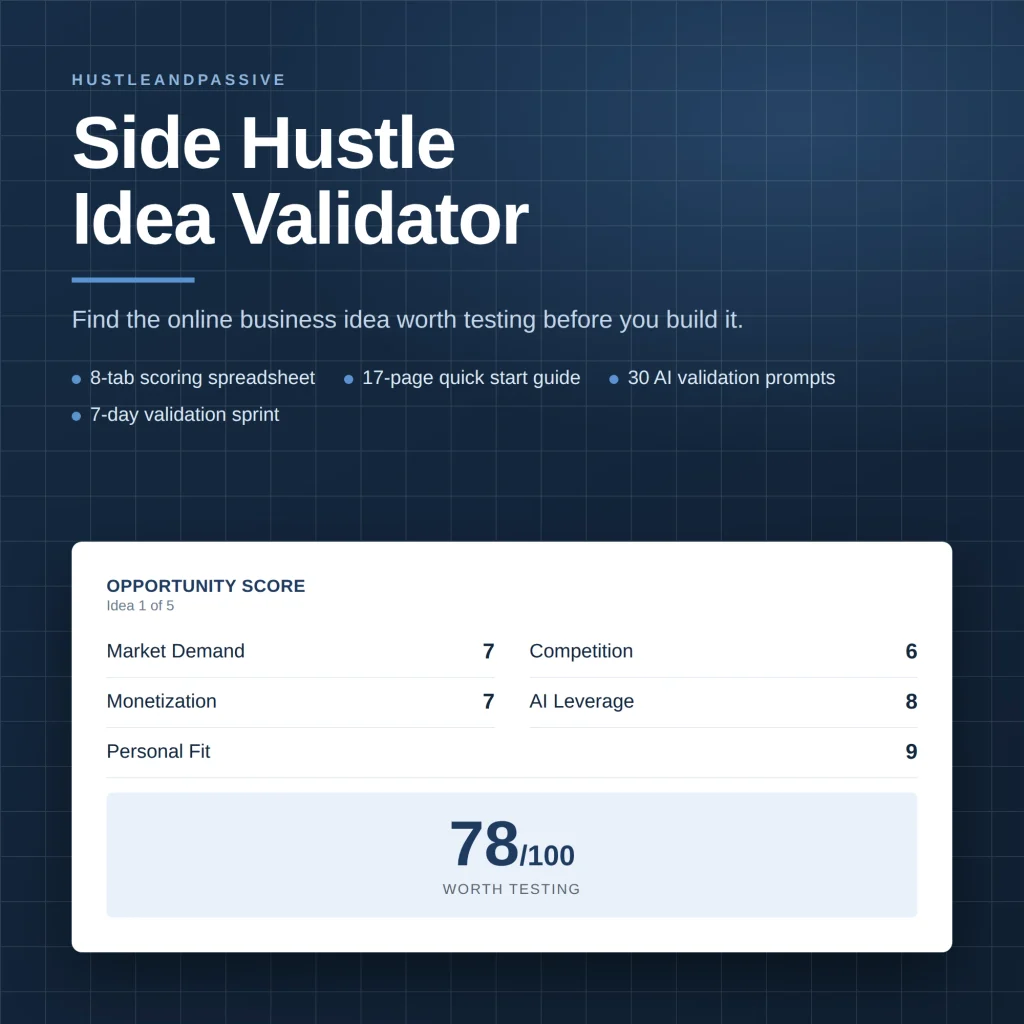
If you’re not sure which skill to pick, my Side Hustle Idea Validator scores ideas on demand, competition, startup cost and personal fit, and the free 50 AI Side Hustles list is a quick read.
My Side Hustle Idea Validator ($9) scores each idea on demand, competition, startup cost and personal fit, so you build the one with the best odds first.
Costly Mistakes When You Learn How to Become a Freelancer
- Offering everything. A vague offer is hard to buy.
- Underpricing. Fees, tax and unpaid time all come out of your rate.
- Ignoring fees. Compare what you actually keep on each platform.
- Skipping taxes. Set money aside from your first payment.
- Working without clear terms. Agree on scope, price and deadline in writing.
- Waiting to be perfect. Send the first pitch before your portfolio feels finished.
My Verdict on How to Become a Freelancer
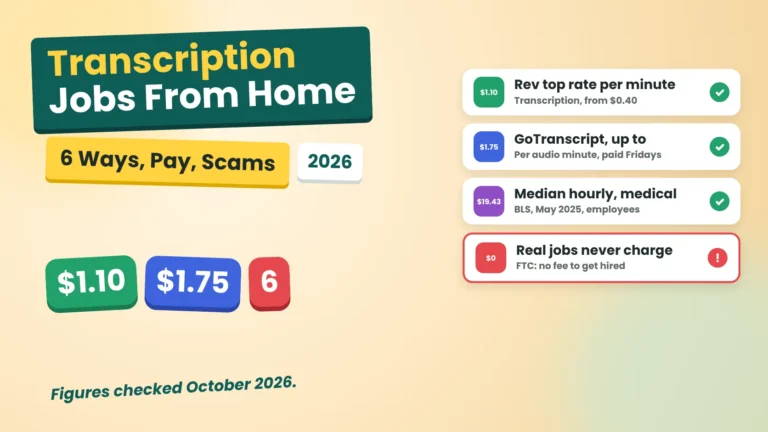
My short answer on how to become a freelancer: treat it like a small business. If I were starting, I’d pick one skill, make a clear offer, price it to cover fees and tax, and send pitches every week for a month. I’d skip anything that charges me to get hired.
My advice: choose one skill today, write your offer in one sentence and send your first three pitches this week.
FAQ
How to become a freelancer with no experience?
Pick a skill you already have, build two or three samples and write a clear offer. Then pitch on a platform or directly to small businesses. Your first client usually takes the longest.
How much do platforms charge freelancers?
It depends. Upwork says its freelancer service fee ranges from 0% to 15% per contract. Fiverr’s help page shows freelancers receiving 80% of the client’s cleared payment. Always check the current fee before you bid.
Do freelancers pay taxes?
Yes. Freelancers are generally self-employed. The IRS says you must file if you net $400 or more, and pay estimated tax if you expect to owe $1,000 or more.
What is the best skill to freelance with?
The best skill is one people already pay for and that you can deliver reliably. Writing, proofreading, transcription, design and virtual assistance are common starting points.
Can I freelance while working full time?
Often yes, but check your employment contract and keep your hours separate. Start small, with a few clients, so you don’t miss deadlines.

I write every guide on hustle&passive. I test what I can, and when I have not tried something myself, I say so and cite my sources.