Superprof is a real tutoring marketplace, but Superprof reviews and star ratings can’t tell you who pays what. Tutors list for free, students pay a monthly pass just to get a tutor’s contact details, and lessons are usually paid outside the site. Read this next to any Superprof reviews you find, because those fee rules decide whether it works for you, not the logo or the review score.
This is a research-based review. I haven’t tutored on Superprof, and I didn’t read user reviews to build this, so I won’t claim worker experiences or earnings. What I did was read Superprof’s own blog pages on how the platform works and what it charges, plus the Bureau of Labor Statistics (BLS) data on tutors, then work out what the rules mean for someone who wants extra income from teaching.
Quick heads-up: there are no affiliate links to Superprof in this review. Two links near the end point to my own digital products, so I may earn something if you buy. Nothing here depends on that.
Last updated: October 2026. Superprof changes its prices and rules, so check the site before you rely on a number.
Key Takeaways
- Superprof is a tutor directory. Tutors create a listing and students contact them, according to Superprof’s own pages.
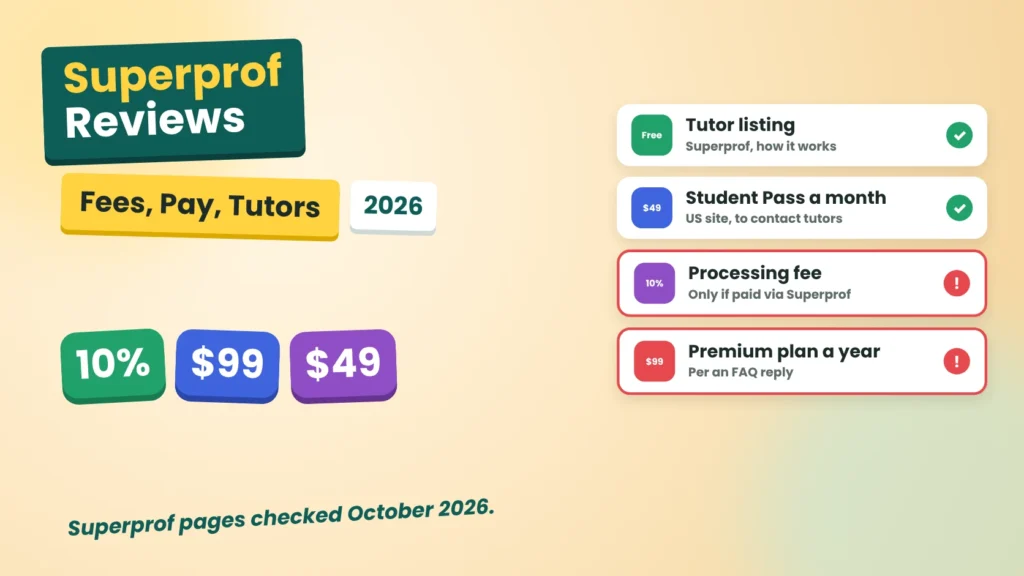
- Tutors list for free. The 10% processing fee applies only if you run lessons and payments through Superprof, and Superprof says there is no mandate to do so.
- Students pay to get in touch. The Student Pass is $49 a month on the US site, and it covers contact details, not the lessons.
- Payout timing isn’t published. The pages I could read don’t say when funds arrive, so ask support before you count on it.
- Tutoring pay has a ceiling. BLS reports a median of $20.84 an hour for tutors in May 2025, with flat job growth.
What Is Superprof and How Does It Work?
Superprof is an online marketplace where tutors advertise lessons and students search for them. Superprof’s how-it-works page says the site covers more than 1,000 subjects, with lessons that can be face to face or online, one on one or in groups. Tutors are not employees of Superprof.
To start, you click “Become a Tutor,” pick your subjects, write an ad, add a description and a photo, enter your location and your lesson fee, and launch. Tutors set their own rates. A student then browses listings and compares rates for free, and only pays when they want to message a tutor.
One thing to flag: Superprof’s support replies are not consistent on location. One says non-US users can sign up as online tutors, and another says a US address is required. If you live outside the United States, I’d confirm that with support before you spend time on a profile.
Is Superprof Legit?
Yes, in the sense that it is a working marketplace with published pricing and a clear split of who pays what. The harder question behind most Superprof reviews is not whether it is a scam, but whether you can get students at a price that makes the fees worth it. I haven’t found an official source that says how many students a typical tutor gets, so I won’t give one. I’d treat any number in Superprof reviews as one person’s experience and the help pages as the rules. That is the line I’ve drawn in these Superprof reviews: facts from Superprof’s own pages, opinions labeled as mine.
How Much Does Superprof Cost for Tutors and Students?
Here is what the pages say, which a star rating can’t show you.
| Who | Item | Cost |
|---|---|---|
| Tutor | Creating a listing | Free |
| Tutor | Processing fee, only if lessons and payments go through Superprof | 10% |
| Tutor | Premium subscription, per an FAQ reply | $99 per year, renewed automatically |
| Student | Student Pass, US site | $49 per month |
The charges and payments page explains the student side. Browsing tutors is free, but you need the pass to contact them. It starts when a tutor replies to your message, you can cancel any time, and you keep your connection to tutors you already arranged lessons with. Lesson payments are arranged with the tutor directly, in person or through the tutor’s preferred payment app. Many tutors offer a free first lesson, though that depends on the tutor.
Here is an illustration (an example, not a promise, and not a Superprof rate). Say a tutor charges $40 an hour and teaches 10 hours in a month, which is $400. Through Superprof’s payment system, the 10% fee is $40, so the tutor keeps $360. Paid through Venmo, Zelle or PayPal, which the page names as ways to avoid the fee, the tutor keeps the full $400 before any fee those apps charge. Add the $99 premium plan, which works out to about $8.25 a month, and the tutor’s cost is still small next to the lesson income. The real cost lands on the student: a $49 pass is more than one full lesson at $40.
That last point matters if you tutor. A student who has to pay $49 before talking to anyone will compare listings first and message only a few, so a clear profile and a clear rate help you.
How Does Superprof Pay Tutors?
Mostly, it doesn’t. Students pay tutors directly, in person after a lesson or through the tutor’s preferred payment app, according to Superprof. The 10% fee comes in only if you choose to run payments through the platform.
I couldn’t read Superprof’s dedicated “how to get paid” help page, because it returned an error, so I can’t tell you how long a Superprof-processed payment takes or what the minimum payout is. The charges page doesn’t say either, and only points tutors to email support about bank deposits. If timing matters to you, ask support in writing before your first paid lesson.
The practical effect of direct payment is that you are running a small business. You chase invoices, handle cancellations, and decide your own policy for no-shows.
How Much Can You Earn Tutoring?
Superprof reviews often quote earnings, but Superprof doesn’t publish what tutors earn, so the best public ceiling comes from official data on the job. The BLS tutor profile reports a median of $43,350 a year, or $20.84 an hour, in May 2025, across 208,400 jobs. About 12% of tutors are self-employed, which means most work for schools or tutoring companies, not as independents. BLS projects no change in employment from 2025 to 2035, with about 34,200 openings a year, mostly from people leaving the field.
Two takeaways. First, that median covers all tutors, including employed ones, so it is a loose guide to what an independent on a marketplace will make. Second, flat demand means students have plenty of options, so your subject, your results and your price decide whether you get messages.
Who Is Superprof For, and Who Should Skip It?
Based on the rules, not on other Superprof reviews, it fits you if you:
- Know a subject well and can explain it to a beginner.
- Are comfortable setting your own rate and chasing your own payments.
- Want a side income that fits around another job. My guide to 2nd jobs shows how to weigh that.
Skip it if you:
- Need money within days. Lesson income comes after you win a student, and winning one takes time.
- Want a platform that handles scheduling, billing and payouts for you.
- Prefer work that doesn’t depend on a student’s budget for a monthly pass.
If you’d rather compare other ways to get paid for a skill, read my guide to the Upwork freelance writer route, my breakdown of Fiverr jobs, or my list of remote side jobs. For faster payouts, see side hustles that pay daily.
How Do You Get Started as a Superprof Tutor?
Win the first student by making the choice easy. Here is the order I’d follow.
- Pick one subject and one level. “Algebra for ninth graders” is easier to book than “math.”
- Write the ad around the result. Say what the student will be able to do, and how you’ll get them there.
- Set a rate you can defend. Do the hours math, including prep and unpaid messaging.
- Offer a free first lesson only if it fits your time. Many tutors do, but it isn’t required.
- Decide how you’ll get paid. Compare the 10% processing fee with the cost and risk of chasing payments yourself.
- Track every dollar. The IRS says you generally owe self-employment tax once net earnings from self-employment reach $400. My guide to financial planning for gig workers shows how to set money aside.
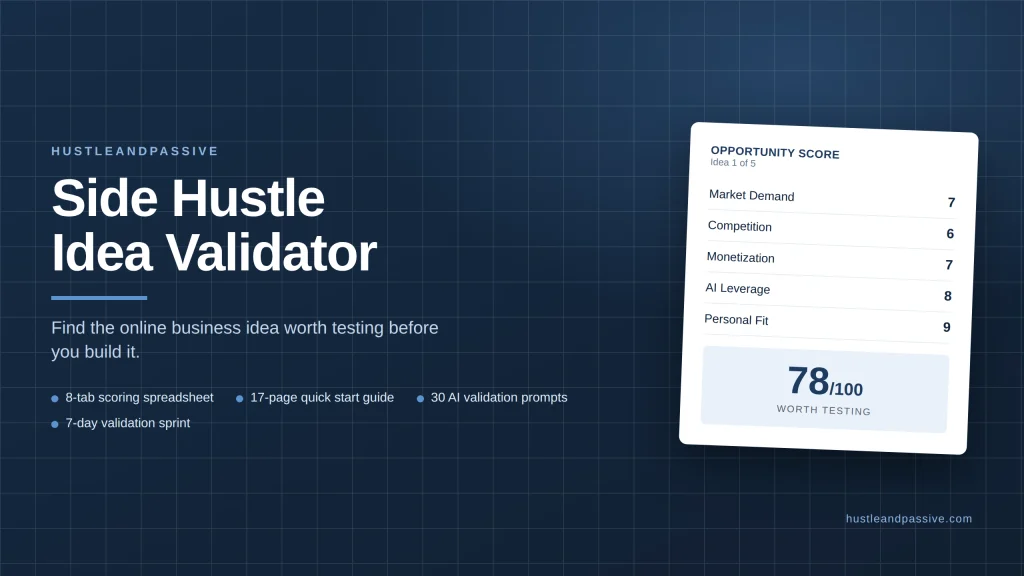
Not sure tutoring is the best use of your spare hours? My Side Hustle Idea Validator lets you score an idea on demand, competition and startup cost before you commit, and the free 50 AI side hustle ideas list gives you options to compare. If you already have a full-time job, my guide to extra income while working full-time covers how to fit it in.
What Are the Risks and Mistakes to Avoid?
After going through the rules behind Superprof reviews, the main risks are slow student demand, payment chasing and a rate set too low. Here are the mistakes I’d watch for.
- Assuming a listing brings students on its own. Students must pay a pass to contact you, so a thin profile can sit unseen.
- Paying for premium before you have a student. Test the free listing first.
- Skipping a written payment policy. With direct payment, no-shows and late payments are your problem.
- Ignoring taxes. Income from tutoring is self-employment income for most independents.
- Trusting one number. Fees and rules change, so check the current page before you plan.
FAQ
Is Superprof legit?
Yes, it is a working tutoring marketplace with published pricing. Tutors list for free, and students pay a monthly pass to contact them. What varies is how many students you get and whether the fee rules fit your plan.
Does Superprof charge tutors?
Creating a listing is free. A 10% processing fee applies only if lessons and payments go through Superprof, and a premium subscription costs $99 a year, according to an FAQ reply on Superprof’s pages.
How does Superprof pay tutors?
Students usually pay tutors directly, in person or through the tutor’s payment app. Superprof’s pages I could read don’t give payout timing for payments processed through the platform.
How much does Superprof cost students?
The Student Pass is $49 a month on the US site, and it covers access to tutor contact details. Lessons are paid to the tutor separately. Prices differ on other country sites.
The Bottom Line
Superprof is a legitimate way to find tutoring students, but the fees fall on different sides and the payout rules aren’t fully published. The honest picture from these Superprof reviews of the rules: listing is free, the 10% fee is optional, the student pass can slow demand, and tutoring pay has a ceiling.
My advice: read Superprof reviews for the feel of the platform and the help pages for the rules, start with a free listing, get paid in a way you can track, and keep your own records from the first lesson. And if Superprof’s fees or rules have changed by the time you read this, send me a message through the contact page so I can update the guide.

Writes and tests every guide on hustle&passive. Everything here is something we have actually run — including the parts that did not work.