Disclosure: some links in this guide are affiliate links, so I may earn a commission if you buy through them, at no extra cost to you. Last updated: October 2026.
Most “get paid to write” lists are padded with dead magazines and sites that stopped paying years ago. I checked every option below against its own guidelines or pricing page in October 2026, and I left out anything I couldn’t confirm. Where a site doesn’t publish its rate, I say so instead of guessing.
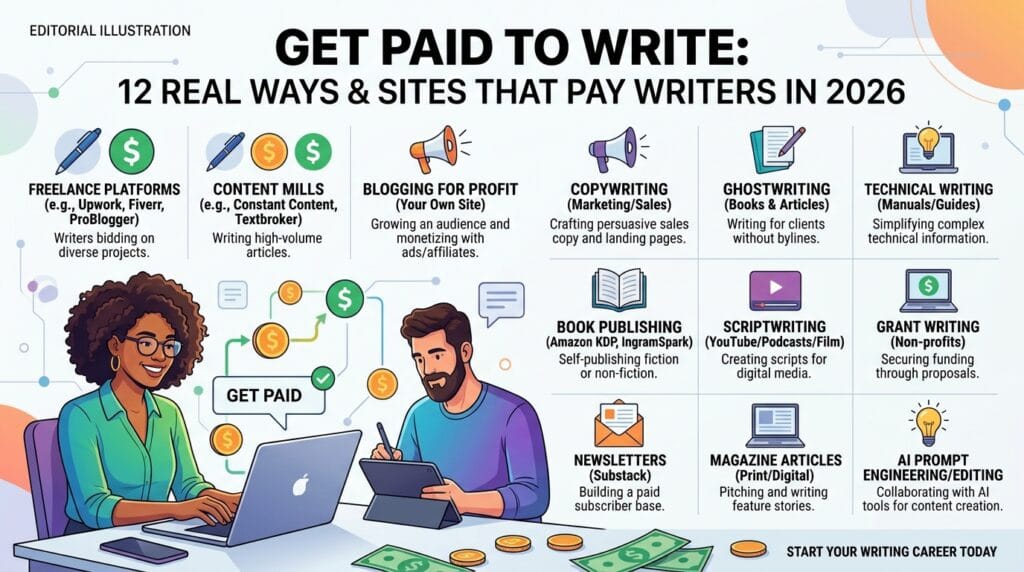
There are really three ways to get paid to write online: a publication pays you for an article, a platform pays you based on readers, or you sell your writing directly to clients or customers. Each one suits a different kind of writer, so this guide covers all three.
Key Takeaways
- The fastest way to get paid to write is to pitch publications that pay per article, such as WritersWeekly ($60 for about 600 words). You get a fixed fee once your piece is accepted.
- Reader-based platforms like Medium and Substack pay over time, based on members or subscribers. Expect little at first and more as your audience grows.
- Freelance clients usually pay the most per piece, but platforms take a cut: Fiverr keeps 20% and Upwork charges writers 0% to 15%.
- Many paying markets now reject AI-written work. WritersWeekly refuses AI-written articles, and SitePoint rejects pieces that rely too heavily on generative AI.
- Your own blog, newsletter or ebook is the slowest route but the only one where every reader and every dollar stays yours.
How Do You Get Paid to Write?
You get paid to write by selling one of three things: a single article, your attention-earning content over time, or a writing service. Here’s how they compare before we get to the sites.
| Route | How you’re paid | Speed to first payment | Best for |
|---|---|---|---|
| Publications that pay per article | Fixed fee per accepted piece | 2 to 8 weeks | Beginners with a few strong ideas |
| Reader-based platforms | Share of member or subscriber money | 1 to 6 months | Writers who publish often |
| Freelance clients | Per article, per word or per project | 1 to 4 weeks | Writers who want steady income |
| Your own blog, newsletter or book | Ads, affiliates, subscriptions, sales | 6 to 12 months | Writers building long-term income |
Times to first payment are typical ranges, not promises. They depend on how often you pitch or publish.
Publications That Pay You to Write Articles
These are the classic “get paid to write articles” options: you pitch an idea or submit a piece, an editor accepts it, and you get a fee. Acceptance rates are low, so pitch several at once.
1. WritersWeekly
WritersWeekly pays $60 on acceptance for feature articles of about 600 words, and $30 for reprints, paid in US dollars via PayPal (WritersWeekly guidelines). Topics are about the business of freelance writing and self-publishing. Send a query with your credits first, not the full article. They don’t accept AI-written articles or queries, and they usually reply within a week.
2. Smashing Magazine
Smashing Magazine pays an honorarium for articles on web design, development, UX and accessibility, and pays promptly on publication (Smashing Magazine). They don’t publish the exact amount. This one suits writers with real technical skills: tutorials, case studies and in-depth guides do best.
3. Cracked
Cracked pays for humor articles, infographics and photo comedy it publishes on its front page, and says no experience is necessary (Cracked). You start by joining their writers’ forum and pitching ideas there. They don’t list a rate publicly.
4. Chicken Soup for the Soul
Chicken Soup for the Soul pays for true personal stories of up to 1,200 words, but only when a story is published in one of its books (Chicken Soup for the Soul). They run themed calls with deadlines; in October 2026, topics include positive thinking (deadline February 28, 2027) and holiday stories (May 30, 2027). They don’t state the amount on the submissions page.
5. The Sun Magazine
The Sun pays for essays, interviews, fiction and poetry, and is one of the best-known paying literary magazines. It caps submissions each month, so categories can close until the first of the next month (The Sun on Submittable). Its general submissions category charges a $2.50 fee. Check the current rates on its site before you submit.
A tip that saves time: pitch three or four publications in the same week. Editors can take weeks to reply, and some never reply to pieces they decline. Waiting on one answer at a time is how writers lose months.
Platforms That Pay You Based on Readers
These sites don’t pay a fixed fee. You publish, and you earn from the people who read or subscribe. Income starts small, but each piece can keep earning.
6. Medium Partner Program
Medium pays writers a share of its members’ fees, based on how much Medium members read and engage with your paywalled stories (Medium Help Center). To join, you need to be 18 or older, have an active Medium membership, and connect a payout account through Stripe. It works best for writers who publish often on topics members already follow, such as productivity, money and tech.
7. Substack
Substack lets you get paid to write a newsletter: readers pay a monthly or yearly subscription. Substack keeps 10% of subscription revenue, and Stripe charges 2.9% + $0.30 per US card payment plus 0.7% for recurring billing (Substack support). Most writers start free, build a list, then add a paid tier once readers ask for more.
8. Amazon Kindle Direct Publishing
With Kindle Direct Publishing you earn royalties on every ebook sale: either 35% of the list price, or 70% minus a small delivery cost (about $0.06 per sale on average) in eligible countries (KDP royalties). A short, practical guide on a topic you know well is a realistic first book. If AI generated any of the text or images, Amazon requires you to disclose it.
Get Paid to Write for Clients
Freelance clients usually pay the most per piece, because a business is buying content that brings it customers. This is where most full-time writers earn their income.
9. Freelance Marketplaces
Upwork, Fiverr and similar marketplaces connect you with clients who already have a budget. They take a cut: Fiverr keeps 20% of each order, and Upwork charges writers 0% to 15% per contract. They’re crowded, so a narrow niche and a strong profile matter more than low prices.
We compare 11 of these platforms by pay and beginner-friendliness in our guide to the best websites for freelance writing. If you’re starting from zero, read how to start a freelance writing career first.
10. Pitch Businesses Directly
The best-paid writing work rarely appears on job boards. Small businesses, software companies and agencies need blog posts, emails and website copy, and many never post a job. Pick one industry you understand, write two or three sample pieces for it, and email ten businesses a week with a short, specific offer. A free CRM such as HubSpot helps you track who you pitched and when to follow up.

Own Your Buyer List
Marketplace traffic isn’t yours. It’s borrowed. HubSpot’s free CRM captures every buyer’s email from your own store so your next launch doesn’t start from zero.
Get Paid to Write on Your Own Platform
These are the slowest options, but nobody can reject your work, and the income keeps building.
11. Start a Blog
A blog earns through affiliate links, display ads and your own products. It’s how I run this site: the articles you read here earn through affiliate links and my own digital products. Expect 6 to 12 months before traffic is steady. You’ll need a domain and hosting; I use Hostinger, which is cheap enough for a first blog. Our guides on how to start a niche blog and blog monetization strategies cover the full setup.
Host Your Own Storefront for Under $2.99/Month
Skip the marketplace cut entirely. Hostinger runs everything from landing pages to checkout, fast enough to handle a launch spike without falling over.
12. Sell Your Own Writing as a Digital Product
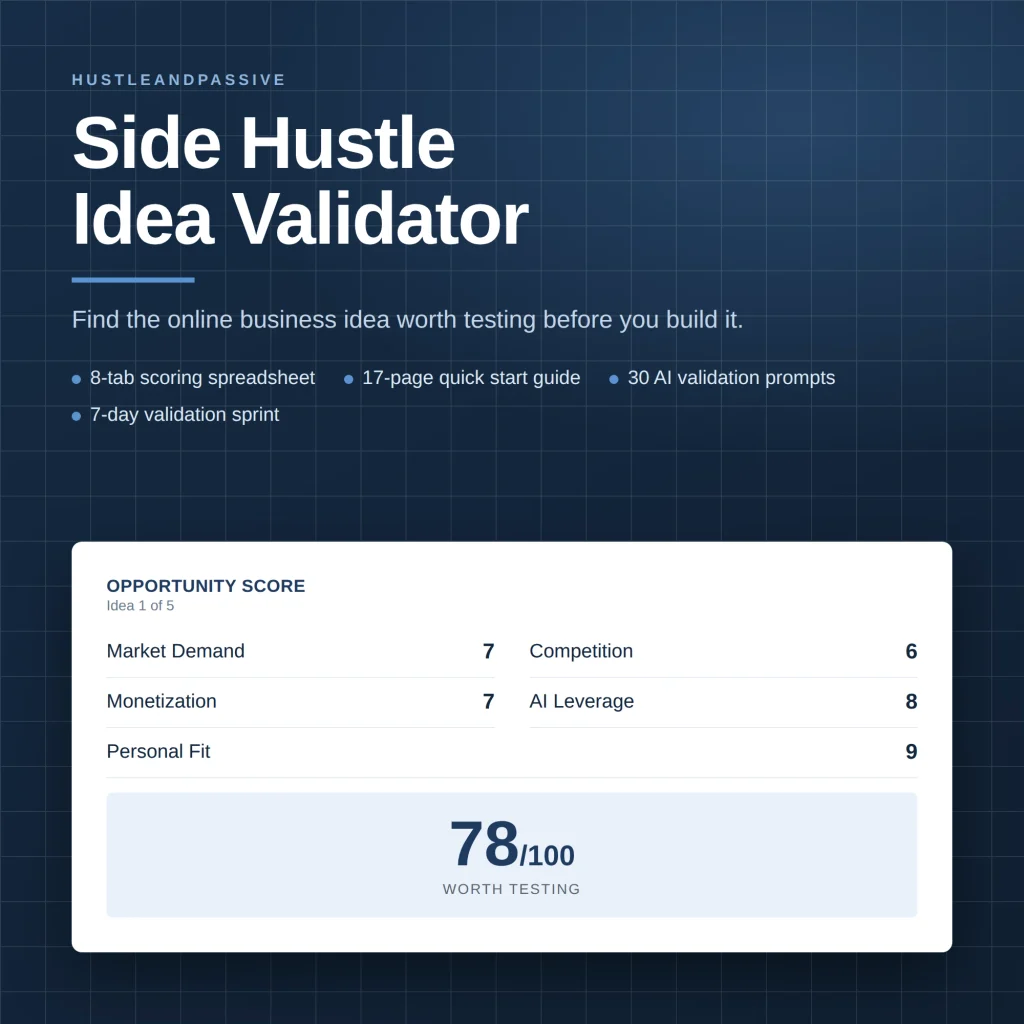
Guides, templates, checklists and workbooks are writing you can sell again and again. Gumroad takes 10% + $0.50 per direct sale, so a $9 guide leaves you about $7.60. I sell my own Side Hustle Idea Validator this way: a spreadsheet plus a written guide. See our list of digital products to create with AI for ideas.
My Side Hustle Idea Validator ($9) scores each idea on demand, competition, startup cost and personal fit, so you build the one with the best odds first.
Can You Get Paid to Write With AI?
Yes, but carefully. Many paying markets now refuse AI-written work: WritersWeekly won’t accept AI-written articles, and SitePoint rejects submissions that rely too heavily on generative AI. Freelance clients increasingly ask how you use it.
The safe approach is to use AI for research and outlines, then write and edit the piece yourself, and be honest when someone asks. Our guide on how to make money with AI covers where AI helps writers and where it hurts.
How Much Can You Get Paid to Write?
It depends on the route. Publications in this list range from small fixed fees, like WritersWeekly’s $60 per article, to rates they don’t disclose. Reader platforms pay in proportion to your audience, which means very little at first. Client work varies the most: rates depend on your niche, your samples and how well you pitch, not on the platform.
To compare options honestly, work out what each one pays per hour, including pitching and editing time. Our side hustle income calculator helps you run those numbers.
FAQ
What websites pay you to write?
Websites that pay you to write include WritersWeekly ($60 per feature article of about 600 words), Smashing Magazine, Cracked and The Sun Magazine. Platforms like Medium and Substack pay based on readers or subscribers, and freelance marketplaces like Upwork and Fiverr connect you with clients who pay per project.
How can a beginner get paid to write?
Beginners do best by pitching publications that accept new writers, such as WritersWeekly or Chicken Soup for the Soul, while building samples on a free blog or Medium. Two or three strong samples in one niche make it much easier to land paid client work on Upwork, Fiverr or by pitching businesses directly.
How much do websites pay per article?
Pay per article varies widely. WritersWeekly pays $60 for about 600 words, while many publications, including Smashing Magazine and Cracked, don’t publish their rates. Client work usually pays more than publications, but platforms take a cut, such as Fiverr’s 20% or Upwork’s 0% to 15%.
Can I get paid to write without experience?
Yes. Cracked says no experience is necessary, and personal-story markets like Chicken Soup for the Soul care about the story, not your résumé. For client work, replace experience with samples: write two or three pieces in the style your target clients need and show those instead.
The Bottom Line
To get paid to write in 2026, pick one route and stick with it for a couple of months. Pitch publications if you want your first paid article soon. Build on Medium or Substack if you write often and can wait for an audience. Go after clients if you want the most money per piece. And whichever you choose, write it yourself: that’s increasingly what editors and clients pay for.
Start with the best websites for freelance writing if client work is your goal, or pitch WritersWeekly this week if you want a first paid byline.

Writes and tests every guide on hustle&passive. Everything here is something we have actually run — including the parts that did not work.