Disclosure: some links in this guide are affiliate links, so I may earn a commission if you buy through them, at no extra cost to you. Last updated: September 2026.
Most blogs that never make money don’t fail on traffic. They fail on timing: they wait for a big audience before adding any way to earn, or they cover every page in ads the moment they get a few visitors. This guide covers eight blog monetization strategies that work in 2026, the traffic each one needs, and a simple roadmap for which to add at each stage, from your first article to tens of thousands of monthly visitors.
Blog Monetization Strategies: Key Takeaways
- Start with affiliate links and an email list from day one. Neither needs a minimum amount of traffic.
- Add display ads later. Premium ad networks now accept smaller blogs, but ads pay little until traffic grows.
- Your own products usually earn the most per reader, because you keep most of the sale.
- Services pay fastest: freelance writing, consulting or setup help can earn money in your first months.
- Mix two or three strategies rather than relying on one program or network.
8 Blog Monetization Strategies Compared
| Strategy | Traffic needed | How you earn | Effort to set up |
|---|---|---|---|
| Affiliate marketing | None to start | Commission per sale | Low |
| Display ads | From about 1,000 monthly sessions for some networks | Per impression and click | Low |
| Digital products | Small but engaged audience | Direct sales | Medium |
| Email newsletter | None to start | Products, affiliates, sponsors | Low to medium |
| Courses and paid communities | Engaged audience | Sales or subscriptions | High |
| Services and coaching | None | Client fees | Low |
| Sponsored posts | Steady traffic in a clear niche | Flat fee per post | Low |
| Memberships and donations | Loyal readers | Recurring support | Low |
When Should You Start Monetizing a Blog?
Start on day one with methods that don’t hurt the reading experience: affiliate links in genuinely helpful articles and an email signup form. Add display ads once you have steady traffic, and launch your own product once readers keep asking you the same questions. Monetizing early isn’t greedy if every recommendation is honest and useful; it simply means your best early articles earn from the start.
The 8 Blog Monetization Strategies
1. Affiliate Marketing
Affiliate marketing is the most common way to monetize a blog: you recommend products you’d genuinely suggest to a friend, and earn a commission when readers buy through your link. It works best in reviews, comparisons and tutorials, where readers are close to a buying decision.
- Join programs that fit your niche; many brands run their own, and Amazon Associates covers almost everything (see our Amazon affiliate marketing guide).
- Disclose affiliate links clearly near the top of each post, as the FTC’s Endorsement Guides FAQ explains.
- Manage links with a plugin like ThirstyAffiliates, so you can update a link across your whole site in one place when a program changes.
Stop digging through old posts every time an affiliate URL changes. With ThirstyAffiliates, you can manage all your affiliate links in one place, create branded links, and update them across your entire website in minutes.

Our ethical affiliate marketing guide covers choosing programs and writing reviews readers trust.
2. Display Ads
Display ads pay you for showing ads on your pages. They’re the most passive option, but they earn little per visitor, so they matter most once traffic is steady.
- Google AdSense has no minimum traffic requirement, according to Google’s eligibility page; you need original content and to be at least 18.
- Journey by Mediavine accepts sites with at least 1,000 sessions in 30 days from the US, Canada, the UK or Australia, according to Mediavine’s requirements page. The main Mediavine program requires at least $5,000 in annual ad revenue.
- Raptive lowered its entry point to 25,000 monthly pageviews in late 2025, with at least half of traffic from the US, UK, Canada, Australia or New Zealand, as This Week in Blogging reported.
Too many ads slow your pages and annoy readers, which can hurt both search rankings and affiliate sales, so start with fewer ad placements and test.
3. Digital Products
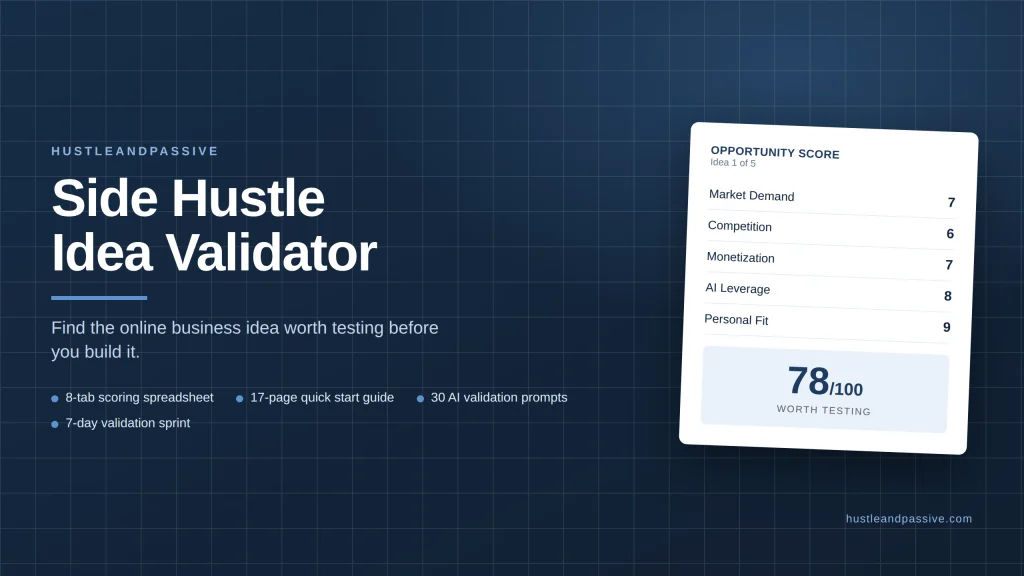
Your own products usually earn the most per reader, because you keep most of the sale price. Templates, checklists, short guides, spreadsheets and prompt packs are quick to create and sell automatically. For example, this site sells a small Side Hustle Idea Validator that solves one specific problem: picking which side hustle idea to test first. See our list of digital products to create with AI and our guide to selling Canva templates for ideas.
4. Email Newsletter
An email list turns one-time visitors into readers you can reach again, which makes every other strategy on this list work better. Offer a simple free resource in exchange for an email address, then send useful emails that sometimes recommend your products or affiliate picks. HubSpot offers free email and CRM tools to start with, and once your list grows, newsletters can also sell sponsor spots.
5. Online Courses and Paid Communities
If your blog teaches a skill, a course or paid community can be your highest-value offer. Platforms like Skool host both a course and a community in one place. Build this once readers trust you; launching a course to a cold audience rarely works.
Stop Losing Audiences After Week One
Course content + community discussion = one powerful platform. Skool unifies your teaching and your tribe, making it easier than ever to retain students and build a loyal, paying audience.
6. Services and Coaching
Your blog is also a portfolio. Readers who like your writing may hire you for the skill you write about, such as freelance writing, website setup, virtual assistance or coaching. Services are often the fastest way to earn from a new blog. See our guides to starting a freelance writing career and becoming a virtual assistant.
7. Sponsored Posts
Brands in your niche may pay you to publish a post about their product. Only accept sponsors you’d genuinely recommend, label the post clearly as sponsored, and mark paid links with rel="sponsored", as Google’s link guidelines require.
8. Memberships and Reader Support
Loyal readers sometimes want to support your work directly through a membership, bonus content or a tip page on services like Patreon or Ko-fi. This works best for blogs with a strong personal voice or a close community, and usually earns less than the other strategies.
A Blog Monetization Roadmap by Traffic Stage
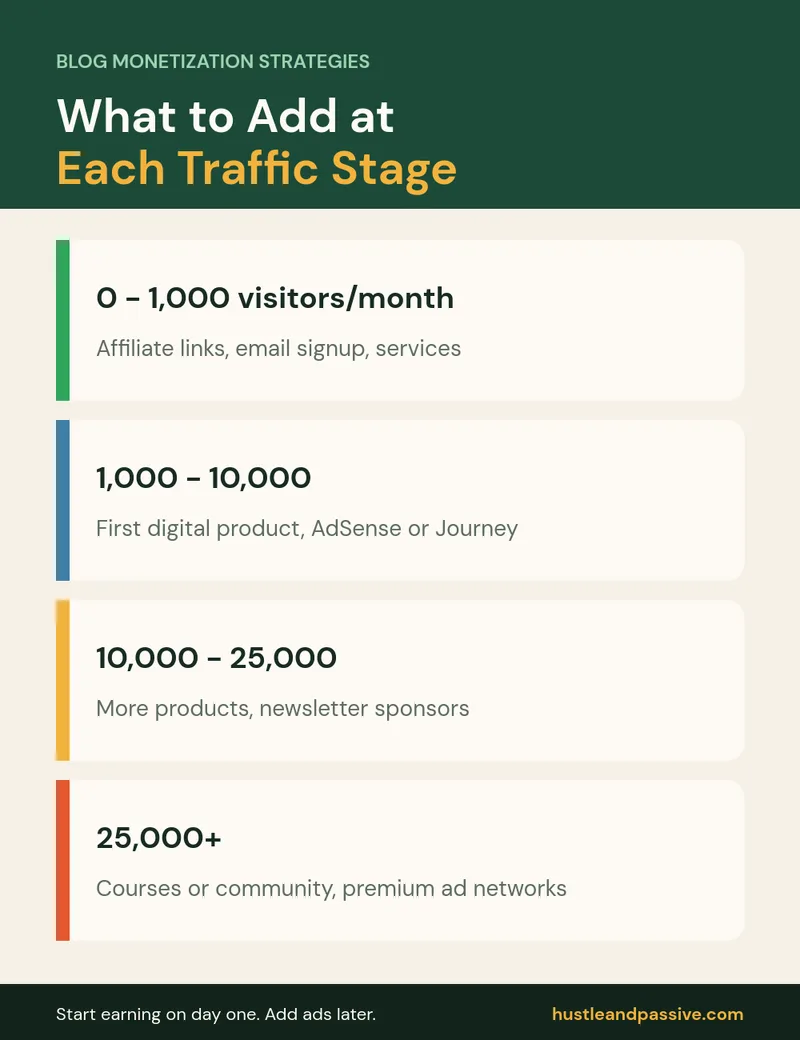
| Monthly visitors | Focus on | Add next |
|---|---|---|
| 0–1,000 | Affiliate links in helpful articles, email signup, services | A simple free resource for your email list |
| 1,000–10,000 | More affiliate content, first digital product | Journey by Mediavine or AdSense, if ads suit your readers |
| 10,000–25,000 | Product range, newsletter sponsors | Better ad networks as you qualify |
| 25,000+ | Courses or community, larger products | Raptive or Mediavine, and direct brand partnerships |
Traffic is the engine behind every stage. A keyword tool like Keysearch helps you find searches with buying intent that suit affiliate and product content.

Find Keywords That Actually Rank
Stop guessing what to write. KeySearch helps you discover low-competition keywords, analyze competitors, and create SEO content that drives long-term organic traffic.
What You Need Before You Monetize
- Your own website. A self-hosted WordPress blog on a host like Hostinger gives you full control over ads, affiliate links and products; free platforms often restrict them. Our niche blog guide walks through the setup.
- A clear niche, so readers, advertisers and affiliate programs all know what your blog is about.
- Legal pages: a privacy policy, an affiliate disclosure and cookie consent where your readers’ location requires it.
- Basic analytics, so you know which articles bring visitors and which earn money.
Blog Monetization Mistakes to Avoid
- Waiting for “enough” traffic before adding any way to earn.
- Recommending products you wouldn’t use just because they pay well; it costs trust fast.
- Too many ads too early, which slows your site and drives readers away.
- Relying on one program or network, so a single policy change can cut your income.
- Skipping disclosures on affiliate links and sponsored posts.
Blog Monetization FAQ
How much traffic do you need to monetize a blog?
None for affiliate links, services and an email list. Google AdSense has no traffic minimum, Journey by Mediavine starts at 1,000 monthly sessions from Tier 1 countries, and Raptive was reported at 25,000 monthly pageviews from late 2025.
What is the best way to monetize a blog?
For most new blogs, affiliate marketing plus an email list is the best start, because both work with little traffic. Your own digital products usually earn the most per reader once you know what your audience needs.
How long does it take to make money blogging?
It varies, but new blogs often take several months to get steady search traffic. Services and affiliate links in buyer-focused articles tend to produce the first income; ads and products grow with traffic.
Can you monetize a blog on a free platform?
Partly, but free platforms often limit ads, affiliate links and plugins. A self-hosted WordPress blog gives you full control over every monetization method.
Do I need to disclose affiliate links on my blog?
Yes. The FTC expects clear disclosure of affiliate relationships, and paid or affiliate links should be marked with rel=”sponsored” for Google.
Your Next Step
Pick the two strategies that match your blog’s stage in the roadmap above: for most new blogs that’s affiliate links plus an email signup. Add them to your three most visited articles this week, then build from there.
Not sure which blog niche or product to focus on? My Side Hustle Idea Validator ($9) scores each idea on demand, competition and startup cost, and the free 50 AI Side Hustle Ideas list gives you more starting points.

Writes and tests every guide on hustle&passive. Everything here is something we have actually run — including the parts that did not work.