Disclosure: some links in this guide are affiliate links, so I may earn a commission if you buy through them, at no extra cost to you.
Making money online isn’t hard because there are too few opportunities. It’s hard because there are too many. In your first 90 days online, every video promises a different shortcut: blogging is dead, dropshipping is the future, AI will replace everything. Most beginners spend those weeks consuming content instead of creating anything.
This guide is the opposite of that. It’s a focused plan for your first 90 days online, built on what consistently works for beginners: one business model, assets you own, publishing early, and measuring progress instead of motivation.
Your First 90 Days Online: The Short Version
- Pick one business model and commit to it for 90 days.
- Buy a domain and build a simple website you own.
- Publish before you feel ready, on a fixed schedule.
- Learn basic SEO so your work keeps bringing visitors.
- Start an email list from day one.
- Use AI to work faster, not to think for you.
- Launch a small digital product earlier than feels comfortable.
1. Pick One Business Model and Ignore the Rest
The biggest beginner mistake isn’t choosing the wrong business. It’s choosing five at once. Affiliate marketing, blogging, YouTube, Etsy, print-on-demand, Amazon KDP, freelancing and AI products can all work, but none of them work with divided attention.
Match the model to what you enjoy:
- Want traffic that keeps coming? Build a blog.
- Enjoy writing for others? Offer freelance services.
- Good at teaching or organizing? Create digital products.
- Comfortable on camera? Focus on YouTube.
Then stay with it for 90 days. Still deciding? Compare options in our guide to 32 honest ways to make money online or our list of remote side hustles.
2. Buy Your Domain on Day One
Your audience should belong to you, not to an algorithm. Platforms change their rules, accounts get suspended and reach can disappear overnight. A website is an asset you control.
The setup is simple: buy a domain, choose reliable hosting such as Hostinger, install WordPress, and start publishing. Your site then becomes the home for your articles, email list, affiliate links and products. Our guide on how to start a niche blog walks through each step.
Host Your Own Storefront for Under $2.99/Month
Skip the marketplace cut entirely. Hostinger runs everything from landing pages to checkout, fast enough to handle a launch spike without falling over.
3. Publish Before You Feel Ready
Many beginners spend weeks redesigning logos, changing fonts and watching tutorials, and publish nothing. Adopt one rule instead: publish first, improve later. Your first article won’t be great, and neither will your tenth. Writing improves with repetition, SEO improves with data, and your business improves with customer feedback.
A realistic starting pace is one article a week, one short newsletter a week, and one useful social post on the days you have time. Consistency matters more than volume.
4. Learn Basic SEO From Day One
Social media rents attention; search traffic compounds. An article you publish today can still bring visitors years from now. The fundamentals are simple:
- Match search intent. Before writing, ask what the reader is trying to do. Someone searching “best online side hustles” wants a comparison, not a history lesson.
- Target long-tail keywords. Specific questions and comparisons are easier to rank for and attract readers closer to taking action. A tool like Keysearch helps you find them.
Find Keywords That Actually Rank
Stop guessing what to write. KeySearch helps you discover low-competition keywords, analyze competitors, and create SEO content that drives long-term organic traffic.
- Build topic clusters. Write several helpful articles around one subject rather than random topics, so search engines see your site as useful on that subject.
Google’s own SEO Starter Guide and its guidance on creating helpful, people-first content are the best free places to learn.
5. Don’t Chase Viral Content
A viral video can bring hundreds of thousands of views and almost no income. An article that ranks for the right search can bring steady visitors, email subscribers and sales for years. Virality is exciting; evergreen content is what builds a business. Spend less time worrying about likes and more time creating content people actively search for.
6. Start an Email List Before You Sell Anything
Many beginners think email is something to set up later. It’s the opposite: build the list while you grow your audience. Visitors from social media or search may never come back; subscribers can hear from you for years.
A simple free resource, called a lead magnet, is enough to start: a checklist, a template, a short PDF guide or a resource list. It just needs to solve one small problem. Free plans from email tools like Kit or HubSpot are enough for your first months.

Own Your Audience. Build Your List
Social media algorithms can change tomorrow. Your email list is yours forever. HubSpot gives you the tools to capture leads, automate sequences, and turn subscribers into buyers without needing a tech degree.
7. Use AI to Work Faster, Not to Replace Your Thinking
AI is great for brainstorming ideas, creating outlines, summarizing research, improving clarity, repurposing content and drafting emails. What it can’t replace is your judgment, your research and your own perspective. Content written entirely by AI tends to sound like everyone else’s.
A workflow that works well:
- Research the topic yourself.
- Write your own outline.
- Use AI to speed up the first draft.
- Add real examples, data and your own view.
- Edit everything before you publish.
For tools, see our guides to the best AI tools for digital products, the AI creator tech stack and free vs paid AI tools.
8. Launch a Small Digital Product Early
You don’t need a huge audience to sell something. A small, specific product for a small group of engaged readers is a great first step: a template, a checklist, a short guide or a prompt pack. It teaches you pricing, sales pages and customer feedback far faster than waiting. See digital products you can create with AI and where to sell them.
9. Measure Progress, Not Motivation
Motivation comes and goes. Track the numbers you control instead: articles published, emails sent, products launched and pitches made. Results like traffic and income follow those inputs, usually with a delay of months, so judge your first 90 days on what you shipped.
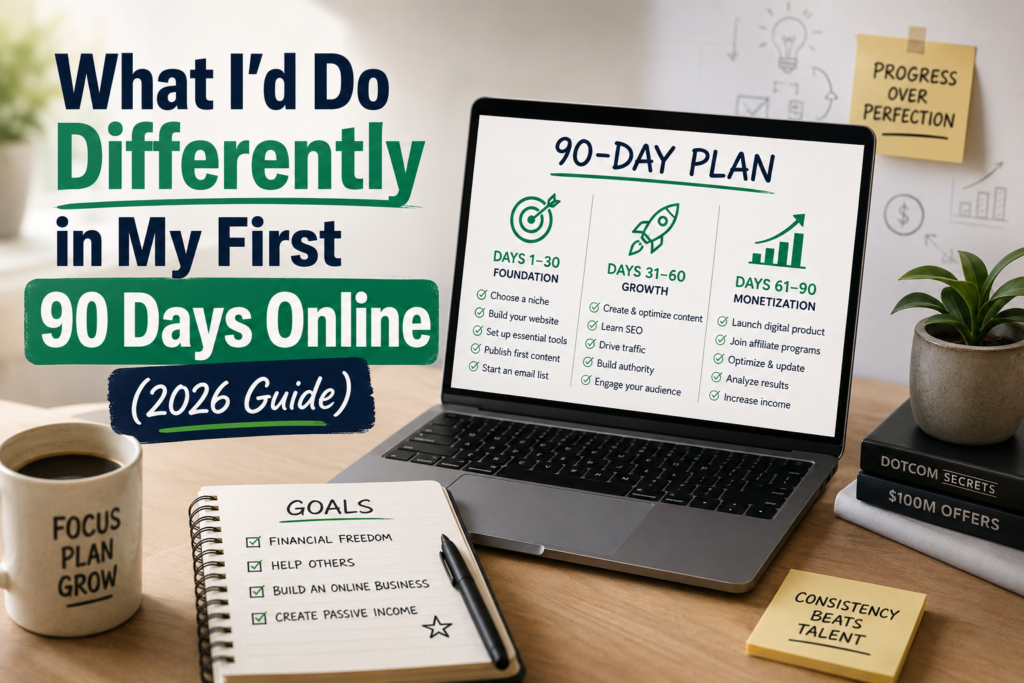
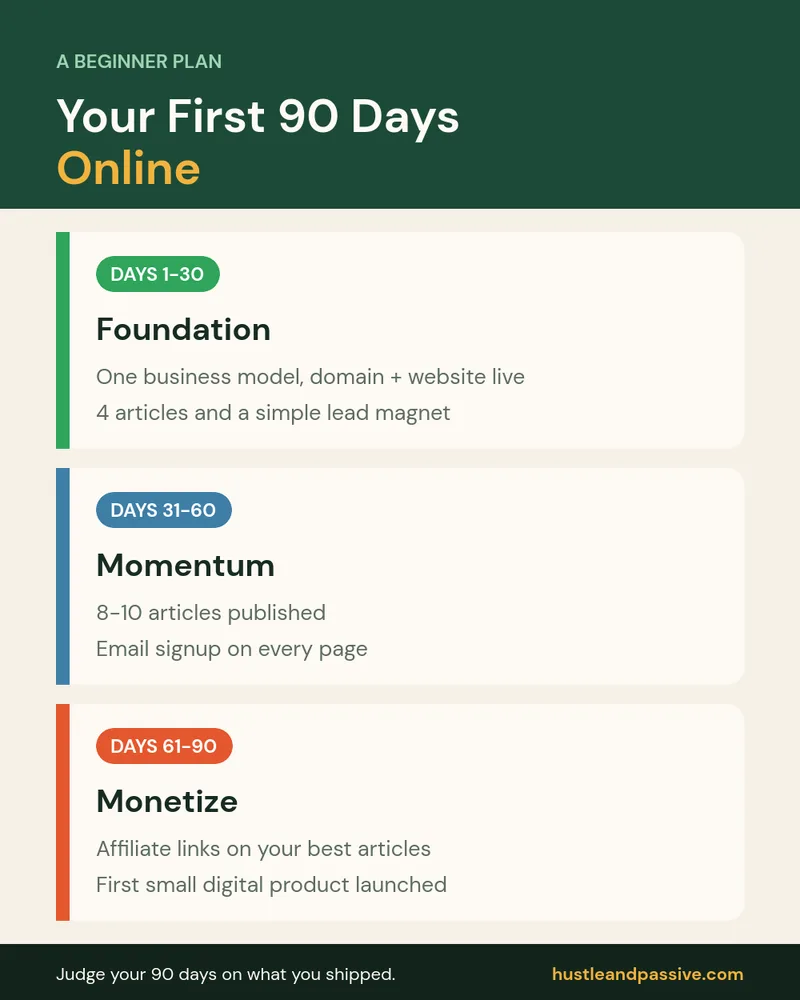
A 90-Day Plan for Your First 90 Days Online
| Days | Focus | Goal by the end |
|---|---|---|
| 1–30 | Foundation | Business model chosen, domain and website live, 4 articles published, lead magnet created |
| 31–60 | Momentum | 8–10 articles published, email signup on every page, first newsletters sent |
| 61–90 | Monetize | Affiliate links on your best articles, first small product launched, review what’s working |
Common Mistakes in Your First 90 Days Online
- Trying too many business models at once.
- Consuming more than creating: courses and videos feel productive but don’t build anything.
- Expecting results too quickly. Search traffic often takes months to arrive.
- Ignoring SEO and relying only on social media.
- Waiting too long to monetize because you don’t feel “big enough” yet.
First 90 Days Online FAQ
How much money should I expect to make in my first 90 days online?
Often very little, and that’s normal. Most beginners earn nothing or a small amount in the first three months, because content and search traffic take time to build. Treat the first 90 days as setting up assets, not as a test of income.
Is AI enough to build an online business?
No. AI speeds up research, drafting and repetitive tasks, but readers and customers come back for useful, trustworthy content and your own perspective, which AI can’t supply on its own.
Should I start with social media or a website?
Start with a website you own, and use social media to bring people to it. A website and email list keep working even when a platform changes its rules.
How often should I publish?
A realistic pace for beginners is one well-researched article a week. Consistency over months matters more than publishing a lot in the first few weeks.
What should I do first in my first 90 days online?
Choose one business model, buy a domain, and publish your first piece of content within the first week.
If you’re building this out, two guides help: a weekly side hustle system and extra income while working full-time.
Your Next Step
Write down the one business model you’ll follow for the next 90 days, buy your domain, and publish your first article this week. For the bigger picture, see our beginner guide to passive income and ethical affiliate marketing.
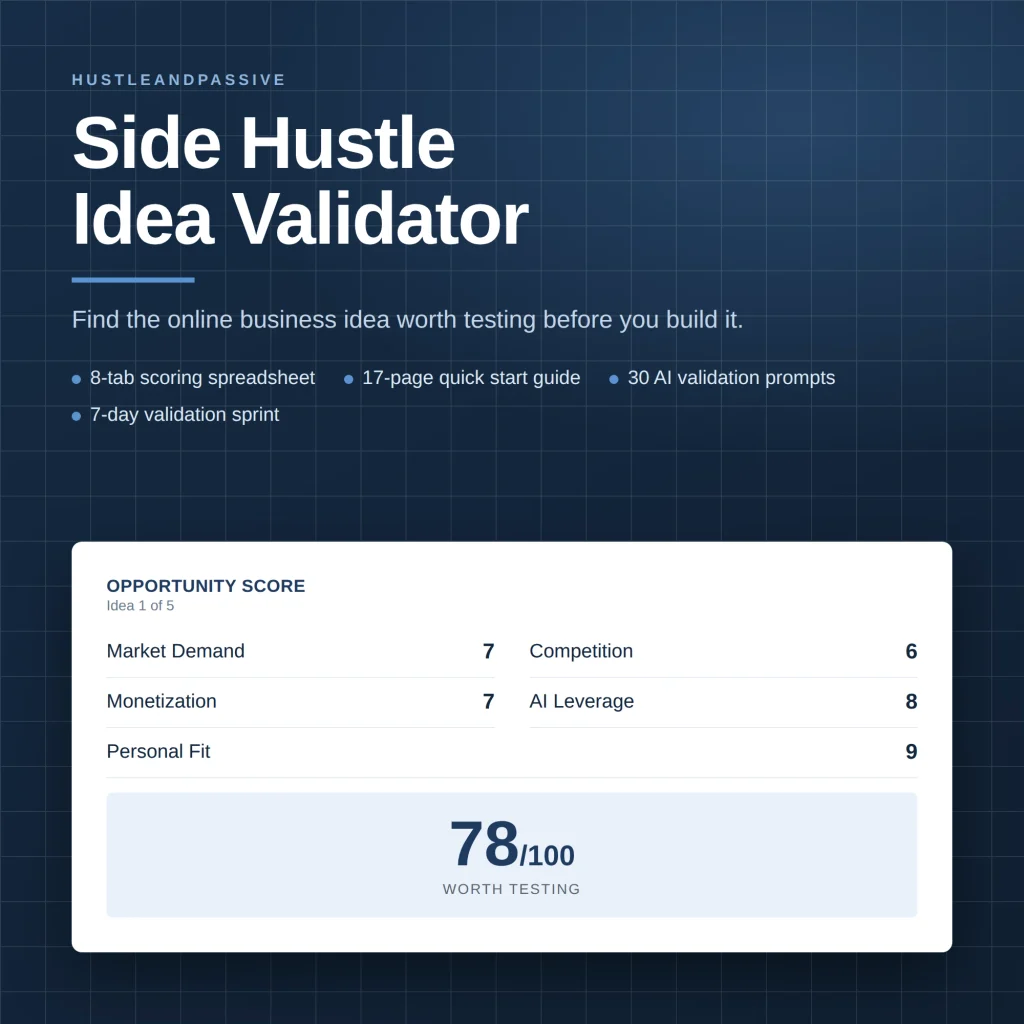
Not sure which business model to pick? My Side Hustle Idea Validator ($9) scores each idea on demand, competition and startup cost, and the free 50 AI Side Hustle Ideas list gives you fifty starting points.

Writes and tests every guide on hustle&passive. Everything here is something we have actually run — including the parts that did not work.