Disclosure: some links in this guide are affiliate links, so I may earn a commission if you buy through them, at no extra cost to you. As an Amazon Associate I earn from qualifying purchases.
Remote side hustles let you earn extra income from home around a day job: no commute, flexible hours, and options for almost every skill level, including side jobs from home that need no experience. This guide covers 15 remote side jobs grouped by skill level, with what each one really pays, where to find the work, and the first step to take. Pay figures come from the platforms or official data where available; where you set your own rates, we say so instead of guessing.
Paying for a job board is a common first step with remote work, so before you subscribe to anything, read is FlexJobs legit to see what the fee really gets you.
If writing is your strongest skill, our guide to websites that pay you to write lists 12 real options, with what each one pays and the fees it takes.
15 Remote Side Hustles at a Glance
| Remote side hustle | Typical pay | Skill level | Where to find work |
|---|---|---|---|
| Virtual assistant | Hourly; you set rates on freelance sites | Beginner | Upwork, small business groups |
| Customer service rep | US median $21.53/hour (all reps, BLS) | Beginner | Working Solutions, LiveOps, company job boards |
| Data entry | Varies widely; beware “high pay” offers | Beginner | Upwork, staffing agencies |
| User testing | $4–$10 per short test; $30–$60 per live interview | Beginner | UserTesting, Respondent |
| Website and app testing | Paid per test case or approved bug | Beginner | Test IO and similar |
| Freelance writing | You set rates; content sites pay less | Intermediate | Direct clients, content platforms |
| Social media graphics | Monthly packages you price | Intermediate | Local businesses, Fiverr |
| Voice-over | Per project | Intermediate | Voices, Fiverr |
| Video editing | Per video or monthly package | Intermediate | Podcasters, YouTubers, Upwork |
| Social media management | Monthly retainer | Intermediate | Local businesses |
| WordPress help | Per project or hourly | Intermediate | Small businesses, Upwork |
| Basic SEO services | Monthly retainer | Intermediate | Local businesses |
| English conversation tutor | $10.20/hour (Cambly adults); $12/hour (Cambly Kids) | Beginner | Cambly, italki |
| Subject tutoring | You set rates; Wyzant keeps 25% | Intermediate | Wyzant, local families |
| Test prep coaching | Higher than general tutoring | Advanced | Direct clients, tutoring sites |
Sources: US customer service pay from the Bureau of Labor Statistics (2025 data, all customer service reps, not only remote); Cambly rates as reported by Premier TEFL; Wyzant’s fee from Wyzant’s tutor support page. Rates change, so check each platform before you apply.
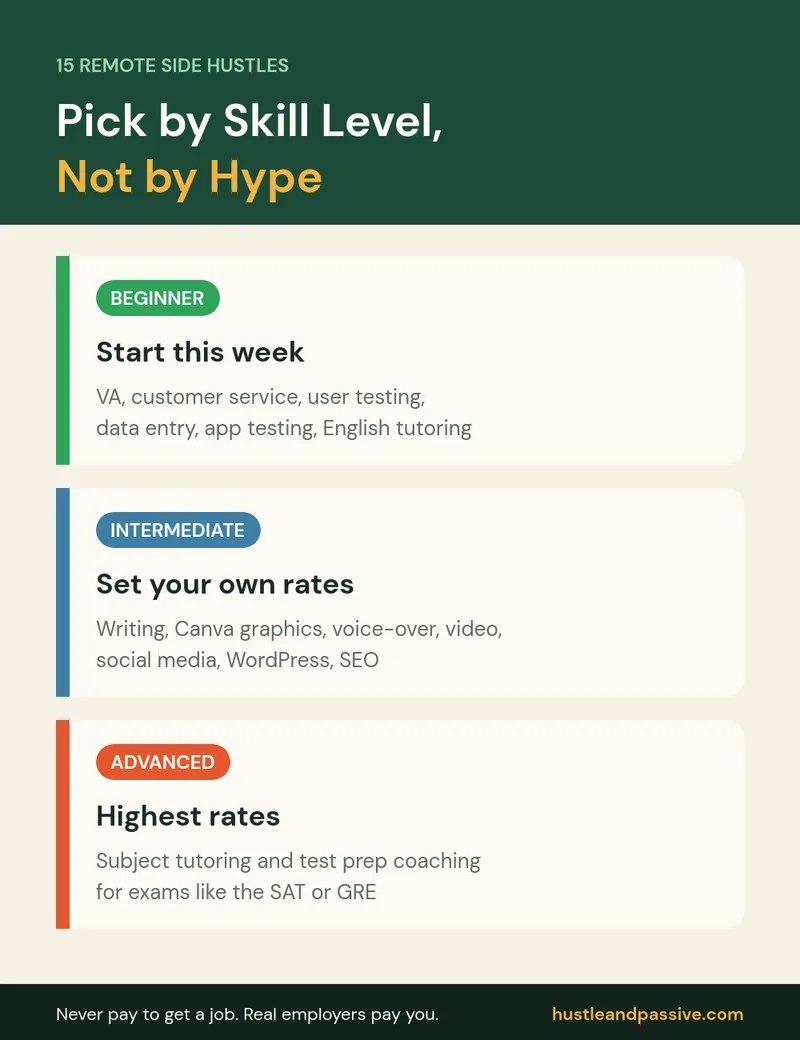
Remote Side Jobs That Don’t Require Special Skills
1. Virtual Assistant
Managing inboxes, scheduling, social posting and customer emails draws on organization rather than training, which makes it one of the easiest remote side hustles to start. Find first clients on Upwork or in Facebook groups for small business owners. Our step-by-step guide on how to become a virtual assistant with no experience covers rates, templates and a 30-day plan, and our roundup of virtual assistant tools covers the software.
2. Remote Customer Service
Chat, email and phone support roles are common with companies serving customers across time zones. Working Solutions, LiveOps and ModSquad regularly hire; expect a skills assessment and mock calls. You’ll need a quiet space, a reliable connection and a good noise-cancelling USB headset. Note that some roles are contractor positions where you pay for your own equipment.
3. Data Entry
Data entry means transferring information between systems for healthcare, research or admin clients. It’s simple but repetitive, and pay varies a lot. Be very wary of listings promising high pay for simple typing: that’s one of the most common job scams (see the scam section below).
4. User Testing and Research Studies
On sites like UserTesting, you record yourself using a website or app and talking through your thoughts. Short tests typically pay $4 to $10 and live interviews $30 to $60, according to a 2026 review of UserTesting pay. Respondent focuses on longer research interviews, often with professionals. You won’t qualify for every study, so treat this as a supplement, not a main income.
5. Website and App Testing
Testing platforms like Test IO pay you to follow test scenarios and report bugs. It’s a good fit if you’re detail-oriented. The downside is an unpredictable schedule: test invitations arrive randomly and fill up fast.
Creative and Tech Remote Side Hustles
6. Freelance Writing
Content platforms offer entry-level work at lower rates, while a simple portfolio and direct outreach lead to better-paying clients over time. See our guides on how to start a freelance writing career and the best freelance writing websites.
7. Social Media Graphics With Canva
Canva’s templates let you produce professional social graphics for small businesses without formal design training. Monthly packages, such as a set number of posts per month, sell better than one-off designs. You can also sell your designs as products; see our guide to selling Canva templates.
8. Voice-Over Work
Explainer videos, e-learning courses and phone systems all need voices, and many clients want natural voices rather than polished narration. A good USB microphone and a quiet, soft-furnished room are the main upfront costs. Voices and Fiverr are common places to find clients, though competition is strong.
9. Video Editing
Businesses and creators need short clips, podcast highlights and YouTube edits. Free software like DaVinci Resolve is enough to start. Cutting long podcast interviews into short clips is a good first offer because it’s easy to show before-and-after results.
10. Social Media Management
Local businesses often need someone to plan, schedule and post content. Bill it as a flat monthly package tied to a posting schedule, and send a simple monthly report showing engagement so clients see the value.
11. WordPress Help
Millions of small business sites run on WordPress and need updates, fixes and new pages. Learn with free resources like freeCodeCamp, and build a small portfolio site of your own; a host like Hostinger gives you a cheap place to practice. Specializing in WordPress leads to more repeat work than trying to cover all of web development.
Host Your Own Storefront for Under $2.99/Month
Skip the marketplace cut entirely. Hostinger runs everything from landing pages to checkout, fast enough to handle a launch spike without falling over.
12. Basic SEO Services
Keyword research, on-page fixes and local listings are valuable to small businesses without a marketing team. Learn the basics from free guides, use a keyword tool like Keysearch, and sell it as a monthly service with clear reports.
Find Keywords That Actually Rank
Stop guessing what to write. KeySearch helps you discover low-competition keywords, analyze competitors, and create SEO content that drives long-term organic traffic.
Remote Teaching and Tutoring
13. English Conversation Tutor
Cambly and italki connect fluent speakers with language learners. On Cambly’s adult platform you need to be 18+ and a native or fluent English speaker, with no degree or teaching certificate required; Cambly Kids requires a college degree. You’re paid only for minutes spent with students, so real hourly earnings are lower when you wait between calls. On italki you set your own price, and italki keeps a commission on each lesson.
14. Subject Tutoring
Math, science and language tutoring pays according to subject and level. On Wyzant you set your hourly rate and Wyzant keeps a 25% platform fee, so price with that in mind. Local families and school networks let you keep your full rate.
15. Test Prep Coaching
Coaching for exams such as the SAT, GRE or professional certifications usually earns more than general tutoring because it needs detailed knowledge of the test. Demand is seasonal, peaking before test dates.
Add Passive Income Alongside Your Remote Gigs
Active gigs pay for your time. Over time, you can turn what you learn into products that sell without you, like templates, guides or a short course. See our list of digital products you can create with AI and our plan for building multiple passive income streams.
How to Avoid Remote Job Scams
Remote work attracts scammers. The first three warning signs below come from the FTC’s guide to job scams; the last two are common patterns worth adding:
- Paying to get a job: real employers don’t charge for training, starter kits or “certification.”
- Checks you’re asked to deposit and send money back from: the check bounces later, and you lose the money.
- Pay that’s too good to be true for simple work like typing or reshipping packages.
- Interviews only by chat app with no video call, company email or verifiable website.
- Requests for bank or ID details before you have a signed offer from a company you’ve verified.
Taxes on Remote Side Income
In the US, if you earn $400 or more in net self-employment income in a year, you generally need to file a tax return and pay self-employment tax, according to the IRS self-employed tax center. Set aside part of every payment, track your expenses, and consider quarterly estimated payments once your side income grows. Our guide to financial planning for gig workers covers this in detail.
How to Balance Remote Side Jobs With a Day Job
- Start with one gig. Learn it well before adding a second.
- Block fixed hours, like two evenings and one weekend morning, and protect them.
- Check your employment contract for rules on outside work, and never use your employer’s time or equipment.
- Track hours and income for each gig so you know what’s really worth your time.
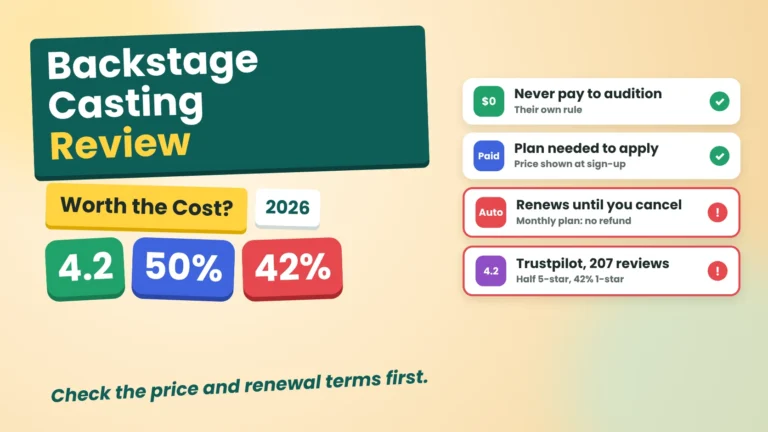
Interested in voice-over or video work without being on camera? See how to start a faceless AI side hustle. If you would rather audition for paid voice and acting roles, check whether Backstage casting is worth paying for first.
Remote Side Hustles FAQ
What is the easiest remote side hustle to start?
User testing and English conversation tutoring have the lowest barriers: you can often sign up and start within days. Virtual assistant work is a strong next step because demand is steady and you can raise your rates as you gain experience.
Which remote side jobs pay the most?
Skilled services such as SEO, WordPress work, video editing and test prep coaching usually pay more than entry-level gigs, because you set your own rates. Beginner platforms with fixed rates, like Cambly or user testing sites, pay less but are faster to start.
Can I do remote side jobs with no experience?
Yes. Customer service, user testing, data entry, conversation tutoring and virtual assistant work all accept beginners. Build a small portfolio or a few reviews first, then raise your rates.
How do I know if a remote job is a scam?
Be wary if you’re asked to pay for training or equipment, deposit a check and send money back, or share bank details before a verified offer. Paying to get a job and fake check schemes are the FTC’s top warning signs.
Do I have to pay taxes on remote side income?
In the US, generally yes once your net self-employment income reaches $400 in a year. Set aside part of each payment and keep records of your expenses.
More guides in this series:
Your Next Step
Pick one remote side hustle from the beginner list, create your profile on one platform today, and aim to finish your first paid task this week. Want more ideas? See our list of ways to make money online and side hustles that pay daily.
If you would rather have a steady role than gigs, compare the best part-time jobs.
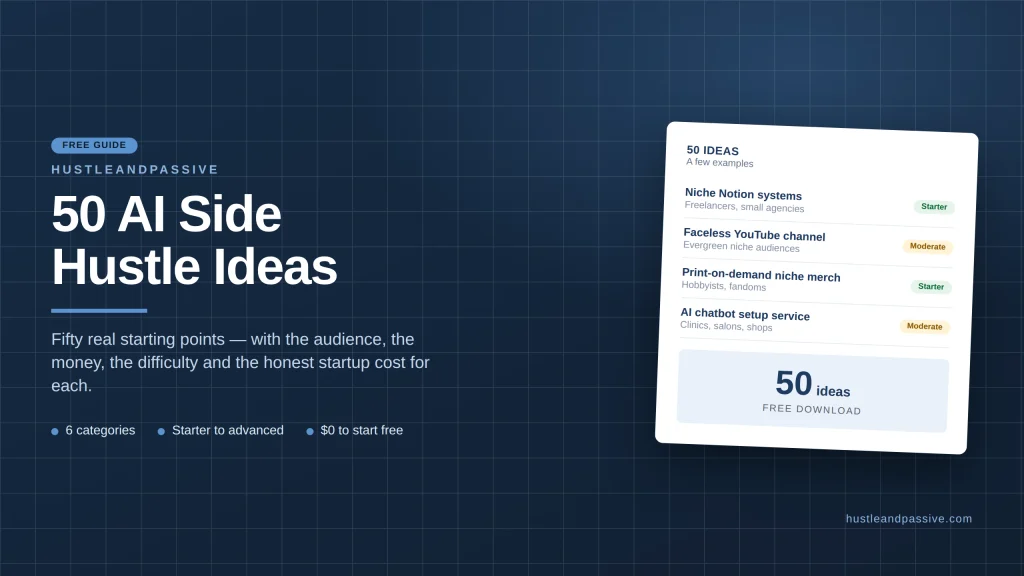
Can’t decide which remote side hustle to try? My Side Hustle Idea Validator ($9) scores each idea on demand, competition and startup cost, and the free 50 AI Side Hustle Ideas list gives you fifty to choose from.

Writes and tests every guide on hustle&passive. Everything here is something we have actually run — including the parts that did not work.