This post contains affiliate links. I may earn a commission at no extra cost to you.
TL;DR
- ChatGPT stopped being “just a chatbot” in July 2026 ChatGPT Work, its new agent mode, now plans and executes multi-step jobs on its own and hands you a finished spreadsheet, deck, or draft.
- The side hustles that worked in 2025 still work freelance writing, SEO blogging with affiliate content, digital products and consulting but the 2026 version of each one is faster and higher-output because of agent mode and scheduled Tasks.
- Three newer ones are worth adding this year: ChatGPT-assisted dropshipping/print-on-demand, packaging your ChatGPT know-how into a paid community, and selling prompt packs and custom GPTs.
- Realistic range to make money with ChatGPT as a part-time side hustler, three to six months in: $300–$2,000/month, depending on the hustle and how consistently you show up.
- You’ll still need at least one non-ChatGPT tool for each hustle a hosting account, a keyword tool, a store platform. ChatGPT drafts; it doesn’t publish, sell, or host anything for you.
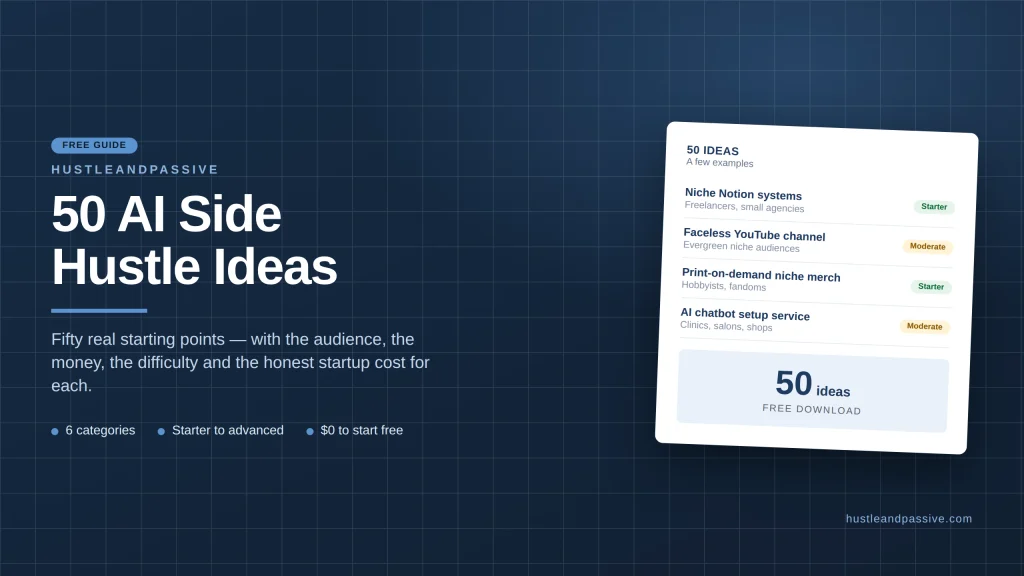
For more on the tools side of this, see AI Tools for Digital Products and Digital Products to Create With AI. If none of the seven fits you, my free 50 AI Side Hustle Ideas list has fifty more starting points.
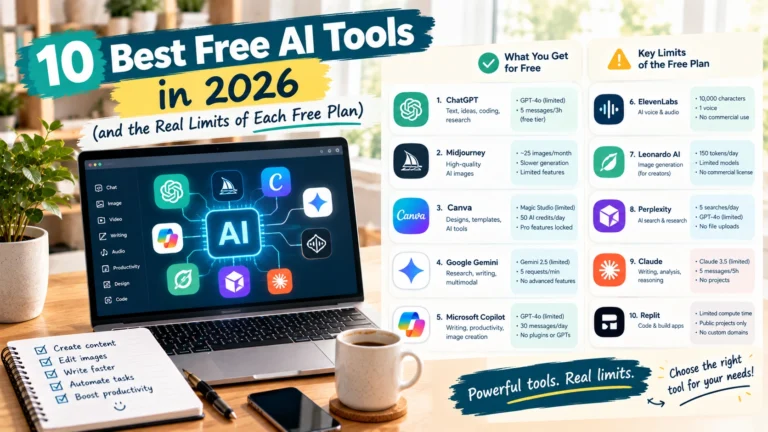
If you want to try this without a subscription, see our list of free AI tools first.
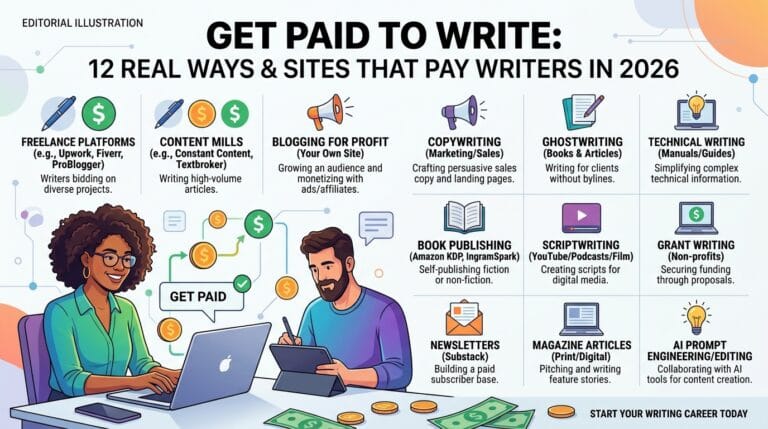
ChatGPT is only one route. For the full picture, including services, templates and faceless channels, see how to make money with AI in 2026.
What’s new for ChatGPT side hustles in 2026
If you read a “make money with ChatGPT” guide from 2024 or 2025, most of it still applies but one thing changed enough to matter for anyone doing this seriously.
In July 2026, OpenAI rolled out ChatGPT Work, an agent mode that sits alongside regular Chat. Instead of answering one prompt at a time, Work plans a multi-step job, connects to tools like Gmail, Google Drive, and Slack through a plugins directory, and can stay on a task for hours to produce a finished deliverable a formatted spreadsheet, a slide deck, a first draft of a whole content calendar rather than a block of text you have to reformat yourself.
Practically, that means the “content creation” and “consulting” hustles below aren’t limited to one-off prompts anymore. You can hand Work a brief in the morning (“research these 10 competitors, build a comparison spreadsheet, draft outreach emails for each”) and come back to something close to done. There’s also Tasks, a smaller but genuinely useful feature: it schedules recurring or one-time jobs a weekly content-idea brief, a daily competitor check so ChatGPT keeps working after you close the tab.
None of this replaces judgment, editing, or actually running the business. It changes the ceiling on how much one person can output, which is the whole game in a side hustle you’re running around a day job.
If you sell ChatGPT-assisted work, it’s worth understanding AI content legal rights first.
1. Freelance Writing & Content Services
Who it’s for: anyone who can write a clean sentence and doesn’t mind editing AI output rather than starting from a blank page.
ChatGPT won’t land you clients, but it will cut your drafting time by more than half once you have a workflow. The reader who does well here treats ChatGPT as a first-draft machine, not a finished-product machine clients can tell the difference, and repeat work depends on it.
How to start:
- Pick a lane blog posts, product descriptions, LinkedIn ghostwriting, email sequences. Generalists undercharge; specialists don’t.
- Build 3–5 portfolio samples using ChatGPT drafts you’ve personally rewritten in your own voice.
- Pitch on Upwork, Contra, or directly via cold email not just marketplaces, which are crowded with AI-only submissions clients are learning to spot.
- Put your portfolio on its own site rather than a shared profile page. A one-page portfolio site is cheap to run and signals you’re a real operator, not a gig-app account.
If you want to skip the DNS and hosting setup, Hostinger gets a portfolio site live in under an hour, and their entry plans are cheap enough that it pays for itself with a single client.
Launch Your Website Today Without Breaking the Bank
Get fast, secure, and beginner-friendly hosting with Hostinger. Set up your website in minutes and start building your online business today.
Sample prompt: “Draft a 600-word blog post on [topic] in a direct, no-fluff tone. Include one specific example or number in each section no generic statements.”
Realistic income: $300–$1,500/month at 5–10 hours/week, scaling with rate and repeat clients.
2. SEO Blogging & Affiliate Content
Who it’s for: people willing to publish consistently for 6+ months before it pays off this is the slowest hustle on this list and the one with the highest ceiling.
The idea is simple: pick a niche, publish content that ranks, and earn commissions on the products you recommend. ChatGPT speeds up drafting and outlining, but it can’t tell you what people are actually searching for or how competitive a keyword is that part still needs real data.
How to start:
- Choose a niche narrow enough to rank in but big enough to sustain 30+ articles.
- Research keywords with actual search volume and difficulty data before you write anything guessing here wastes months.
- Draft with ChatGPT, then rewrite the intro and add one real detail per section (a number, a screenshot, a specific outcome) so it doesn’t read like every other AI article in your niche.
- Apply to affiliate programs relevant to your niche and place links naturally, not stuffed into every paragraph.
Keyword research is the step people skip and regret. Keysearch is the tool I’d point a beginner to first it’s cheaper than the big-name options and good enough for a one-person blog to find the keywords worth the effort.
Find Keywords That Actually Rank
Stop guessing what to write. KeySearch helps you discover low-competition keywords, analyze competitors, and create SEO content that drives long-term organic traffic.
Sample prompt: “List 15 long-tail keyword ideas around [topic] that a beginner blogger with low domain authority could realistically rank for.”
Realistic income: $0 for the first 3–4 months, then $200–$1,000/month by month 8–12 for a consistently updated niche site and it compounds from there.
3. Selling AI-Designed Digital Products
Who it’s for: people who’d rather build something once and sell it repeatedly than trade hours for money.
If you want a ChatGPT side hustle without clients, templates, planners, prompt packs, and Notion dashboards are still one of the highest-margin digital products around, because ChatGPT can draft the content and a design tool turns it into something sellable in an afternoon.
How to start:
- Pick a format buyers already trust Notion templates, Canva templates, printable planners, prompt packs for a specific job or hobby.
- Use ChatGPT to draft the content structure, copy, and instructions.
- Design it properly this is the step that separates a $9 product from something nobody buys.
- List it on Etsy, Gumroad, or your own site, and price based on the problem it solves, not the hours it took you.
For the design step, Canva is what most sellers in this space actually use its template library makes it realistic to go from a ChatGPT outline to a polished product in one sitting, even with no design background.
Sample prompt: “Create a 12-page content outline for a [niche] Notion template sections, what goes in each, and what makes it different from a generic version of this template.”
Realistic income: $100–$800/month per product once you have a handful listed; most sellers run 3–8 products in a portfolio rather than betting on one.
4. ChatGPT-Assisted Dropshipping & Print-on-Demand
Who it’s for: people who want a real online store, not just content this one needs more setup than the others but has a lower content ceiling to worry about.
This wasn’t a standard ChatGPT side hustle two years ago, but ChatGPT Work has made it realistic for one person to run the content side of a small store product descriptions, ad copy, customer-service replies without hiring anyone.
How to start:
- Pick a narrow product niche rather than a general store niche stores convert better and are easier to market.
- Source products through a print-on-demand or dropshipping supplier integration.
- Use ChatGPT for product descriptions, size guides, and FAQ copy this is genuinely tedious work to write by hand for 20+ SKUs.
- Run the store itself on a proper e-commerce platform rather than trying to patch one together payments, inventory, and shipping rules aren’t worth DIY-ing.
Shopify is the platform most side-hustle store owners default to for exactly this reason it handles the operational parts so your time goes into product and marketing, where ChatGPT can actually help.
Sell Digital Products While You Sleep
Don’t let a clunky checkout process kill your sales. Shopify makes it incredibly easy to sell digital downloads, manage inventory, and get paid whether you are awake or asleep.
Sample prompt: “Write a product description for [product] aimed at [audience], highlighting [2–3 features], in a tone that’s confident but not salesy. Keep it under 120 words.”
Realistic income: highly variable $0 to $1,000+/month depending on product-market fit and ad spend; treat the first two months as a test, not a launch.
5. Packaging Your ChatGPT Skills Into a Paid Community
Who it’s for: anyone who’s already good at one of the hustles above and gets asked “how do you do that?” more than twice a week.
If people are asking how you’re using ChatGPT for [X], that’s a sellable skill, not just a hobby. A paid community or mini-course is a way to monetize the knowledge without trading more hours for client work.
How to start:
- Narrow your topic to one specific outcome (“write your first 10 blog posts with ChatGPT,” not “how to use AI”).
- Draft your curriculum and lesson outlines with ChatGPT, then test them on 2–3 people for free before charging anyone.
- Launch small a $19–$49/month community beats a $500 course nobody finishes.
- Keep the format simple: weekly prompts, a Q&A thread, and a couple of live sessions is enough to start.
Skool is built specifically for this course content and community discussion live in one place, which matters more than it sounds like for keeping people engaged past week one.
Stop Losing Students After Week One
Course content + community discussion = one powerful platform. Skool unifies your teaching and your tribe, making it easier than ever to retain students and build a loyal, paying audience.
Sample prompt: “Outline a 4-week beginner curriculum for [skill], with one clear outcome per week and a specific action step for each lesson.”
Realistic income: $200–$1,500/month with 20–50 paying members; most of the effort is in the first cohort, not the tenth.
6. Consulting & Done-for-You AI Implementation
Who it’s for: people with an existing skill (marketing, ops, customer service, content) who can show a business how to fold ChatGPT into what they already do.
This is the highest hourly-rate ChatGPT side hustle on the list, and also the one where ChatGPT itself is the smallest part of the value you’re selling judgment, not prompts.
How to start:
- Pick a specific business problem you can solve, not “AI consulting” in general “cut your customer-email response time in half” sells; “AI strategy” doesn’t.
- Build one case study, even an unpaid pilot, before charging full rate.
- Use ChatGPT Work to build the actual deliverables during the engagement workflow docs, prompt libraries, first-draft automations so clients see something tangible, fast.
- Track leads and follow-ups somewhere real once you have more than 2–3 prospects at once; a spreadsheet stops working faster than people expect.
If you’re managing more than a handful of leads, a free-tier CRM like HubSpot keeps follow-ups from falling through the cracks overkill at one client, genuinely useful at five.

Own Your Audience. Build Your List
Social media algorithms can change tomorrow. Your email list is yours forever. HubSpot gives you the tools to capture leads, automate sequences, and turn subscribers into buyers without needing a tech degree.
Sample prompt: “Draft a one-page proposal for a [business type] client covering: the problem, the fix using ChatGPT, expected time saved per week, and a 2-week pilot scope.”
Realistic income: $500–$3,000/month for a handful of small clients at 3–5 hours each, well above the per-hour rate of the other hustles here.
7. Selling Prompt Packs and Custom GPTs
Who it’s for: people who already use ChatGPT well for one specific job, such as writing listings, planning lessons or answering support emails, and can package that into something repeatable.
This is the most direct way to make money with ChatGPT itself: instead of using ChatGPT prompts to make money through client work, you sell the prompts. A prompt pack is a tested set of prompts for one outcome; a custom GPT is a version of ChatGPT set up with your instructions and reference files. Both are cheap to make. The money usually comes from what you sell around them, not from the GPT Store itself: sell the pack on Gumroad or Etsy, include a custom GPT as a bonus with a paid template, or set one up for a client as part of a service.
How to start:
- Pick one narrow job and one buyer, for example “Etsy listing descriptions for handmade jewelry sellers”.
- Build 15–25 prompts for that job and test each one on real inputs until the output is usable with light editing.
- Write a short guide on how to use them, with before-and-after examples from your tests.
- Price it as a small product ($9–$29 is common for prompt packs) and list it where your buyers already shop.
Sample prompt: “Act as a prompt engineer. Turn this task into a reusable prompt with placeholders in [brackets], one example input, and a checklist the user can follow to judge whether the output is good: [describe the task].”
Realistic income: $50–$500/month from a small catalog. Prompt packs are easy to copy, so the ones that keep selling are narrow, well tested and backed by a buyer audience.
Earnings Reality Check: What Each Way to Make Money with ChatGPT Pays
These are the ranges from each section above in one place. They are illustrations for someone putting in 5–10 hours a week, not averages or promises: plenty of people earn nothing from a hustle they abandon after a month, and a few earn much more.
| Side hustle | Time to first dollar | Part-time range after 3–6 months | What decides it |
|---|---|---|---|
| Freelance writing | Weeks, if you pitch | $300–$1,500/mo | Your niche, rates and repeat clients |
| SEO blogging & affiliates | 3–4 months or more | $0–$1,000/mo (by month 8–12) | Keyword choice and publishing consistency |
| Digital products | 1–3 months | $100–$800/mo per product | Design quality and where you list |
| Dropshipping / print-on-demand | 1–2 months | $0–$1,000+/mo | Product-market fit and ad spend |
| Paid community | 1–2 months | $200–$1,500/mo | An audience that already asks you for help |
| Consulting | Weeks, with a network | $500–$3,000/mo | A specific problem you can solve |
| Prompt packs & custom GPTs | 1–2 months | $50–$500/mo | How narrow and well tested the product is |
The pattern matters more than the numbers: services pay fastest but stop when you stop, while blogs, products and communities start slower and keep paying.
Putting It Together: Using ChatGPT Work to Run All of This
Whichever ChatGPT side hustle you pick, the actual bottleneck is rarely “can I write this” it’s the busywork around it: research, formatting, following up, keeping a content calendar current. That’s the specific gap ChatGPT Work and Tasks close in 2026. A content calendar that used to take an evening to build can be a Work session you kick off before dinner and check on after. A weekly competitor scan that you’d skip when busy can run on a schedule via Tasks instead.
Start with one ChatGPT side hustle from this list, not three at once the people who actually hit the income ranges above picked one and stuck with it past the point where it felt slow.
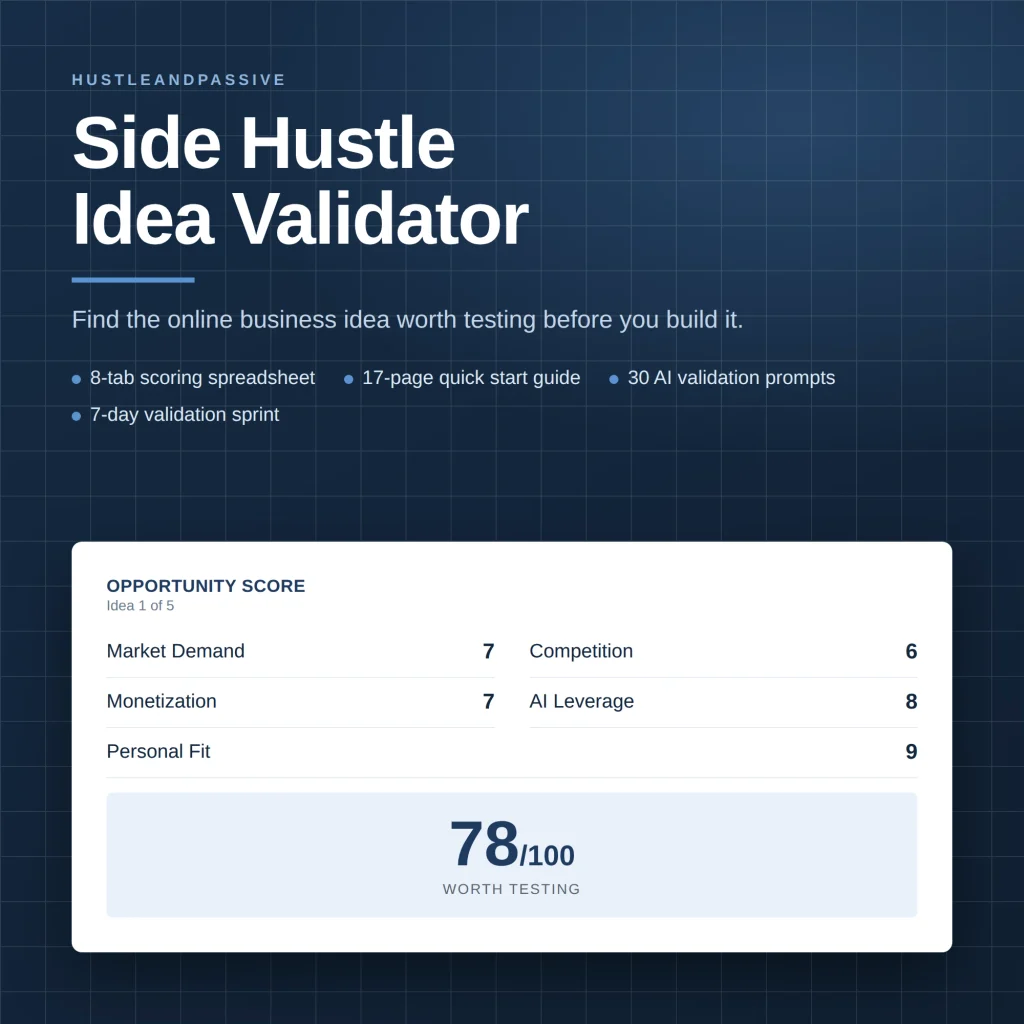
My Side Hustle Idea Validator is a spreadsheet that scores each option on eight weighted criteria, including market demand, competition, startup cost and personal fit, and gives you a build, modify or kill call. It won’t predict income; it tells you which hustle deserves your next 90 days.
Frequently Asked Questions
Is ChatGPT actually free to use for these side hustles?
The free tier covers light use, but anyone doing this seriously will hit limits fast. Most side hustlers on this list move to a paid tier (ChatGPT Plus is $20/month) once volume picks up, which is a small cost against even one client payment.
How much can a beginner realistically make in the first month?
Close to $0 for content-based hustles (SEO blogging, digital products) those are 3+ month plays. Freelance services and consulting can produce income in week one if you already have a network to pitch.
Do I need to disclose that I used ChatGPT?
For most freelance and content work, no legal disclosure is required, but many clients ask directly — be upfront if asked, and always fact-check and edit AI drafts before publishing under your name.
Is ChatGPT Work worth it for a side hustle, or is regular ChatGPT enough?
Regular Chat is enough to start any hustle on this list. Work becomes worth it once you’re producing enough volume that the multi-step, deliverable-first format actually saves you real time usually a few weeks in, not on day one.
If you want to go deeper, my guide to free vs paid AI tools is a good next read.
Conclusion
The ways to make money with ChatGPT that worked in 2025 (freelance writing, affiliate blogging, digital products and consulting) still work in 2026, and ChatGPT Work has made each of them faster to run. Dropshipping, paid communities and prompt packs are worth adding this year because agent mode makes the content side of all three realistic for one person. Pick the one ChatGPT side hustle that matches a skill you already have, give it a real 90 days, and layer in the right tool for that hustle rather than trying to do all seven at once.

Writes and tests every guide on hustle&passive. Everything here is something we have actually run — including the parts that did not work.