Disclosure: some links in this guide are affiliate links, so I may earn a commission if you buy through them, at no extra cost to you. As an Amazon Associate I earn from qualifying purchases.
Most “work from home” lists are really laptop jobs. This guide is different: it covers home-based businesses that use your house itself, such as a kitchen, a spare room or a garage, and some equipment, to make and sell physical products or offer in-person services. For each one you’ll see a realistic starting budget, the space you need, and the rule you must check before your first sale.
Want laptop-only ideas instead? See our side hustle ideas from home, or the full list of best business ideas for 2026.
12 Home-Based Businesses at a Glance
Budgets are rough starting ranges for basic equipment and supplies, assuming you already have a home and a phone or computer. Your costs will depend on what you already own and local fees.
| Business | Starting budget | Space you need | Check first |
|---|---|---|---|
| Home bakery | $300–$1,500 | Your kitchen | Your state’s cottage food law |
| Candle making | $150–$500 | Kitchen or ventilated workspace | Fire-safety labels, insurance |
| Handmade soap | $200–$600 | Kitchen or workspace | Labeling rules (CPSC or FDA) |
| Laser engraving | $400–$3,000+ | Garage or ventilated room | Fume extraction, fire safety |
| Custom T-shirts | $400–$1,200 | Spare table or room | No copyrighted designs |
| Machine embroidery | $500–$1,500+ | Spare room | No copyrighted designs |
| 3D printing | $250–$1,000 | Desk or shelf | No trademarked characters |
| Sewing and alterations | $200–$800 | Spare room | Home occupation permit |
| Home photo studio | $500–$2,000 plus camera | Spare room | Client visits allowed by zoning |
| Pet grooming | $500–$2,000 | Garage or utility room | Zoning, insurance |
| Home daycare | Varies by state | Child-safe home | State child care license |
| Bike repair | $300–$1,000 | Garage | Zoning for customer traffic |
Food and Handmade Product Businesses
1. Home Bakery
Cookies, breads, cakes and treats are the classic home-based business, and most US states now allow them under cottage food laws. According to the Institute for Justice, rules vary widely: many states limit sales to shelf-stable foods, about half of states with yearly sales caps set them at $50,000 or less, and some ban online sales or shipping. Look up your own state’s law before you bake for customers.
- Equipment: a stand mixer, a digital kitchen scale, extra baking pans and labeled packaging.
- How you earn: farmers’ markets, local pre-orders, custom cakes for events.
2. Candle Making
Candles have low ingredient costs and sell well as gifts, especially in a clear niche like a scent theme or local design. Test burn every batch, and put clear fire-safety warnings on every candle. Product liability insurance is worth pricing early, because you’re selling something people set on fire.
- Equipment: a soy wax starter kit, a pouring pitcher, a thermometer, wicks, jars and fragrance oils.
- How you earn: Etsy, craft fairs, local shops on consignment, custom wedding favors.
3. Handmade Soap
In the US, true soap made mostly of fats and lye is regulated by the Consumer Product Safety Commission, while products sold as moisturizers or with cosmetic claims fall under the FDA. The FDA’s fact sheet for homemade cosmetics confirms no license or pre-approval is needed, but you’re responsible for safety and correct labels, including a street address. Avoid health claims like “treats eczema,” which turn a soap into a drug.
- Equipment: a scale, stick blender, soap molds, safety goggles and gloves for handling lye.
- How you earn: markets, Etsy, gift sets, wholesale to local boutiques.
Maker Businesses With Equipment
4. Laser Engraving and Personalized Gifts
A laser engraver turns cheap blanks such as wood signs, cutting boards, tumblers and coasters into personalized products that sell for much more. Entry-level diode lasers cost a few hundred dollars; enclosed CO2 machines cost thousands. Plan for ventilation from day one, because engraving produces smoke and fumes, and never leave a running laser unattended.
- Equipment: a diode laser engraver, an exhaust fan or enclosure, a fire extinguisher and blank materials.
- How you earn: custom gifts, wedding and corporate orders, Etsy personalization.
5. Custom T-Shirts and Apparel
With a heat press and a cutting machine, you can make custom shirts, tote bags and team apparel on demand. The fastest-growing orders are usually local: sports teams, family reunions, small businesses and events.
- Equipment: a heat press, a cutting machine, heat-transfer vinyl and blank garments.
- Watch out: don’t use team logos, characters or brand names you don’t have rights to.
6. Machine Embroidery
Embroidered hats, jackets and baby items sell at premium prices because they look more durable and personal than prints. Start with a single-needle machine; multi-needle machines that handle bigger orders cost several thousand dollars.
- Equipment: an embroidery machine, stabilizer, thread and digitizing software or purchased designs.
- How you earn: names and monograms, small business uniforms, custom gifts.
7. 3D Printing
A 3D printer can produce replacement parts, organizers, planters, tabletop game pieces and custom prototypes. Original designs are your advantage; printing well-known characters or brand logos can get you into legal trouble and is removed quickly by marketplaces.
- Equipment: a beginner 3D printer, filament and basic finishing tools.
- How you earn: Etsy, local businesses needing custom parts, commissions.
Service Businesses You Run From Home
8. Sewing and Alterations
Hemming trousers, fixing zips and taking in wedding dresses is steady, repeat work that many towns are short on. If customers come to your home for fittings, check whether your city requires a home occupation permit.
- Equipment: a reliable sewing machine, a mirror, pins, measuring tape and a small fitting area.
- How you earn: per-item pricing, bridal alterations, partnerships with dry cleaners.
9. Home Photography Studio
A spare room with a backdrop and lighting is enough for product photos for small online sellers, headshots and small family shoots. Product photography is the easiest start because clients can mail you the products.
- Equipment: a camera you already own, softbox lights, a backdrop stand and a light tent for small products.
- How you earn: per-image pricing for sellers, headshot sessions, monthly content packages.
10. Pet Grooming
Home-based grooming works well for small dogs and cats, especially if you already have experience. Check your zoning and home-occupation rules, since customers will visit, and get insurance that covers animals in your care.
- Equipment: a grooming table, a high-velocity dryer, clippers and a washable tub area.
- How you earn: regular appointments every 4 to 8 weeks, add-ons like nail trims.
11. Home Daycare
Home daycare fills a real need, but it’s the most regulated option on this list. Most states require a family child care license once you care for more than a small number of unrelated children, with background checks, training and home inspections. Start by contacting your state’s child care licensing agency.
- Equipment: safety gates, outlet covers, first-aid kit, age-appropriate toys and sleeping space.
- How you earn: weekly or monthly fees per child.
12. Bike Repair
Tune-ups, flat repairs and brake adjustments are in steady demand in towns without a nearby bike shop. A garage with a repair stand is enough, and you can offer pickup and drop-off to stand out.
- Equipment: a bike repair stand, a bike tool kit and common spare parts.
- How you earn: fixed-price tune-ups, repairs, seasonal servicing.
Home-Based Business Checklist: Rules to Check Before You Start
Every home-based business has the same basic paperwork. In the US, the SBA’s 10 steps to start a business is a good overview. At minimum, check:
- Zoning and home occupation permits: many cities limit customer visits, signs, parking and employees for businesses run from home.
- HOA or lease rules: homeowners’ associations and landlords can restrict business use even when the city allows it.
- Insurance: standard homeowners or renters policies often exclude business equipment and business liability, so ask your insurer about a home business rider or a separate policy.
- Business license and sales tax: most places require a general business license, and selling physical products usually means collecting sales tax.
- Product-specific rules: cottage food laws, cosmetics labeling, child care licensing and so on, as listed above.
- Taxes: keep receipts for equipment and supplies. If part of your home is used regularly and only for the business, you may qualify for the IRS home office deduction.
How to Choose the Right Home-Based Business
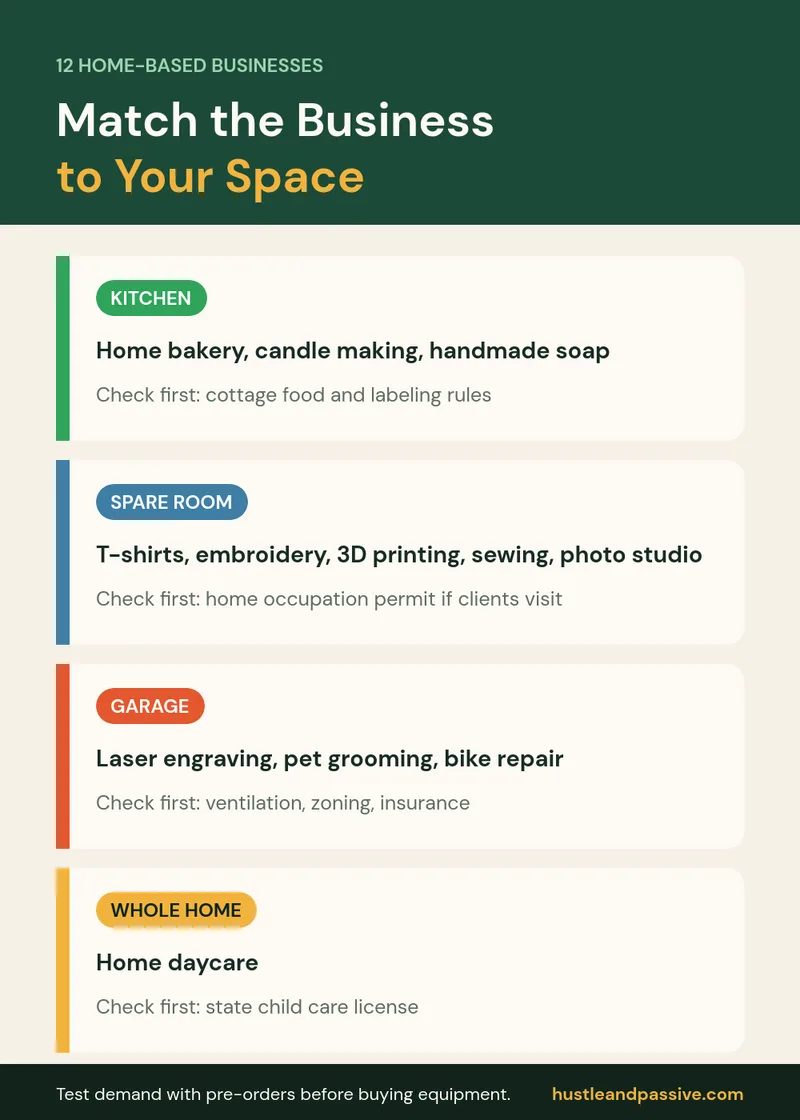
- Start with the space you have. A kitchen suits food and soap; a garage suits lasers, bikes and grooming; a spare room suits sewing, embroidery and photography.
- Check the rules first. Five minutes on your state and city websites can rule out an idea before you spend money.
- Test demand cheaply. Take pre-orders from friends, list a few items on Etsy or book a table at one market before buying premium equipment.
- Buy entry-level equipment first. Upgrade once orders justify it.
When you’re ready to sell online, you can start on Etsy or build your own store with Shopify. For a simple booking site for a service business, a host like Hostinger includes a website builder. Shipping products to customers? Our guide to shipping supplies for small business covers the label printer, scale and mailers you need.
Sell Digital Products While You Sleep
Don’t let a clunky checkout process kill your sales. Shopify makes it incredibly easy to sell digital downloads, manage inventory, and get paid whether you are awake or asleep.
Host Your Own Storefront for Under $2.99/Month
Skip the marketplace cut entirely. Hostinger runs everything from landing pages to checkout, fast enough to handle a launch spike without falling over.
Home-Based Businesses FAQ
What is the most profitable home-based business?
It depends on your skills and market, but businesses that turn cheap materials into personalized products, such as laser engraving, embroidery and custom apparel, tend to have strong margins. Service businesses like alterations and grooming have low material costs, but your income is limited by your hours.
Do I need a license to run a business from home?
Usually yes. Most cities and counties require a general business license, and many require a home occupation permit. Food, cosmetics and child care businesses often have extra state rules.
Can I sell food I make at home?
In most US states, yes, under cottage food laws, but the allowed foods, sales caps and whether you can sell online or ship vary by state. Check your state’s law before your first sale.
Does homeowners insurance cover a home business?
Often not fully. Many standard policies exclude business equipment and liability for customers or products, so ask your insurer about a business rider or separate policy.
What home-based business can I start with little money?
Sewing and alterations, candle making and pet sitting can all start for a few hundred dollars or less if you already own some of the equipment.
If you want to go deeper, my guide to going from side hustle to full-time income is a good next read.
Your Next Step
Pick the business that fits the space you already have, check your city’s home occupation rules and your state’s product rules today, then test demand with a handful of pre-orders before you buy anything expensive. Setting up your workspace? See our guide on how to set up a home office for your home-based business.
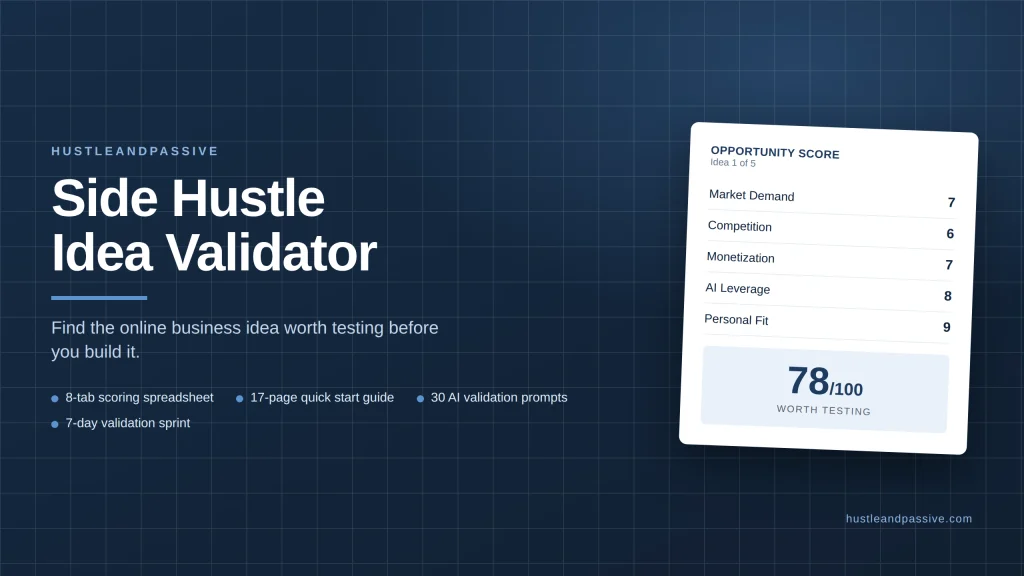
Can’t decide between two ideas? My Side Hustle Idea Validator ($9) scores each idea on demand, competition and startup cost so you pick the one to test first. Or grab the free 50 AI Side Hustle Ideas list.

Writes and tests every guide on hustle&passive. Everything here is something we have actually run — including the parts that did not work.