Disclosure: some links in this guide are affiliate links, so I may earn a commission if you buy through them, at no extra cost to you. This is general information, not financial or tax advice.
Turning a side hustle into full-time income is less about one brave leap and more about a few boring numbers lining up: steady income, savings, and a plan for health insurance and taxes. This guide starts with three real, well-documented stories of people who made the move, then gives you a checklist to decide when you’re ready and a 12-month plan to get there.
One honest note first about side hustle success stories: the three founders below are famous because their results are exceptional. You shouldn’t expect the same outcome. What transfers is how they made the move, not how big it got.
Side Hustle to Full-Time Income: Are You Ready?
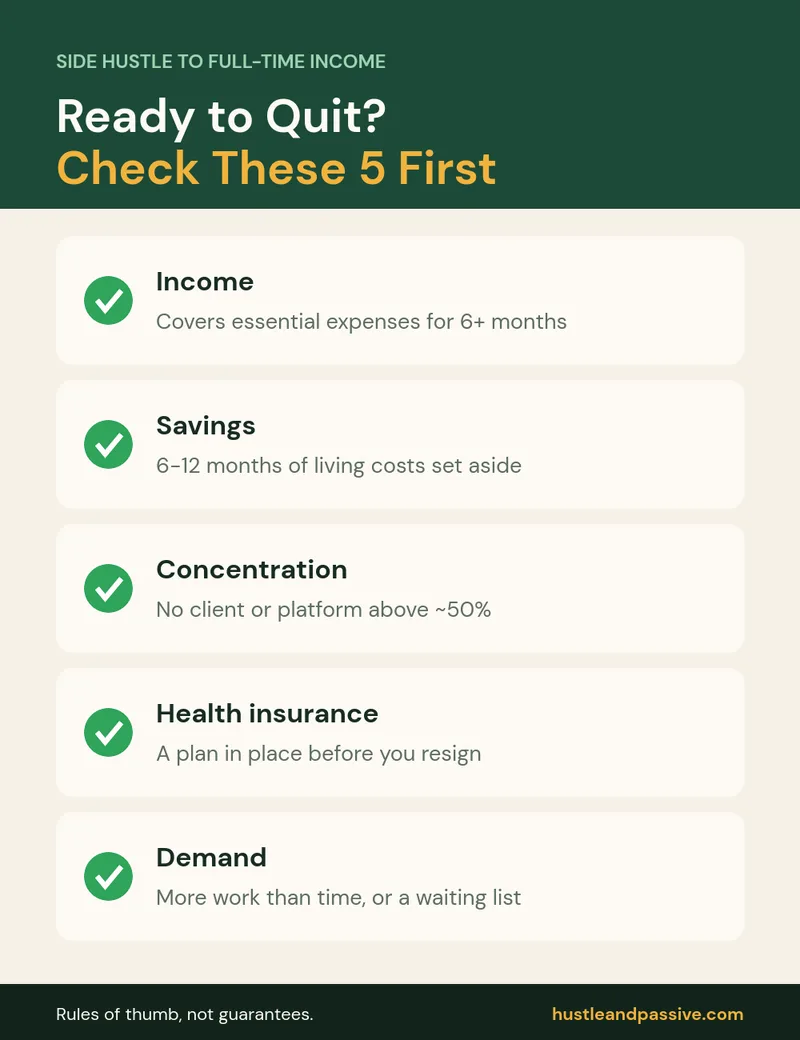
A side hustle is usually ready to become your full-time income when most of these are true:
- It has covered your essential monthly expenses for at least six months in a row, not just one good month.
- You have 6 to 12 months of living expenses saved, separate from business money.
- No single client or platform brings in more than about half your income.
- You have a plan for health insurance and taxes once your employer stops handling them.
- You have more demand than time: repeat customers, a waiting list or work you’re turning down.
These are rules of thumb, not laws. The more of them you meet, the safer the move.
3 Real Side Hustle Success Stories
1. Pat Flynn: A Study Guide That Became a Business
Pat Flynn was an architect who had built a website with notes to help people pass the LEED green building exam. After he was laid off in 2008, he turned those notes into an ebook study guide priced at $19.99. According to Forbes, it made $7,008.55 in its first month. That same month he started Smart Passive Income, a blog documenting his online business with public income reports, which grew into a podcast, books and more.
The lesson: his first product solved a narrow problem for a specific audience that was already visiting his site. He didn’t start with a big idea; he started with a useful one. This is the same path as our guide to digital products you can create.
2. Sara Blakely: Building Spanx Around a Day Job
Sara Blakely spent seven years selling fax machines door to door. She launched Spanx in 2000 with $5,000 of her own savings, building it on nights and weekends while she kept her day job, according to a report on Yahoo Finance. She kept the idea private for about a year, Fortune reported, and her early breakthrough was getting the product into Neiman Marcus. She never took outside investors before selling a majority stake to Blackstone in 2021.
The lesson: she kept her income while she tested the idea, and put a small, fixed amount of her own money at risk. You can do the same: cap what you’re willing to spend, and keep your salary until the business proves itself.
3. Ben Francis: From Pizza Delivery to Gymshark
Ben Francis started Gymshark in 2012 while studying at university and working at Pizza Hut, using his wages to buy a sewing machine, according to CNBC. The turning point came at a 2013 fitness expo, where he and his co-founder gave products to fitness YouTubers and daily sales jumped from about $450 to $45,000. He left university a couple of months later to run the business full time.
The lesson: he went full time only after clear proof of demand. Look for your own version of that moment, such as orders you can’t keep up with, before you quit.
The Side Hustle to Full-Time Income Checklist
| Check | Rule of thumb | Why it matters |
|---|---|---|
| Income | Side income covers essential expenses for 6+ months | One good month can be luck; six is a pattern |
| Savings | 6–12 months of living costs saved | Income often dips when you first go full time |
| Concentration | No client or platform above about 50% of income | Losing one client shouldn’t end the business |
| Health insurance | A plan before you resign | In the US, job-based coverage usually ends when you leave |
| Taxes | Set aside part of every payment | No employer is withholding tax any more |
| Demand | More work than time, or a waiting list | Proof you can fill full-time hours |
In the US, losing job-based health coverage usually qualifies you for a Special Enrollment Period on the Health Insurance Marketplace, and you’ll likely need to pay quarterly estimated taxes once you’re self-employed. Our guide to financial planning for gig workers covers budgeting and taxes on irregular income in detail.
A 12-Month Plan to Turn a Side Hustle Into Full-Time Income
Months 1–3: Prove It Can Earn
- Pick one offer and one type of customer, and track every hour and every dollar.
- Set a target: the monthly income that would cover your essential expenses.
- Open a separate bank account for business income.
Months 4–6: Make It Repeatable
- Turn one-off buyers into repeat customers: retainers, subscriptions, packages or a product line.
- Build an email list so you own your audience instead of renting it from a platform. HubSpot offers a free CRM and email tools to start.

Own Your Audience. Build Your List
Social media algorithms can change tomorrow. Your email list is yours forever. HubSpot gives you the tools to capture leads, automate sequences, and turn subscribers into buyers without needing a tech degree.
- Start saving toward your 6-to-12-month safety fund.
Months 7–9: Reduce Risk
- Add a second income source that serves the same customers. See our plan for building multiple passive income streams.
- Get your own website so a platform change can’t wipe out your business; a host like Hostinger keeps costs low. If you sell products, Shopify gives you your own store.
- Check your employment contract for notice periods and rules on outside work.
Host Your Own Storefront for Under $2.99/Month
Skip the marketplace cut entirely. Hostinger runs everything from landing pages to checkout, fast enough to handle a launch spike without falling over.
Sell Digital Products While You Sleep
Don’t let a clunky checkout process kill your sales. Shopify makes it incredibly easy to sell digital downloads, manage inventory, and get paid whether you are awake or asleep.
Months 10–12: Decide and Plan the Exit
- Review the checklist above with real numbers from the last six months.
- Price your health insurance and set up quarterly tax payments.
- If you’re not ready, consider cutting to part-time hours or a four-day week first rather than quitting outright.
Mistakes to Avoid on the Way From Side Hustle to Full-Time Income
- Quitting after one great month. Seasonal spikes and one-off launches don’t predict steady income.
- Forgetting self-employment tax. In the US, self-employed people pay both halves of Social Security and Medicare tax, so set aside more than you expect.
- Spending your safety fund on the business. Keep personal savings and business money separate.
- Relying on one platform or client. A single algorithm change or lost contract can halve your income overnight.
- Underpricing. Rates that worked as a side hustle often don’t cover full-time costs like insurance, equipment and unpaid admin time.
Side Hustle to Full-Time Income FAQ
How much should my side hustle make before I quit my job?
A common rule of thumb is that it should cover at least your essential monthly expenses for six months in a row, and you should have 6 to 12 months of living costs saved. Many people wait until the side hustle matches their full salary to be safe.
How long does it take to turn a side hustle into a full-time income?
It varies widely. Service businesses like freelancing or virtual assistance can replace a salary within a year or two with steady effort, while product businesses and content sites often take longer. Plan for at least 12 months.
What happens to my health insurance if I quit to work for myself?
In the US, job-based coverage usually ends when you leave, but losing it typically qualifies you for a Special Enrollment Period on the Health Insurance Marketplace. You may also be able to keep your employer plan for a time through COBRA, usually at full cost.
Do I need to pay quarterly taxes when self-employed?
In the US, generally yes, if you expect to owe $1,000 or more in tax for the year. The IRS estimated taxes page explains how to calculate and pay them.
Are side hustle success stories realistic?
The famous ones are exceptional, so don’t expect billion-dollar outcomes. What’s realistic is using the same approach: test your idea while employed, prove steady demand, and move full time only when the numbers support it.
Related reading: starting a business from scratch and home-based businesses.
Your Next Step
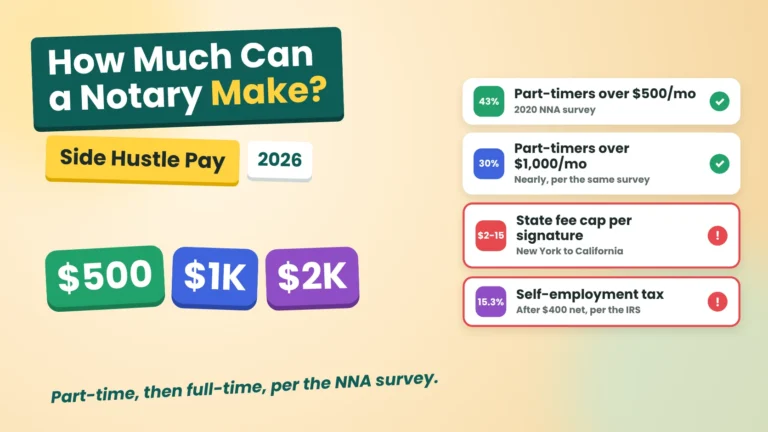
Write down your essential monthly expenses and your side hustle’s income for each of the last six months. That one comparison tells you how far you are from turning your side hustle into full-time income. Still looking for the right side hustle? See our best business ideas for 2026 and remote side hustles you can start from home. If you want a low-cost service to grow into, here is what a notary side hustle can realistically earn.
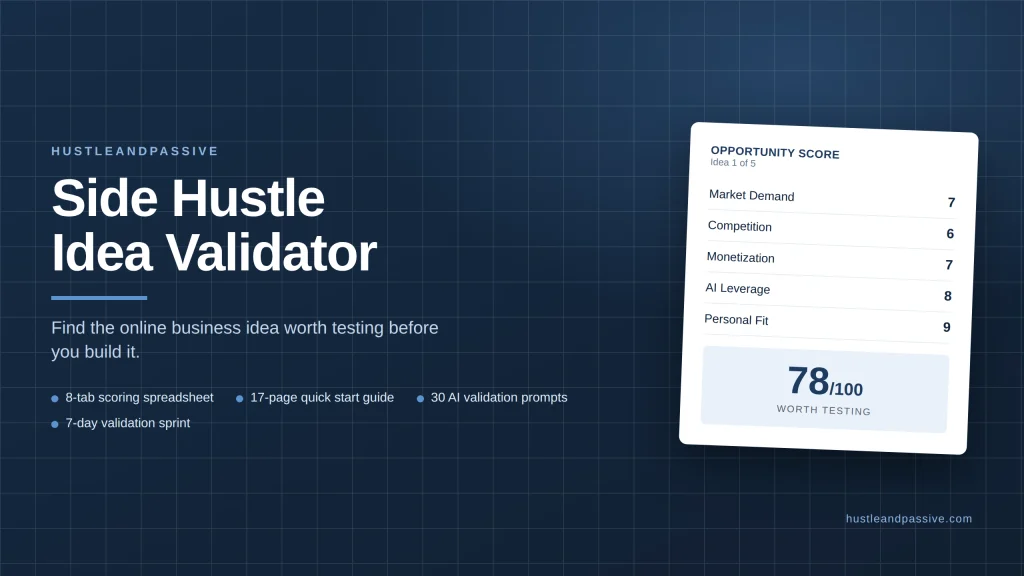
Not sure your idea can become full-time income? My Side Hustle Idea Validator ($9) scores an idea on demand, competition and startup cost before you invest more time in it, and the free 50 AI Side Hustle Ideas list gives you fifty to compare.

Writes and tests every guide on hustle&passive. Everything here is something we have actually run — including the parts that did not work.