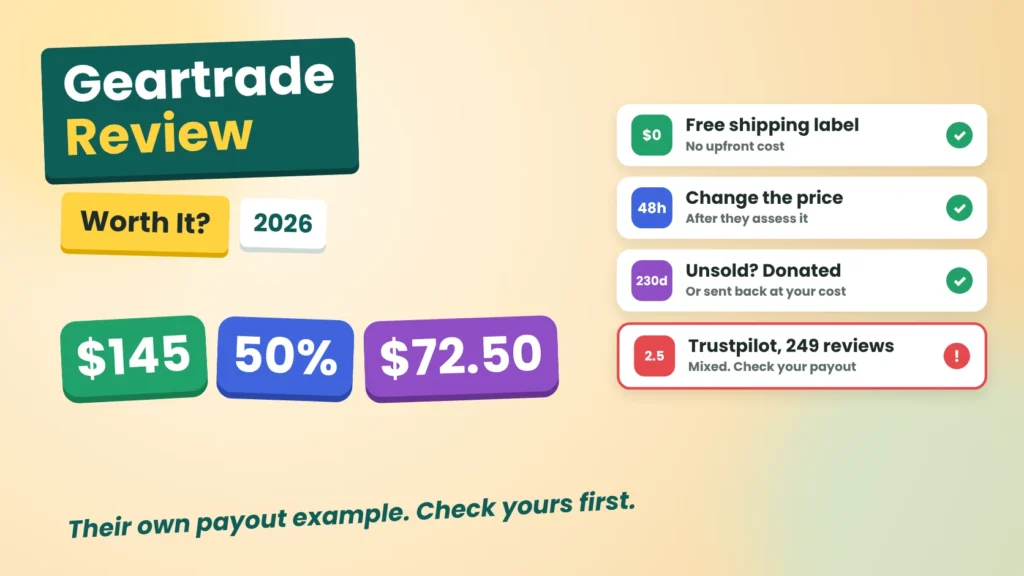
If you have a closet full of skis, a bike you stopped riding, or a tent that has seen better days, selling it yourself can feel like a part-time job. You take photos, write listings, answer messages, and haggle with strangers. That’s the problem this company says it solves. Short answer: it can be worth it if your time matters more than the last few dollars, but check your item’s payout before you ship.
I haven’t sold anything through Geartrade myself, so this isn’t a “here’s what I made” story. What I did was read the company’s own pages on how selling works, how it pays and what it accepts, and then I looked at what its Trustpilot profile shows. I’ll flag every place where its pages don’t give a clear answer, because a few of those places matter if you’re about to ship a box. There are no affiliate links in this guide.
Last updated: October 2026. The company can change its rules and payouts, so check its pages before you send anything.
Key Takeaways
- Geartrade is a consignment marketplace. You ship your gear in, the company lists and sells it, and you get a share of the sale. You don’t deal with buyers.
- You pay nothing to ship. The company says it provides a free shipping label, so there is no upfront cost to you.
- The cut is real, and only partly explained. The company says its percentage rises with the item’s value and that it charges a flat fee when gear sells, but its pages don’t give the full numbers in text.
- Not everything is accepted. Gear must be in good or better condition, fully functional and under five years old, and ropes, harnesses and used climbing hardware are on the no list.
- Reviews are mixed. Trustpilot shows a 2.5 out of 5 score from 249 reviews, with a lot of five-star and a lot of one-star ratings (Trustpilot doesn’t verify reviewers).
What Is Geartrade?
Geartrade is an online consignment marketplace for used outdoor gear. It lists categories like ski, snowboard, mountain bike, road bike, hiking, climbing, paddle sports, surf, wake, skate, fly fishing, yoga and camping. According to its own site, the company has been operating since 1999 and uses more than 20 years of sales data and seasonality to set prices.
In plain terms, it works like a middleman. You send in your gear, it sits on the shelf, and the company sells it to a buyer. If it sells, you get paid. If it doesn’t, the item eventually comes back to you or gets donated, which I’ll cover below.
How Does Geartrade Work?
The process has three steps for sellers, according to its how-it-works pages.
- Request a label. The company sends you a free shipping label, and it says it can send a box if you need one. You can drop the package at a FedEx location, a drop box, Walgreens or Dollar General.
- Ship your gear. Pack it up and send it in. It says you can use extra space in the box for clean outdoor clothing or gear.
- Get a price and wait. When your gear arrives, the company assesses it and suggests a price based on condition and retail price. You get an email, and you have 48 hours to change the price or adjust your listing.
After that, the company handles the photos, listing, marketing, customer service and fulfillment. You don’t negotiate with buyers.
One practical tip from its pages: if you already have the same item listed on a peer-to-peer marketplace, delete that listing before you send it to Geartrade, so you don’t sell it twice.
How Much Does Geartrade Pay?
Geartrade pays you a percentage of the selling price, and that percentage rises with the item’s value, according to its how-it-works page. The page gives one example: a $145 sale pays 50%, or $72.50. The full payout chart is shown as an image, so I can’t list the tiers for you, and I’d rather say that than guess.
Here’s what else its pages say about money:
- A flat fee exists. It says it charges a flat fee when gear sells, but the pages I read don’t give the amount.
- Shipping is free. The label costs you nothing up front.
- Payout timing. One page says earnings land in your account after the 14-day return window closes. Another says earnings are added when the gear sells. I’d plan for the longer wait.
- How you get the money. You can cash out to Venmo or PayPal, or spend your balance on the site as store credit.
- Returns. If a buyer returns an order, the company relists the item and pays you once it sells again.
The number you care about is how much of the sale price reaches your account. Check your own item’s payout in your account before you ship anything big, because I can’t promise you a specific percentage.
What Can You Sell on Geartrade?
Geartrade accepts outdoor gear and apparel in good or better condition that is fully functional and under five years old. Minor cosmetic wear is fine, but significant damage or defects that affect performance aren’t. Items must be clean, with no stains, odors, rips, tears or missing parts, and tags must still be visible. Apparel can’t be altered.
A few categories need extra care. Bikes require you to email the company first. Climbing shoes are accepted. The not-accepted list includes ropes, harnesses, used climbing hardware, watercraft, knives, guns, team sports gear, socks, underwear and unbranded items, and Geartrade says the list isn’t exhaustive.
My advice is to wash and inspect everything before you box it. Its pages are clear that smelly, unwashed or damaged items can’t be sold, and you don’t want to pay for packing and drop-off just to have an item rejected.
What Happens to Gear That Doesn’t Sell?
Listings run for up to 230 days. At 200 days, the company emails you options: donate the gear (which it says is tax-deductible) or have it sent back to you at your own expense. If you take no action by day 230, the company donates the gear. Donations happen weekly, so donated items can’t be returned.
That means you shouldn’t send anything you can’t live without. If the item has real sentimental value or you may want it back, selling it yourself is a safer route.
Is Geartrade Legit?
Geartrade looks like a real, long-running business, but its reviews are divided. The company says it has operated since 1999, and its pages explain the process in detail. On Trustpilot, it shows a 2.5 out of 5 score from 249 reviews as of October 2026. About 59% of those reviews are five stars, and about 21% are one star. Trustpilot says it doesn’t verify reviewers’ claims.
The themes in the positive reviews include easy ordering, prices below retail, and items matching their descriptions. The themes in the negative reviews include return fees and shipping costs, item condition problems, slow processing, communication delays and low payouts for consignment items.
My take: a split like that is common for marketplaces where you can’t inspect the item first, and a lot of the complaints come from buyers rather than sellers. But “low payouts for consignment items” shows up as a theme, and it’s the one a seller should take seriously. Check your item’s expected payout, and treat the Trustpilot score as a reason to be careful, not as proof of anything.
Geartrade vs Selling It Yourself
Here’s the trade-off in plain terms. With a consignment service, you save time and skip buyer messages, and in return you give up a share of the sale and some control over price and timing. Selling it yourself on a peer-to-peer marketplace can keep more money in your pocket, but you do all the work.
- Use Geartrade if your time matters more than the last few dollars, you have several items to clear out, and you don’t want to deal with buyers.
- Sell it yourself if you want to keep as much of the price as possible, the item is worth a lot, or you need the cash fast.
If you’re weighing this against other ways to turn clutter into cash, my guide to ways to make money covers selling things alongside many other options, and my side hustles guide shows how to check whether a hustle is worth your hours.
Tips Before You Ship
- Check the payout first. Look at the payout chart or your account before you box up a valuable item.
- Clean and photograph your gear. Keep a record of its condition in case there’s a dispute later.
- Start small. Send one or two items first, and see how long it takes and what you receive.
- Don’t send anything you want back. Remember that unsold gear may be donated at day 230.
- Track the income. If selling gear becomes regular, keep a simple record. My guide to financial planning for gig workers covers the habits I’d start with.
FAQ
Is Geartrade legit?
The company has operated since 1999, according to its site, and its pages describe the process in detail. Its Trustpilot score is 2.5 out of 5 from 249 reviews, with a wide split between five-star and one-star ratings, so it’s worth starting with one or two items.
How does Geartrade work?
You request a free shipping label, send your gear in, and the company suggests a price after it arrives. You have 48 hours to change it. It then lists and sells the item, and you get paid a share of the sale.
How much does Geartrade pay?
It pays a percentage of the selling price that rises with the item’s value. Its page gives one example, where a $145 sale pays 50%, or $72.50, and says it charges a flat fee when gear sells. The full payout chart isn’t available as text.
How long does Geartrade take to pay?
One page says earnings go into your account after the 14-day return window closes, and another says they’re added when the gear sells. You can then cash out to Venmo or PayPal, or use the balance as store credit.
What can’t you sell on Geartrade?
It doesn’t accept ropes, harnesses, used climbing hardware, watercraft, knives, guns, team sports gear, socks, underwear or unbranded items, and the list isn’t exhaustive. Gear must also be clean, fully functional and under five years old.
If you want the bigger picture, my guide to digital product ideas pulls it all together.
The Bottom Line
Geartrade can be a decent way to clear out good outdoor gear without the hassle of selling it yourself, as long as you’re comfortable giving up part of the sale and some control. The key unknown is the payout on your particular item, so check that before you ship.
My advice: start with one or two items you won’t miss, wash them, and see what you get paid. And if the company has changed its terms by the time you read this, send me a message through the contact page so I can update the guide.

Writes and tests every guide on hustle&passive. Everything here is something we have actually run — including the parts that did not work.