Here’s the part most “hobbies that make money” lists skip: turning something you love into income can make it feel like a job. And the first dollar you earn changes how the IRS looks at it.
This guide to hobbies that make money is for you if you already have a hobby, or a skill you enjoy, and you want to know which ones can realistically bring in extra cash, what the platforms keep, and what to watch before you start.
I haven’t run all of these myself, so I won’t quote my own earnings. I read each platform’s official rules and the IRS guidance, then built the list around what’s checkable.
Some links on hustle&passive may be affiliate links. If you purchase through one of these links, we may earn a commission at no additional cost to you. Affiliate Disclosure
Last updated: October 2026. Fees and thresholds change, so check each official page before you commit. This is general information, not tax or legal advice.
Key Takeaways
- Most hobbies that make money pay little at first. Treat it as pocket money while you learn what people will pay for.
- Pick hobbies where a platform brings you buyers. Etsy, Wyzant, YouTube and Rover each handle the “finding customers” part, but each takes its own cut or has entry rules.
- Hobby income is still reportable. The IRS says you must report what you receive, even if the activity isn’t a business.
- Selling food has local rules. Cottage food laws vary by state, so check yours before you bake for strangers.
- Start with one hobby. Test it for a month before you buy equipment.
Which Hobbies Actually Make Money?
The hobbies that make money are the ones where a stranger already searches for what you make or know. That’s the whole filter. Someone searches “custom pet portrait”, “math tutor” or “sourdough near me”, and a hobby becomes a service or product.
Here’s the quick comparison of the best hobbies that make money before the details.
| Hobby | Where the money comes from | Main catch |
|---|---|---|
| Photography | Prints, stock, local shoots | Gear costs and competition |
| Writing | Freelance articles, your own blog | Slow start |
| Crafts and handmade | Etsy and local markets | Fees and shipping time |
| Baking | Local orders under cottage food laws | State rules |
| Tutoring a skill | Platforms like Wyzant | Platform fee on most lessons |
| Pet sitting | Rover and local clients | Trust and scheduling |
| Video and YouTube | Ads after you qualify | A high bar for ad income |
| Digital templates | Etsy and other marketplaces | Many sellers do the same |
8 Hobbies That Can Turn Into Income
1. Photography
If you already shoot for fun, you have the hardest part: the eye. Money comes from local portraits, event work, prints, or stock licensing. The catch is gear and a crowded field, so don’t buy anything new until a paying client asks for it. My guide on how much photographers make covers realistic pay and stock royalties.
2. Writing
Writers can sell articles to clients or build a blog around what they know. Freelancing pays faster, a blog pays later and only if traffic arrives. I’d start with freelancing to learn what people pay for, and my guide to freelance writing websites is a good place to look. If you’d rather own the asset, here’s how to start a niche blog.
3. Crafts and handmade goods
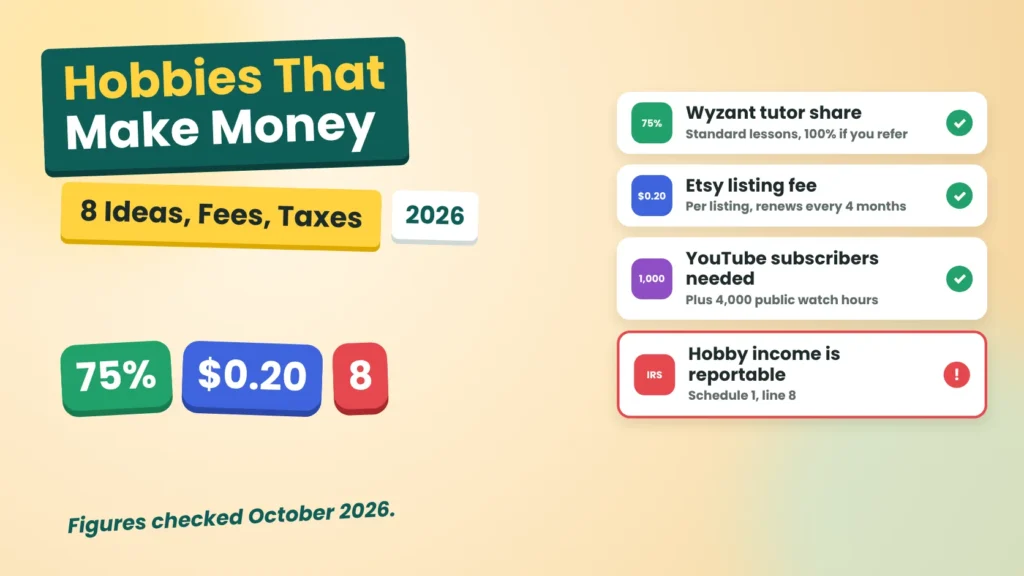
Knitting, candles, jewelry, woodwork. Etsy is the obvious marketplace. Its fee page says creating or renewing a listing costs $0.20, listings expire after four months, and editing is free. That’s only one fee, and there are others, so read the full list before you price anything. I break down the steps in my guide on how to sell on Etsy.
4. Baking and homemade food
People pay for good bread, cakes and cookies. Most US states have a cottage food law that lets you make certain low-risk foods at home.
The National Agricultural Law Center says these laws cover items such as baked goods, jams, dry mixes and candies, and that approaches vary a lot from state to state. So the rule I’d follow is simple: look up your state’s law first, before you post a single menu.
5. Tutoring a skill you love
Math, a language, guitar, chess. Tutors can list on a marketplace and let it bring students. According to Wyzant’s fee page, tutors keep 75% of their posted hourly rate on standard lessons, and keep 100% on lessons with a new student they refer themselves. The page also mentions a separate 9% service fee, which it doesn’t fully explain, so read it before you set your rate.
6. Pet sitting and dog walking
If you love animals, this is one of the most direct ways to get paid for time you’d spend anyway. The tradeoff is trust: clients want reviews, and you’ll need to be reliable. I wrote the full numbers in my pet sitting side hustle guide.
7. Video and YouTube
Filming gaming, crafts, cooking or tutorials can pay, but not quickly. YouTube’s Partner Program page says the full tier needs 1,000 subscribers plus either 4,000 qualified public watch hours in the past 12 months or 10 million qualified Shorts views in the past 90 days. Meeting the numbers doesn’t guarantee approval, because the whole channel is reviewed. I’d treat this as a long game, not a quick win.
8. Digital templates and printables
If you love design, planners and templates can be made once and sold many times. The upside is no shipping. The downside is that many sellers do the same, so pick a narrow niche. My guide to selling Canva templates shows how.
How to Pick Your First Hobby Business
Here’s how I’d choose:
- You want the fastest first dollar. Tutoring or pet sitting, because the customer already exists on the platform.
- You like making things. Crafts or templates, but plan for competition.
- You like teaching on camera. YouTube, with patience.
- You already bake or shoot well. Start with local friends and neighbors, then widen.
If you can’t decide, my Side Hustle Idea Validator scores ideas on demand, competition, startup cost and personal fit. For more options, the free 50 AI Side Hustles list is a quick read.
My Side Hustle Idea Validator ($9) scores each idea on demand, competition, startup cost and personal fit, so you build the one with the best odds first.

Is Hobby Income Taxable?
Yes, in general. The IRS fact sheet Know the difference between a hobby and a business says people must report the income they receive from an activity, even when it isn’t run to make a profit. Hobby income goes on Schedule 1 (Form 1040), line 8. It also says that losses from an activity not engaged in for profit can’t offset your other income.
That’s why the hobby versus business question matters for any of the hobbies that make money. The IRS lists factors it looks at, such as whether you run the activity in a businesslike way, keep accurate books, change methods to improve profit, and whether you depend on it for income.
The page doesn’t say which expenses you can deduct, so I won’t guess. Keep your receipts and ask a tax professional before you file.
The Mistakes That Cost Hobby Sellers Money
- Not tracking income. Even small sales count, so keep a simple spreadsheet from day one.
- Mixing personal and business money. Use a separate account, even a free one.
- Underpricing. Count your time and fees, not just materials.
- Ignoring local rules. Food, pet care and home-based work can have local requirements.
- Quitting the fun. If it stops being enjoyable in month two, scale back.
If you want an easy way to keep your income and expenses in order, FreshBooks is one option, and a spreadsheet works too.

Spend less time managing invoices and expenses and more time growing your online business. Try FreshBooks and streamline your accounting today.
My Verdict on Hobbies That Make Money
Hobbies that make money are real, but they reward patience. If I were starting today, I’d pick the one where a platform already brings customers, test it for 30 days, and only then spend on gear. I’d skip anything that needs a big upfront purchase.
My advice: choose one of these hobbies that make money, list your first item or offer this week, and keep a record of every dollar.
FAQ
What hobbies make money?
Photography, writing, crafts, baking, tutoring, pet sitting, video content and digital templates can all earn money. Which one works best depends on whether a platform or local buyers already look for what you offer, and on the costs of getting started.
Can you really turn a hobby into income?
Yes, but usually slowly. Most people start with small sales or a few clients and build from there. Expect to learn pricing, customer service and record keeping, not just the craft itself.
Do I pay taxes on hobby income?
In general, yes. The IRS says you must report income from an activity even if it’s a hobby, and hobby losses can’t offset other income. Rules vary by situation, so check with a tax professional.
What is the easiest hobby to make money from?
Tutoring and pet sitting are often the quickest to start, because platforms bring you customers and you need little equipment. Crafts and YouTube usually take longer to produce income.
Can I sell homemade food?
In many US states, yes, under cottage food laws that cover low-risk foods like baked goods and jams. The rules differ by state, so check your state’s law before you sell.

I write every guide on hustle&passive. I test what I can, and when I have not tried something myself, I say so and cite my sources.