A pet sitting side hustle looks easy: someone pays you to feed a dog, walk it and send a photo. The catch is that the marketplace you use takes a slice, you wait days for the payout, and a bad week with one animal can cost more than a good week earns. Do the numbers first and the decision gets simpler.
This guide is for you if you like animals, have spare evenings or weekends, and want to know what a pet sitting side hustle pays before you build a profile. I haven’t sat for anyone’s pets as a paid job, so I won’t quote my own earnings. What I did was read Rover’s own help pages on fees, payouts, protection and background checks, plus the Bureau of Labor Statistics (BLS) data on animal care workers, then turn the rules into plain English with the math worked out.
Some links on hustle&passive may be affiliate links. If you purchase through one of these links, we may earn a commission at no additional cost to you. Affiliate Disclosure
Last updated: October 2026. Fees and rules change by state and by program, so check Rover’s help pages before you rely on a number.
Key Takeaways
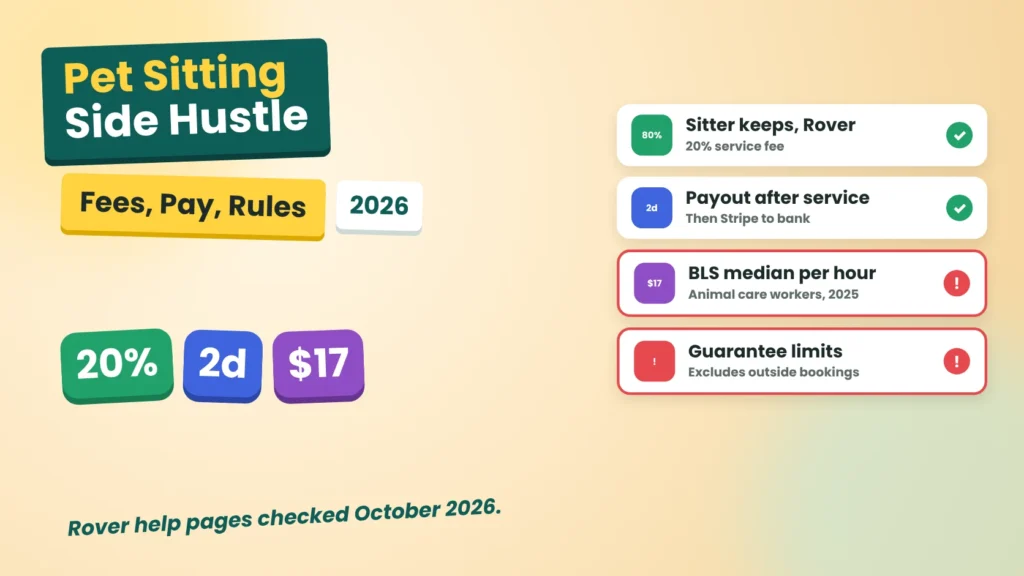
- Rover keeps 20% from sitters. On a $100 booking you receive $80, according to Rover’s help center, with exceptions for California and a U.S. pilot program.
- Payouts take about 2 days. Rover says payments appear 2 days after a service, then Stripe sends them to your bank, which can take up to 5 business days.
- The guarantee has limits. It excludes injury to you or the owner, bookings made outside Rover and preventable conditions such as fleas and ticks.
- Official pay data is modest. BLS lists a median of $17.08 an hour for animal care and service workers in 2025.
- Rules are local. Rover says to follow your local licensing laws, and those differ by location.
What Does a Pet Sitting Side Hustle Involve?
A pet sitting side hustle means looking after other people’s animals for money: visiting a home to feed and walk a pet, hosting it at yours, or doing day care. Some people find clients through word of mouth. Others use a marketplace like Rover, which handles bookings and payments in exchange for a fee.
The work is simple to describe and tiring to do. Animals need care on holidays and weekends, which is exactly when owners are away, so the hours rarely fit a quiet schedule. If you’re still choosing, my guide to weekend side hustles and my list of odd jobs show other options with similar flexibility.
How Much Does Rover Take From Sitters?
Rover takes 20% of each booking from the sitter. Rover’s service fee page says pet care providers keep 80% of earnings, and pet parents pay a separate booking fee of 11%. The page also says the list price on a sitter’s profile already includes the sitter’s fee. Two exceptions matter: California has different fees for legal reasons, and some U.S. sitters may be in a pilot program with other rates. The page doesn’t list those numbers.
Here is an illustration (an example, not a promise). Say you charge $100 for a weekend booking. Rover keeps $20 and you receive $80. If you complete ten bookings like that in a month, you gross $1,000 and take home $800 before your own costs, such as food, supplies and travel. So the fee is the first number to put in your price, not an afterthought.
The part to remember: raising your rates is usually the fastest way to protect your margin, and a profile that shows what you charge before the fee helps owners compare fairly.
How and When Does a Pet Sitter Get Paid?
Plan on a short wait. Rover’s payment page says booking payments show up in your account 2 days after a service is completed. Funds then sit under Processing Payments before Stripe sends them to your bank. Most banks deposit right away, but it can take up to 5 business days. Tips added later arrive within 24 hours of the client leaving them.
To set up payouts, Rover asks for your Social Security number and bank account information, entered through Stripe. The page doesn’t list a withdrawal fee, so I can’t give you one. It does say your payments section lists completed bookings and yearly withdrawal totals, which helps at tax time.
Is a Pet Sitting Side Hustle Safe? What Does the Rover Guarantee Cover?
Partly, and it’s worth reading before you take your first booking. Rover’s guarantee page for sitters says it covers certain costs from certain injuries to the pet in your care or a resident pet, plus damage to your property, when the service was booked and paid through Rover. It also includes 24/7 Rover Support.
It excludes a lot. Injury to you or the owner, anything during a meet and greet or outside the confirmed dates, bookings made outside Rover, preventive care, illness and pre-existing conditions, and preventable issues such as fleas and ticks are not covered. The dollar limits and deductibles aren’t on that page, so I can’t quote them. They sit on Rover’s separate guarantee terms, so read those before you rely on it.
My take: the guarantee is a reason to keep bookings inside the platform, not a reason to stop being careful. Meet the animal first, ask about medical needs, and decide in advance what you’d refuse.
Do You Need a License or a Background Check?
Maybe, and the rules depend on where you live. Rover’s licensing page says sitters must follow local laws and regulations on licensing and other requirements, and advises checking with your local government. The page doesn’t say whether you need to be bonded, so I won’t claim either way.
On Rover, the background check help page says sitters and dog walkers who list services complete a background check through a third-party provider, First Advantage. It doesn’t state the cost or the time it takes, so check before you apply.
How Much Can a Pet Sitting Side Hustle Earn?
Nobody can give you a safe number, and I’d be wary of anyone who does. The best official benchmark is for the wider job, not for marketplace sitters. The BLS animal care and service workers profile reports a median of $35,530 a year, or $17.08 an hour, in May 2025, across 413,000 jobs. About 25% of animal caretakers are self-employed. BLS projects 11% growth from 2025 to 2035, which it calls much faster than average, with about 69,400 openings a year.
Two takeaways. First, that median covers employed workers too, so treat it as a loose ceiling, not what a new sitter earns. Second, demand looks healthy, which helps, but a growing field also means competition in your area. A pet sitting side hustle pays best when you have repeat clients and a clear niche, such as senior dogs, cats or overnight stays.
How Do You Start a Pet Sitting Side Hustle?
Make it easy for an owner to say yes. Here is the order I’d follow.
- Check local rules first. Search your city or county for pet care licensing before you advertise.
- Pick one or two services. Drop-in visits and dog walking need less space than boarding.
- Set a rate that survives the fee. If the platform keeps 20%, price so you’re still happy with 80%.
- Build a profile with proof. Add clear photos, your experience with animals and what you’ll do in an emergency.
- Offer a meet and greet. It protects you and shows the owner how you handle their pet.
- Keep records from day one. The IRS says you generally owe self-employment tax once net earnings from self-employment reach $400, so track income and costs. My guide to financial planning for gig workers shows how to set money aside.
If Rover is the platform you pick, you can join through Rover’s signup page. Read the fee and guarantee sections above first, whichever way you sign up.

Not sure a pet sitting side hustle beats other options for your hours? My Side Hustle Idea Validator lets you score an idea on demand, competition and startup cost, and the free 50 AI side hustle ideas list gives you more to compare. And if you already have a day job, my guide to extra income while working full-time covers fitting it in.

Who Should Skip a Pet Sitting Side Hustle?
Based on the rules, it fits you if you:
- Are comfortable with animals, including accidents and anxious pets.
- Can be flexible on weekends and holidays.
- Want to set your own rates and build repeat clients.
Skip it if you:
- Need money within days. Payouts take about 2 days after a service, plus bank time.
- Can’t handle a pet getting sick or hurt in your care.
- Rent a home where pets aren’t allowed, if you plan to host.
If you’d rather work with no animals, see my list of remote side jobs or side hustles that pay daily.
What Are the Risks and Mistakes to Avoid?
The main risks with a pet sitting side hustle are an injured animal, a missed local rule and a price that ignores fees. Here are the mistakes I’d watch for.
- Taking bookings off the platform. Rover’s guarantee excludes bookings made outside Rover.
- Skipping the meet and greet. Injury during a meet and greet isn’t covered, so go in with clear rules.
- Ignoring local licensing. Rover tells sitters to follow local laws.
- Pricing before fees. A 20% fee changes your hourly rate fast.
- Forgetting taxes. Net earnings of $400 trigger self-employment tax, so keep every record.
FAQ
How much does Rover take from pet sitters?
Rover says it takes 20% of each booking from sitters, so you keep 80%. Pet parents pay a separate 11% booking fee. California and a U.S. pilot program may have different fees.
How long does Rover take to pay sitters?
Payments appear in your account 2 days after a service is completed. Stripe then sends them to your bank, which can take up to 5 business days.
Is a pet sitting side hustle worth it?
It can be, if you price after the fee and have steady clients. BLS lists a median of $17.08 an hour for animal care and service workers, but that covers employed workers, not marketplace sitters.
Do you need a license to pet sit?
It depends on where you live. Rover says sitters must follow local licensing laws and recommends checking with your local government.
This is one piece of a bigger topic, so my guide to the best gig economy jobs that pay instantly is a good place to zoom out.
The Bottom Line
A pet sitting side hustle is a real way to earn from something you enjoy, but it pays in small steps and carries risk. The honest picture: the platform keeps 20%, payouts take days, and local rules and animal health can change your plans.
My advice: check your local rules, price after the fee, meet every pet first and keep records from your first booking. And if Rover’s fees or the guarantee have changed by the time you read this, send me a message through the contact page so I can update the guide.

Writes and tests every guide on hustle&passive. Everything here is something we have actually run — including the parts that did not work.