Disclosure: some links in this guide are affiliate links, so I may earn a commission if you buy through them, at no extra cost to you. None of the finance apps below are affiliate links. This is general information, not financial advice. Last updated: October 2026.
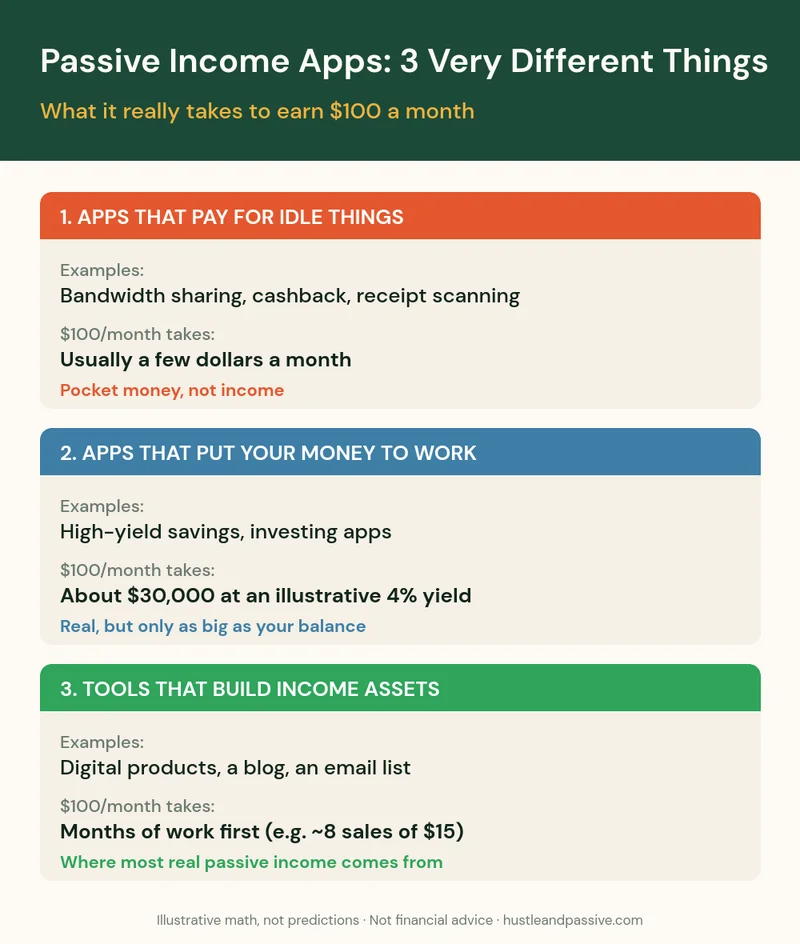
Most lists of passive income apps put a bandwidth-sharing app, a cashback app and a real-estate investing app side by side as if they were the same thing. They aren’t. One pays you a few dollars for leaving your phone on. One pays you back part of what you spend. One pays you a return on money you already have, and can lose some of it. Lumping them together is how people end up disappointed.
So this guide sorts the best passive income apps into three honest groups and answers one question for each: what does it really take to earn $100 a month? Fees and payout rules come from each company’s own pages.
Key Takeaways
- Apps that pay for idle things (bandwidth sharing, cashback, receipt scanning) usually pay a few dollars a month. Useful pocket money, not income.
- Apps that put your money to work (high-yield savings, investing apps) pay in proportion to your balance. At an illustrative 4% yield, $100 a month needs about $30,000.
- Monthly fees matter more than people think: a $4 monthly fee on a $1,000 balance costs 4.8% a year.
- Most real passive income comes from assets you build, like digital products, a blog or an email list, and these take months of work first.
- Investing always carries risk. Bank deposits at FDIC-insured banks are protected up to $250,000 per depositor, per bank, per ownership category; investments are not FDIC-insured.
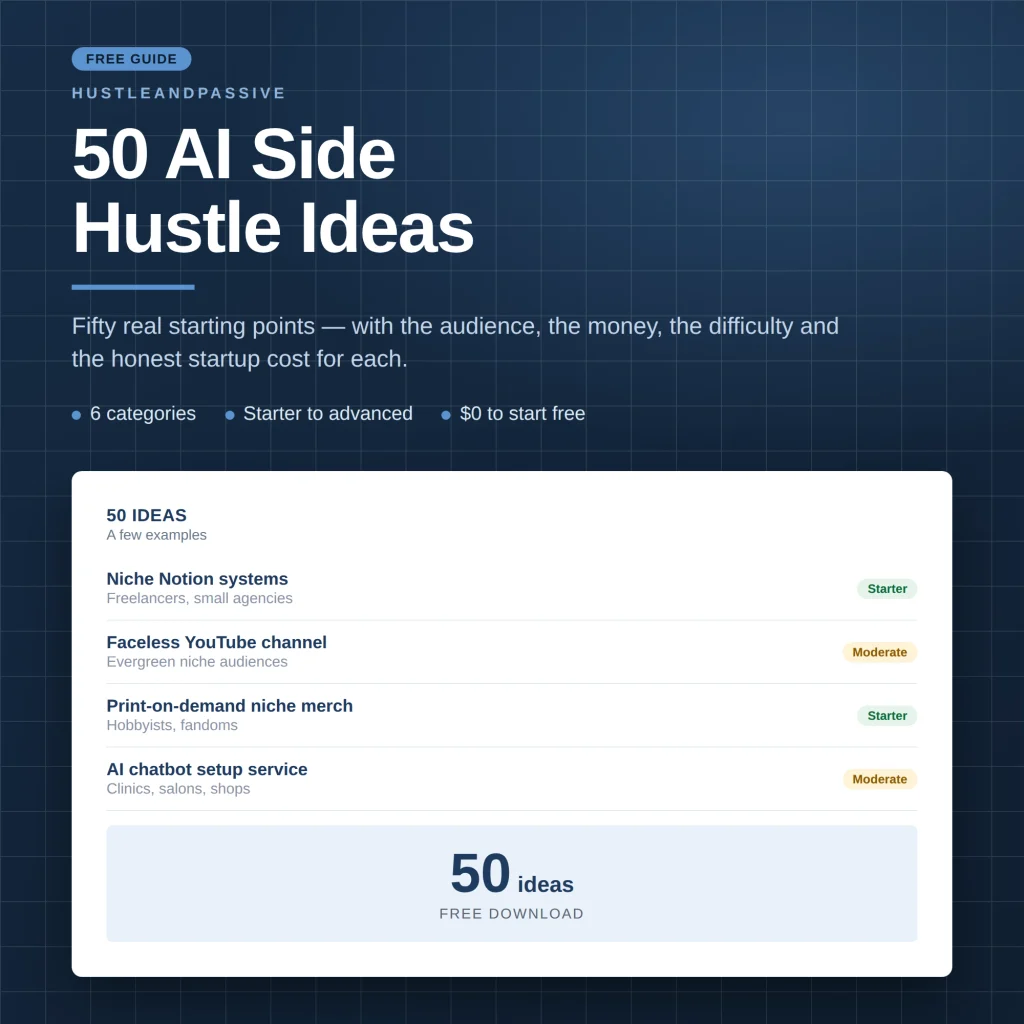
Still deciding what to build? The free 50 AI Side Hustle Ideas list includes the asset-building options covered in group 3.

Passive Income Apps Compared: What $100 a Month Really Takes
| App or tool | Group | Cost to start | What $100 a month takes | Main risk |
|---|---|---|---|---|
| Honeygain | 1. Idle things | $0 | Not realistic for most users | Third parties use your internet connection |
| Rakuten | 1. Idle things | $0 | Very high spending at cashback stores | Encourages buying things you don’t need |
| Receipt-scanning apps | 1. Idle things | $0 | Not realistic; points pay in gift cards | Time spent for very little |
| High-yield savings account | 2. Money at work | Any deposit | About $30,000 at an illustrative 4% APY | Rates can fall; inflation |
| Acorns | 2. Money at work | From $4 a month | A large invested balance; returns vary | Fees eat small balances; market losses |
| Betterment | 2. Money at work | $5 a month under $24,000 | A large invested balance; returns vary | Market losses |
| Fundrise | 2. Money at work | About 1% a year in fees on real estate funds | A large invested balance; returns vary | Market losses; money can be hard to withdraw quickly |
| Etsy or Gumroad | 3. Assets you build | $0.20 a listing or $0 | About 8 sales a month of a $15 product | Months of work before steady sales |
| A blog with affiliate links | 3. Assets you build | About $50–$150 a year | Steady search traffic to buying-intent posts | 6–12 months before meaningful income |
| An email list | 3. Assets you build | $0 on free plans | An engaged list plus something to sell | Slow to grow |
“What $100 a month takes” rows for groups 2 and 3 are illustrative math, not predictions. Investment returns are not guaranteed.
Group 1: Passive Income Apps That Pay for Idle Things
These are the apps most “passive income” lists lead with, because they’re genuinely passive: install, forget, get paid. The catch is the size of the payment.
Honeygain (bandwidth sharing)
Honeygain pays you for letting it use your unused internet bandwidth, which it describes as being used “for data intelligence tasks, such as web crawling and content delivery,” according to its help center. You can withdraw once you reach $20, per its payout page.
- The honest take: your connection is being used by businesses you don’t see. Check your internet provider’s terms first; some don’t allow reselling your connection. Expect slow progress toward the $20 minimum.
Rakuten (cashback)
Rakuten pays you a percentage back when you shop at partner stores through its app or browser extension. Cashback is paid quarterly, on February 15, May 15, August 15 and November 15, once you have at least $5.01 confirmed, by check, PayPal and a few other options, according to Rakuten’s payment help page.
- The honest take: cashback is a discount, not income. It’s worth using on things you’d buy anyway; buying more to earn more loses money every time.
Receipt-scanning apps
Apps that give you points for scanning grocery receipts pay mostly in gift cards. They’re harmless if you enjoy them, but the time you spend adds up faster than the rewards.
Verdict on group 1: fine for a few dollars a month. If you’re after real passive income, your time is better spent on group 3.
Group 2: Passive Income Apps That Put Your Money to Work
These apps earn in proportion to how much money you put in. That makes the math simple: to earn $100 a month ($1,200 a year) at an illustrative 4% yield, you’d need about $30,000. At 2%, you’d need $60,000. Returns on investing apps go up and down, and you can lose money.
Before investing anything, make sure you have an emergency fund and no high-interest debt. The SEC’s Investor.gov has free, unbiased basics, and a licensed financial advisor can help with your own situation.
High-yield savings accounts
The simplest option: a savings account at an online bank that pays a higher interest rate than a typical checking account. Deposits at FDIC-insured banks are protected up to $250,000 per depositor, per insured bank, for each account ownership category, according to the FDIC.
- The honest take: the lowest-risk option on this list, but rates change with the economy, and interest is taxable income. Our automatic saving system shows how to fill one without thinking about it.
Acorns (round-up investing)
Acorns rounds up your card purchases and invests the spare change. Plans cost $4, $8 or $12 a month, according to Acorns’ pricing page.
- The honest take: a flat fee hits small balances hard. $4 a month is $48 a year, which is 4.8% of a $1,000 balance before any market movement. It makes more sense once your balance is larger, or if you use the extra features in the higher plans.
Betterment (automated investing)
Betterment builds and rebalances a diversified portfolio for you. Its basic plan costs $5 a month, switching to 0.25% a year once you have $24,000 invested or set up recurring deposits of $200 or more a month, per Betterment’s pricing page.
- The honest take: good for hands-off investors, and the fee structure rewards regular monthly deposits. Like any investment, the value can fall.
Fundrise (real estate investing)
Fundrise lets you invest in real estate funds without buying property. It charges a 0.15% annual advisory fee plus a 0.85% annual management fee on its real estate funds, about $10 a year per $1,000 invested, according to Fundrise’s fee page.
- The honest take: real estate funds are designed as long-term investments, so your money may not be quick to withdraw. Read the fund documents before you invest.
Verdict on group 2: real, but only as big as your balance. For most people starting out, these apps are where passive income goes to grow, not where it starts.
Group 3: Tools That Build Passive Income Assets
This is where most real passive income comes from: an asset you build once that keeps selling or earning. It’s the least passive at the start and the most passive later. None of these are “set and forget” in month one.
Digital products on Etsy or Gumroad
A template, planner or short guide sells again and again with no extra work per sale. On Gumroad, a $15 product nets $13.00 after its 10% + $0.50 fee, so $100 a month takes about 8 sales. Our list of digital product ideas compares build times and what you keep on each platform. Once a product sells steadily, your own Shopify store lets you keep more of each sale and own the customer list.
A blog with affiliate links
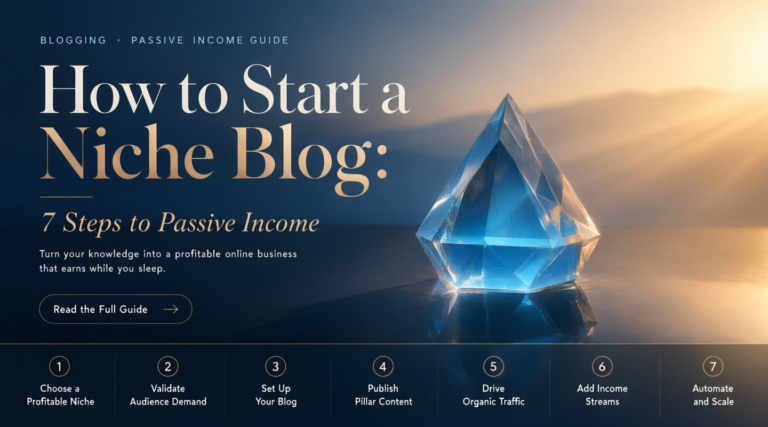
Helpful articles that rank in search can earn commissions for years. It’s slow: expect months before meaningful traffic. The two tools that matter most are a host for your own site, such as Hostinger (the host this site runs on), and a keyword tool like Keysearch to find searches you can realistically rank for. Our guide to starting a niche blog walks through it.
Host Your Own Storefront for Under $2.99/Month
Skip the marketplace cut entirely. Hostinger runs everything from landing pages to checkout, fast enough to handle a launch spike without falling over.
Sell Digital Products While You Sleep
Don’t let a clunky checkout process kill your sales. Shopify makes it incredibly easy to sell digital downloads, manage inventory, and get paid whether you are awake or asleep.
An email list
An email list is the asset that makes the other two work better, because you can reach readers and buyers again whenever you launch something. You can start one with a spreadsheet and a free email tool, or use a free CRM like HubSpot to capture sign-ups and send emails from one place.

Own Your Buyer List
Marketplace traffic isn’t yours. It’s borrowed. HubSpot’s free CRM captures every buyer’s email from your own store so your next launch doesn’t start from zero.
A paid community
Once you have an audience that trusts you, a paid community brings recurring monthly revenue. Platforms like Skool host the community and course in one place. It’s the least passive option here, because members expect you to show up.
Stop Losing Audiences After Week One
Course content + community discussion = one powerful platform. Skool unifies your teaching and your tribe, making it easier than ever to retain students and build a loyal, paying audience.
Verdict on group 3: the best long-term bet for most people, if you’re willing to do months of work before it pays. Our guide to understanding passive income covers the 10 steps to build your first stream.
Which Passive Income Apps Should You Start With?
It depends on what you have more of: time or money.
- No money, some time: start in group 3 with one digital product or a blog, and use group 1 apps only for things you’d do anyway.
- Some savings, little time: build an emergency fund in a high-yield savings account first, then consider group 2 investing apps after learning the basics.
- Both: keep savings working in group 2 while you build a group 3 asset. That’s a common way to build multiple passive income streams.
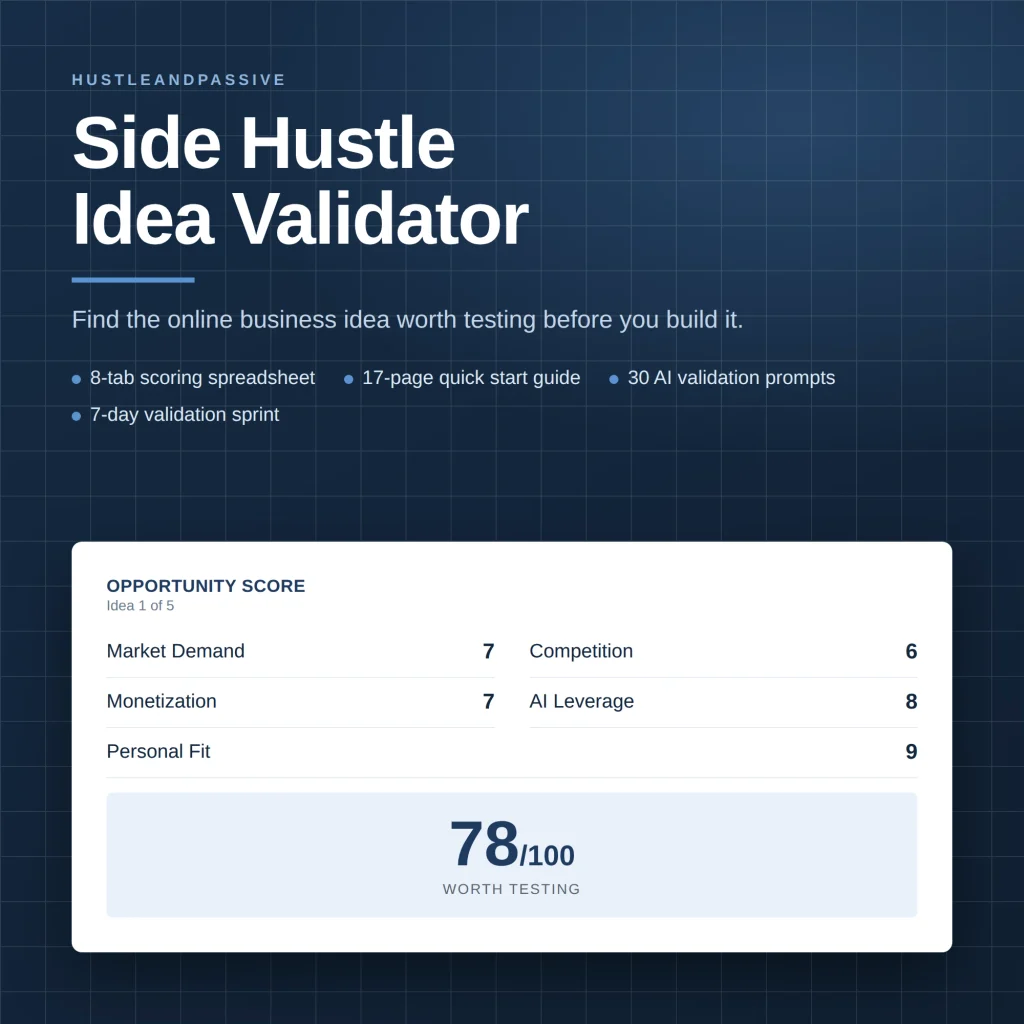
Not sure which asset fits you? My Side Hustle Idea Validator ($9) scores each idea on demand, competition, startup cost and personal fit, so you build the one with the best odds first.
My Side Hustle Idea Validator ($9) scores each idea on demand, competition, startup cost and personal fit, so you build the one with the best odds first.
Red Flags in Passive Income Apps
- Guaranteed returns. Real investments don’t guarantee returns; promises of high, guaranteed profits are a classic warning sign.
- Paying to join an “earning” app, or buying a membership to unlock higher payouts.
- Pressure to recruit friends as the main way to earn.
- No clear company, license or withdrawal rules. If you can’t find how and when you get paid, don’t deposit money.
For more on money you can make quickly rather than passively, see how many hours it takes to earn $100 a day online.
Passive Income Apps FAQ
What are the best passive income apps?
It depends on your goal. Cashback and bandwidth-sharing apps like Rakuten and Honeygain pay small amounts for little effort. High-yield savings accounts and investing apps like Betterment or Fundrise earn in proportion to your balance and carry risk. Tools like Etsy, Gumroad and a blog build assets that can earn more over time.
Can you really make passive income from apps?
Yes, but mostly small amounts. Apps that pay for idle things usually earn a few dollars a month. Meaningful passive income comes from savings or investments, which need capital, or from assets like digital products and blogs, which need months of work first.
How much money do I need to earn $100 a month in passive income?
At an illustrative 4% yield, about $30,000 in savings or investments. With a digital product, it takes about 8 sales a month of a $15 product after Gumroad’s fees. Returns and sales are not guaranteed.
Are passive income apps safe?
Some are, some aren’t. Savings at FDIC-insured banks are protected up to $250,000 per depositor, per bank, per ownership category. Investing apps can lose value. Be wary of any app that guarantees returns, charges you to join or relies on recruiting friends.
Do I have to pay taxes on passive income from apps?
In the US, interest, dividends and investment gains are generally taxable, and income from selling products is taxable too. Keep records of what you earn and ask a tax professional about your situation.
Start with one asset. The free 50 AI Side Hustle Ideas list gives you fifty to choose from.

Writes and tests every guide on hustle&passive. Everything here is something we have actually run — including the parts that did not work.