Here’s a reality check before you search for freelance proofreading jobs: the best-known company in this space says its freelance roster is full right now. That doesn’t mean there’s no work. It means you’ll need more than one door.
This guide is for you if you have a sharp eye for grammar and you want to know where proofreaders actually find paid work, what the platforms keep and what employers expect. I haven’t proofread for pay myself, so I won’t quote my own earnings.
I read the companies’ own pages, the U.S. Bureau of Labor Statistics (BLS) and the IRS, and I tell you when a page didn’t say.
Some links on hustle&passive may be affiliate links. If you purchase through one of these links, we may earn a commission at no additional cost to you. Affiliate Disclosure
Last updated: October 2026. Hiring status, fees and requirements change often, so check each official page before you apply. This is general information, not tax or legal advice.
Key Takeaways
- Proofreading checks for errors. Editing changes the text more deeply, and many companies expect both skills.
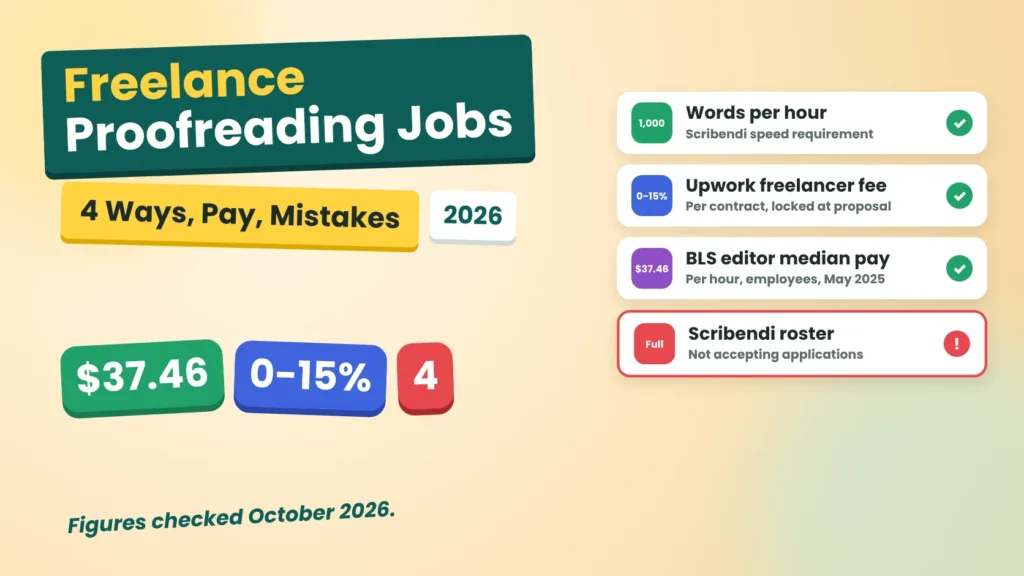
- Hiring can be closed. Scribendi’s jobs page says its freelance roster is currently full and it isn’t accepting applications.
- Platforms take a share. Upwork says its freelancer fee runs from 0% to 15% per contract, and Fiverr’s help page shows freelancers receiving 80% of a cleared payment.
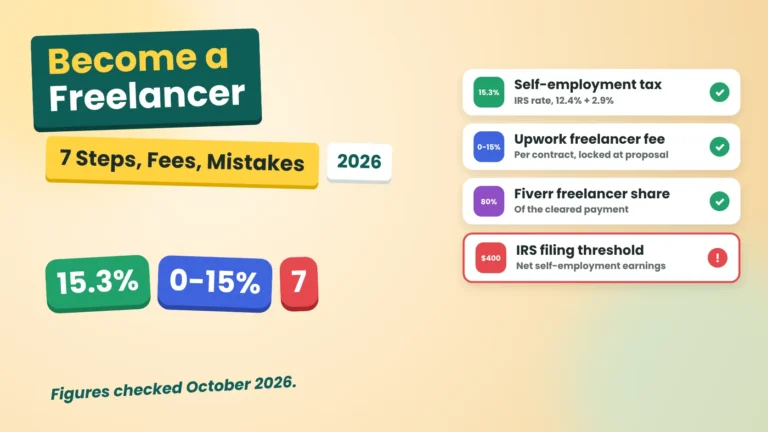
- You’re self-employed. The IRS says you must file if you net $400 or more from self-employment.
- Speed matters. Scribendi lists an average speed of 1,000 to 1,500 words per hour as a standard requirement.
What Do Freelance Proofreading Jobs Involve?
A proofreader reads a finished text and fixes grammar, spelling, punctuation and formatting errors. Some jobs also ask for light editing. Clients include authors, students, businesses and publishers.
Here’s the quick comparison before the details.
| Option | What the official page says | Main catch |
|---|---|---|
| Scribendi | Contractor role, paid monthly through Payoneer | Roster currently full, strict requirements |
| Upwork | Fee of 0% to 15% per contract | You must win bids |
| Fiverr | Freelancers receive 80% of a cleared payment | 14-day clearing period |
| Your own clients | You set the price | You must find them |
4 Ways to Find Freelance Proofreading Jobs
1. Scribendi
Scribendi’s freelance FAQ says freelancers are independent contractors who take a standardized test of editing and proofreading skills, and are paid once a month through Payoneer in US dollars. Its jobs page lists a university degree in a relevant field, at least three years of experience in editing, writing or similar work, native-level English and an average speed of 1,000 to 1,500 words per hour.
The catch: the page says the freelance roster is currently full and it’s not accepting applications. It also lists some US jurisdictions where freelancers can’t reside, including California, Florida, New York and Washington. Check the page before you invest time.
2. Upwork
Upwork lets you bid on proofreading projects. Its freelancer fee article says Upwork charges between 0% and 15% on each contract, and the rate is fixed the moment you submit a proposal.
Competition is high, so a narrow offer, such as “proofreading for academic papers”, works better than a general one. I cover the details in my Upwork guide for writers.
3. Fiverr
Fiverr is a marketplace where you list a service and buyers find you. Its help page for freelancers says you receive 80% of what the buyer pays once it clears, and withdrawals wait out a 14-day clearing period. My guide to Fiverr jobs shows how to start with no reviews.
4. Your own clients
You can also offer proofreading directly to authors, students, small businesses and bloggers, and set your own price. You’ll skip platform fees, but you have to find the work. My guide to where to find virtual assistant clients works for any service, and my guide to freelance writing websites lists places where writers and editors meet clients.
What Do Proofreaders Earn?
It depends on your rate and speed. For a rough reference, the BLS lists the median pay for editors at $37.46 an hour, or $77,920 a year (May 2025), and projects employment to decline 1 percent from 2025 to 2035. It says editors typically need a bachelor’s degree and writing and proofreading experience.
Those figures cover employees in a related field, not freelancers, so treat them as a ceiling for comparison, not a promise. Here’s an example. If you charge $0.02 per word and work at 1,000 to 1,500 words an hour, that’s $20 to $30 an hour before fees and tax. That’s an illustration, not a market rate.
Do You Pay Taxes on Freelance Proofreading Income?
Yes, in general, including on freelance proofreading jobs. Self-employment tax is 15.3 percent according to the IRS (12.4 percent for Social Security, 2.9 percent for Medicare), and Schedule SE applies once your net self-employment earnings reach $400. The IRS estimated taxes page explains that estimated payments are generally due quarterly when you expect a $1,000 or larger bill at filing.
Keep records of income and expenses, and ask a tax professional if you’re unsure. FreshBooks is one tool for invoices and expense tracking, and a spreadsheet works too. If you’re new to this, my guide on how to become a freelancer covers the whole setup.

Spend less time managing invoices and expenses and more time growing your online business. Try FreshBooks and streamline your accounting today.
Skills That Help You Land Freelance Proofreading Jobs
- A style guide. Many clients expect you to follow one, so ask which.
- Word processing skills. Scribendi requires Microsoft Word 2016 or later.
- Speed and accuracy. Practice on your own text and time yourself.
- Reliability. Deadlines matter more than almost anything else.
How to Avoid Scams in Freelance Proofreading Jobs
According to the FTC, a real employer won’t charge you for the privilege of working. Treat any “proofreading job” that wants money for training or software, or mails you a check and asks for part of it back, as a red flag.
Before you reply to an ad, search the company name plus “scam” or “complaint”. If you already sent money, tell the payment provider and file a report at ReportFraud.ftc.gov. The FTC’s job scams page lists more warning signs.
Which Option Should You Start With?
Here’s how I’d choose among these freelance proofreading jobs:
- You have a degree and editing experience. Check Scribendi’s status, then apply if it reopens.
- You want to start this week. Build a narrow Upwork or Fiverr offer.
- You have contacts. Offer proofreading directly to authors and students.
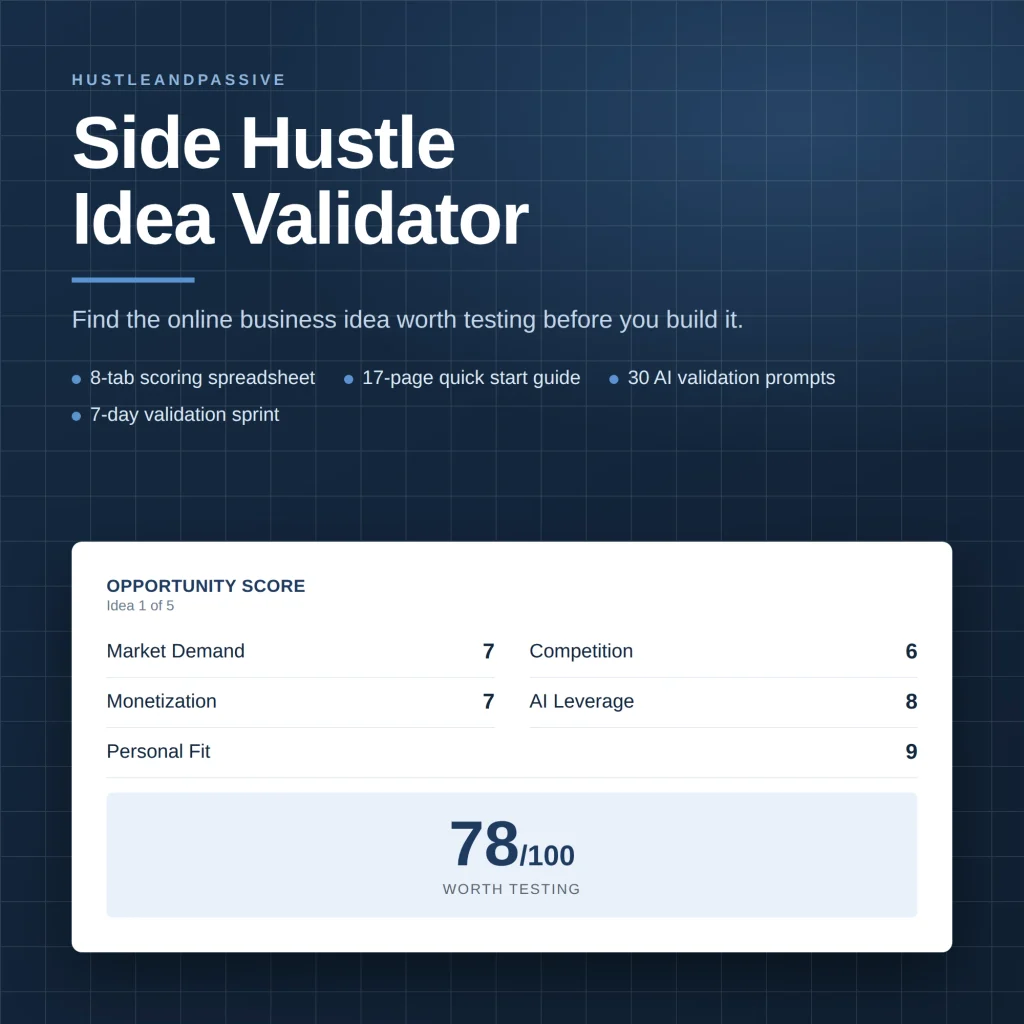
If you’re not sure freelancing is for you, my Side Hustle Idea Validator scores ideas on demand, competition, startup cost and personal fit. The free 50 AI Side Hustles list is a quick read too, and my guide to transcription jobs from home covers a related listening-and-typing skill.
My Side Hustle Idea Validator ($9) scores each idea on demand, competition, startup cost and personal fit, so you build the one with the best odds first.
Costly Mistakes New Proofreaders Make
- Underpricing. Fees, tax and unpaid time all come out of your rate.
- Skipping a sample. Show a before-and-after of a short text.
- Missing deadlines. One late job can end a client relationship.
- Ignoring the style guide. Ask which one the client uses.
- Not reading the fee page. Know what you keep before you bid.
My Verdict on Freelance Proofreading Jobs
Freelance proofreading jobs are real, but the best-known door is closed right now and the pay depends on your speed. If I were starting, I’d build a narrow offer on Upwork or Fiverr, practice with a style guide and approach authors directly. I’d skip any job that asks me to pay first.
My advice: write one sample, set your per-word rate to cover fees and tax, and send three pitches this week.
FAQ
Are there freelance proofreading jobs for beginners?
Yes, but many companies want experience. Scribendi lists a degree and three years of related experience, and it isn’t accepting applications right now. Beginners often start on Upwork or Fiverr, or with direct clients.
How much do freelance proofreaders make?
It depends on your rate and speed. The BLS median pay for editors is $37.46 an hour, but that covers employees. Freelancers set their own rates and pay platform fees and taxes.
Do I need a degree to be a proofreader?
Not always for freelance work. Scribendi’s page lists a university degree as a standard requirement, while platforms like Upwork and Fiverr let you list services without one. Samples and reviews help.
Is Scribendi hiring freelance proofreaders?
Its jobs page says the freelance roster is currently full and it isn’t accepting applications. Check the page for updates before applying.
Do proofreaders pay taxes on freelance income?
Yes, generally. Net self-employment earnings of $400 or more mean you file, and expecting to owe $1,000 or more means estimated payments, per the IRS.

I write every guide on hustle&passive. I test what I can, and when I have not tried something myself, I say so and cite my sources.