Apps that pay you to walk exist, but most of them don’t pay cash. They pay in points, discount codes or entries into research programs, and the exchange rate is rarely written down in plain numbers. So the real question isn’t whether you can get paid for steps you were taking anyway. It’s what you give up in exchange: your location, your health data and your attention.
This guide is for you if you walk a lot already and want to know if apps that pay you to walk are worth installing. I haven’t used any of them, so I won’t quote my own earnings. What I did was read Sweatcoin’s terms of service, Evidation’s privacy notice and company page, the Federal Trade Commission (FTC) guidance on health apps and the CDC’s activity guidelines, then work out what those rules mean for a person with a phone and a pair of shoes.
Quick heads-up: there are no affiliate links to any walking app in this guide. Two links near the end point to my own digital products, so I may earn something if you buy. Nothing here depends on that.
Last updated: October 2026. These apps change their terms and rewards often, so check the current pages before you rely on a detail.
Key Takeaways
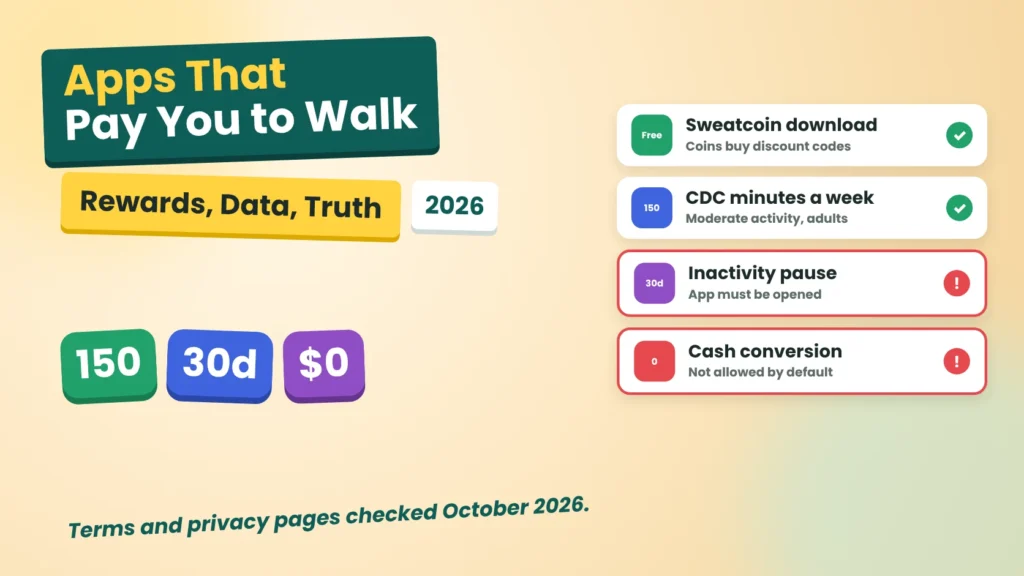
- Cash is rare. Sweatcoin’s US terms say its coins can’t be exchanged for cash, and they buy discount codes in its marketplace instead.
- Rates aren’t published in the terms. The terms say the step volumes live in the app’s FAQ and that daily earnings may be capped.
- You pay with data. Evidation’s privacy notice lists geolocation, device identifiers and more, depending on your settings.
- The health benefit is the real prize. The CDC recommends 150 minutes of moderate activity a week for adults.
- Treat it as a perk, not income. No official source I read suggests walking apps replace a side hustle.
Do Apps That Pay You to Walk Pay in Real Money?
They pay, but mostly in rewards, not wages. An app counts your steps with your phone’s sensors, turns them into points or coins, and lets you spend those on discounts, products or entries into programs. The company earns from advertising, partnerships or data, and shares a small part with you.
I wouldn’t expect rent money from any of them. If your goal is actual cash, my guide to apps that pay you real money compares survey, research and cash-back options that are built to pay out.
What Do Sweatcoin’s Terms Say About Payment?
Sweatcoin is the best known of the apps that pay you to walk, and its US terms are readable. Here is what the terms for US users say, in my own words.
| Topic | What the terms say |
|---|---|
| How coins are earned | Only through verified physical movement such as steps. The movement counts are in the app’s FAQ, and the company can change them. |
| Daily limits | The company may cap daily earnings. The terms give no number, and caps can vary by membership level. |
| Redeeming | Coins buy “Sale Codes” in the marketplace, which unlock third-party discounts. Prices and limits can change. |
| Cash | Coins can’t be exchanged for cash unless the company agrees in writing. |
| Inactivity | If you don’t open the app for 30 days, it stops generating coins until you open it again. |
| Age | At least 13, with parental or guardian consent under 16. |
A few other terms matter more than they look. Disputes go to individual binding arbitration in Delaware, with a 30-day window to opt out after you first accept the terms. The company’s liability is capped at the greater of $30 or what you paid in the previous 12 months. And the app’s verification of your movement is final and can’t be reversed.
I couldn’t find the actual conversion rate in these sources. The terms point to the app’s FAQ, and Sweatcoin’s help page didn’t give figures either. So when you see a claim about how much Sweatcoin pays, ask where the number came from.
What Does Sweatcoin Say on Its Own Site?
Sweatcoin’s homepage says the app converts steps into coins you can spend on products and services, that it’s free to download and that its algorithm is meant to ignore shakes and bumps. It also says it doesn’t sell your location data. The page doesn’t give conversion rates or tiers, so I haven’t treated any figure as official.
What About Evidation and Research-Style Apps?
Evidation works differently. Its company page describes a health data business that pays people in rewards for sharing data and joining research. It says its community has 5 million people and that it has paid millions of dollars in rewards. The page doesn’t explain how points are earned, and I couldn’t read a rewards page, so I can’t give you a points-to-dollars rate.
What I could read is the privacy notice, last updated February 19, 2026. It lists contact details, device identifiers, usage data and geolocation depending on your device settings. It says the company may disclose de-identified information and that analytics and advertising companies may collect data through its sites and apps. Some of that may count as a “sale” or “sharing” under California and other state laws. It also says its websites don’t honor Do Not Track, and it lists controls for access, deletion and opting out.
That isn’t a reason to avoid it. It’s a reason to read the notice first, because with apps that pay you to walk, your data is part of the price.
Is Your Health Data Protected?
Not always the way you’d assume. The FTC’s guidance says many health apps and fitness trackers aren’t covered by HIPAA, but its Health Breach Notification Rule applies to certain businesses outside HIPAA. The FTC says an app that can sync with a fitness tracker is probably a vendor of personal health records. A breach, it says, isn’t limited to hackers: sharing health information without a person’s authorization can count. Civil penalties can reach $53,088 per violation.
My take: that rule helps after something goes wrong. Before it does, the best protection is picking what you grant. Turn off location when the app doesn’t need it, and don’t connect more health sources than you must.
How Much Can You Earn Walking?
Probably less than the ads suggest. I haven’t found an official source that gives a typical monthly payout for any walking app, so I won’t invent one.
Here is an illustration (an example, not a promise, and not any app’s rate). Say an app paid one cent for every 1,000 steps, with no cap. A 10,000-step day would be 10 cents, or about $3 in a 30-day month. Even if a real app paid ten times that, it would still be small next to a part-time shift. That’s why I’d treat apps that pay you to walk as a bonus on activity you already do.
The better return is health. The CDC recommends 150 minutes of moderate-intensity activity a week for adults, or 75 minutes of vigorous activity, plus muscle-strengthening on at least 2 days. A walking app can help you stick to that, and that is worth more than a few coins.
Who Should Use Apps That Pay You to Walk, and Who Should Skip Them?
Based on the rules, it fits you if you:
- Already walk daily and don’t mind sharing step data.
- Like discounts and small perks, and can ignore the rest.
- Read the privacy settings before you accept them.
Skip it if you:
- Need money you can count on. Rewards, caps and codes change without notice.
- Don’t want your location or device data collected.
- Plan to walk more only to earn. The pay won’t justify the time.
If you want a side income that pays more per hour, see side hustles that pay daily, paid survey sites or my list of remote side jobs.
How Do You Try Walking Apps Safely?
Treat it like a small experiment. Here is the order I’d follow.
- Pick one app, not five. Several apps tracking the same steps drain your battery and multiply the data you share.
- Read the terms and the privacy notice. Look for cash rules, daily caps and arbitration.
- Limit permissions. Grant location only while using the app, if the phone allows it.
- Keep a log for 30 days. Write down what you earned and what you could redeem.
- Decide the verdict. If the reward is worth your data, keep it. If not, delete the account and ask for deletion of your data.
- Don’t buy anything to unlock rewards. A walking app that asks for money first is a red flag.
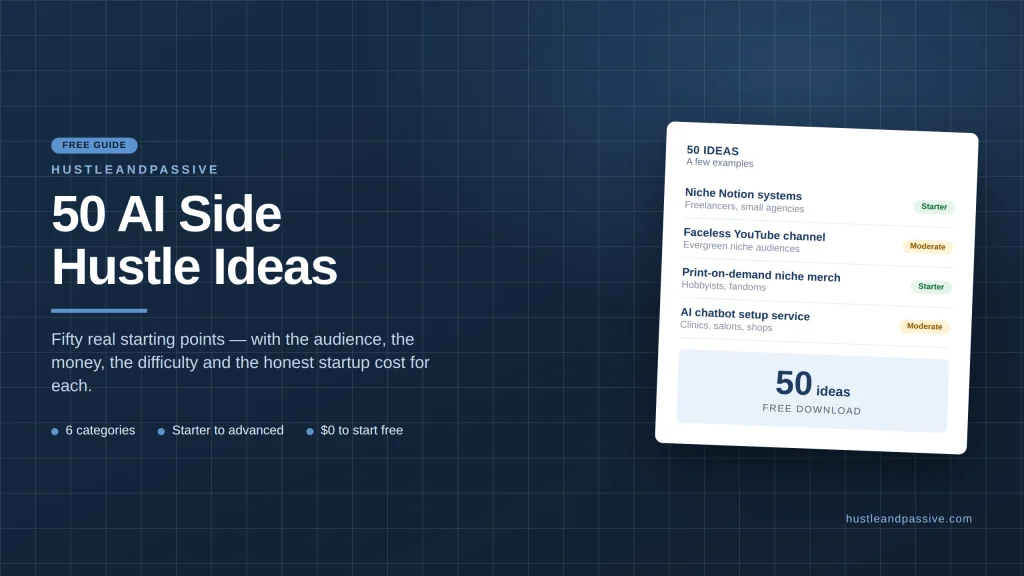
Not sure walking apps belong in your plan at all? My Side Hustle Idea Validator helps you test an idea against demand, competition and startup cost, and the free 50 AI side hustle ideas list gives you more options to compare. And if you’re juggling a job already, my guide to extra income while working full-time shows how to fit it in.
What Are the Risks and Mistakes to Avoid?
The main risks with apps that pay you to walk are low rewards, data sharing and changing rules. Here are the mistakes I’d watch for.
- Expecting cash. Sweatcoin’s terms say coins can’t be exchanged for cash.
- Accepting every permission. Location and health data are the real currency.
- Faking steps. The terms ban simulated movement and say affected coins may be destroyed.
- Ignoring inactivity rules. Coins stop generating after 30 days without opening the app.
- Counting rewards as income. I haven’t found an IRS page on app rewards, so ask a tax professional if you receive anything of value regularly.
FAQ
Do apps that pay you to walk pay in real money?
Most pay in points, discount codes or rewards rather than cash. Sweatcoin’s US terms say its coins can’t be exchanged for cash and buy marketplace codes instead.
Does Sweatcoin pay you?
Not in cash, according to its US terms. Coins buy discount codes from third parties. The terms say daily earnings may be capped and that the step volumes are in the app’s FAQ.
Are walking apps safe for your data?
It depends on the app and your settings. Evidation’s privacy notice says it collects data such as geolocation depending on your settings and may disclose de-identified information. Read each notice before you accept.
How many steps do you need to get paid?
No official source I read gives a universal number. Sweatcoin’s terms say the step volumes are in the app’s FAQ and can change, so check the current rules before you plan around them.
The Bottom Line
Apps that pay you to walk can reward a habit you already have, but they’re not a side hustle. The honest picture: rewards are small, cash is rare, and your data is part of the deal.
My advice: pick one app, read its terms and privacy notice, give it the fewest permissions that work and judge it after 30 days. And if a walking app’s rules have changed by the time you read this, send me a message through the contact page so I can update the guide.

Writes and tests every guide on hustle&passive. Everything here is something we have actually run — including the parts that did not work.